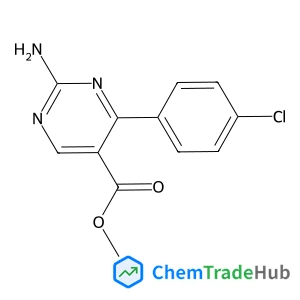
Methyl 2-amino-4-(4-chlorophenyl)-5-pyrimidinecarboxylate
CAS Number:
1133115-56-6
Molecular Formula:
C12H10ClN3O2
Ting Hu, Jian Zhou, Jinming Dong
The effect of in-plane strain on monolayer InSe has been systematically investigated by using first-principles calculations. It is found that monolayer InSe exhibits superior mechanical flexibility, which can sustain a tensile strain up to 27% in the armchair direction. More importantly, a new phase with inversion symmetry denoted as phase-II is obtained when the tensile strain increases over 25% along the zigzag direction, which is predicted to be metallic and thermodynamically stable at room temperature. And the phase-II InSe could show an out-of-plane negative Poisson's ratio after the uniaxial tensile strain is larger than 5%. Moreover, both uniaxial and biaxial compressive strains can trigger the indirect-to-direct band gap transition in the pristine monolayer InSe and its band gap decreases monotonously with the applied tensile strain, which offers an effective method to tune the electronic properties of monolayer InSe for its promising application in electronics and optoelectronics.

Kinetics and Catalysis

Journal of Heterocyclic Chemistry

Proceedings of the National Academy of Sciences of the United States of America

Pure and Applied Chemistry

Journal of Catalysis

Russian Chemical Reviews

Journal of Physics and Chemistry of Solids

Helvetica Chimica Acta

European Journal of Wood and Wood Products

Israel Journal of Chemistry
Libo Cai, Xiaoyi Zhu, Jiayi Chen, Aijun Lin, Hequan Yao
DOI: 10.1039/C9QO00830F
Meng-Ting Chen, Yang Zhang, Myroslav O. Vysotsky, Joachim O. Lindner, Meng-Hua Li, Mei-Jin Lin, Frank Würthner
DOI: 10.1039/C9QO01090D
Wei He, Jipan Yu, Dawei Wang, Guoxia Ran, Xiao-Feng Xia
DOI: 10.1039/C9QO00848A
Deying Yang, Zhongqiu Liu
DOI: 10.1039/C9QO00486F
Yao Zhou, Yixian Lou, Ya Wang
DOI: 10.1039/C9QO00847K
Yongqi Yao, Wen Yang, Qifu Lin, Weitao Yang, Huanyong Li, Lin Wang, Fenglong Gu, Dingqiao Yang
DOI: 10.1039/C9QO00660E
Hidemasa Hikawa, Yuuki Matsuura, Shoko Kikkawa, Isao Azumaya
DOI: 10.1039/C9QO00831D
Giacomo Mari, Gianfranco Favi, Stefania Santeusanio, Fabio Mantellini, Lucia De Crescentini
DOI: 10.1039/C9QO00895K
6-(3-Fluorophenyl)picolinic acid is generally considered safe for laboratory use...
(3R)-3-Pyrrolidinol is used in the pharmaceutical industry as a precursor for dr...
When handling (4R,5R)-4,5-Diethoxycarbonyl-2,2-dimethyldioxolane (CAS: 59779-75-...
1-(6-Chloroimidazo[1,2-b]pyridazin-3-yl)ethanone is often synthesized via a mult...
The market for N-Ethyl-3,4-dimethylbenzylamine (CAS: 39180-83-1) remains steady,...
Tert-butyl 3-(pyrrolidin-1-yl)azetidine-1-carboxylate is a chemical compound wit...
1-Bromo-3-chloro-2,4-dimethoxybenzene (CAS: 1228956-93-1) falls under the classi...
The safety of 8-Bromo-2-methyl-3,4-dihydroisoquinolin-1(2H)-one (CAS: 1368622-07...
Benzyl [(3S)-2,6-dioxo-3-piperidinyl]carbamate is generally safe when handled wi...
1-{[4-(4,4,5,5-Tetramethyl-1,3,2-dioxaborolan-2-yl)phenyl]sulfonyl}pyrrolidine s...

Physical Chemistry Chemical Physics (PCCP) is an international journal co-owned by 19 physical chemistry and physics societies from around the world. This journal publishes original, cutting-edge research in physical chemistry, chemical physics and biophysical chemistry. To be suitable for publication in PCCP, articles must include significant innovation and/or insight into physical chemistry; this is the most important criterion that reviewers and Editors will judge against when evaluating submissions. The journal has a broad scope and welcomes contributions spanning experiment, theory, computation and data science. Topical coverage includes spectroscopy, dynamics, kinetics, statistical mechanics, thermodynamics, electrochemistry, catalysis, surface science, quantum mechanics, quantum computing and machine learning. Interdisciplinary research areas such as polymers and soft matter, materials, nanoscience, energy, surfaces/interfaces, and biophysical chemistry are welcomed if they demonstrate significant innovation and/or insight into physical chemistry. Joined experimental/theoretical studies are particularly appreciated when complementary and based on up-to-date approaches.
![(3R,4aR,7aS,9aR,10S,11R,13aR,13bS,15aS,15bR)-3,11-Dihydroxy-10-(hydroxymethyl)-4,4,7a,10,13a,15b-hexamethyl-1,2,3,4,4a,7,7a,8,9,9a,10,11,12,13,13a,13b,14,15,15a,15b-icosahydro-5H-naphtho[2',1':4,5]cyc
lohepta[1,2-a]naphthalen-5-one structure](https://static.chemtradehub.com/structs/538/53800-21-8-9f18.webp "(3R,4aR,7aS,9aR,10S,11R,13aR,13bS,15aS,15bR)-3,11-Dihydroxy-10-(hydroxymethyl)-4,4,7a,10,13a,15b-hexamethyl-1,2,3,4,4a,7,7a,8,9,9a,10,11,12,13,13a,13b,14,15,15a,15b-icosahydro-5H-naphtho[2',1':4,5]cyc
lohepta[1,2-a]naphthalen-5-one structure")
![trans-2-{[(Tert-butoxy)carbonyl]amino}cyclobutane-1-carboxylic acid structure](https://static.chemtradehub.com/structs/951/951173-25-4-27cd.webp "trans-2-{[(Tert-butoxy)carbonyl]amino}cyclobutane-1-carboxylic acid structure")