


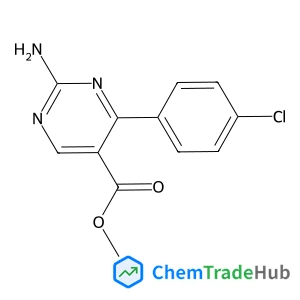
Methyl 2-amino-4-(4-chlorophenyl)-5-pyrimidinecarboxylate
CAS Number:
1133115-56-6
Molecular Formula:
C12H10ClN3O2
Spin caloritronics has drawn much attention as it combines thermoelectrics and spintronics together. Carbon-based structures, such as graphene, have been found to exhibit different kinds of spin caloritronic features. However, a study of spin caloritronics in carbon nanotubes (CNTs) is still lacking. Using first-principles calculations, we investigate the spin-Seebeck effect (SSE) in partially hydrogenated CNTs. It is found that linear hydrogenation could make CNTs acquire magnetism and exhibit the spin-Seebeck effect. Moreover, an odd–even effect of the SSE is observed, where the even cases could be used as spin-Seebeck diodes. Further analysis shows that, it is induced by the difference of band structures, where the band structure of a tube is a combination of that of graphene-nanoribbon parts “divided” by hydrogenation. This mechanism could be extended to nanotubes with different diameters, showing great application potential. We believe that our results are very useful for the development of nanotube-based spin caloritronic devices.

Pharmacological Reviews

Science Progress

European Journal of Wood and Wood Products

Proceedings of the National Academy of Sciences of the United States of America

Journal of Medicinal Chemistry

Journal of Catalysis

Journal of Physics and Chemistry of Solids

Molecular Pharmacology

Pure and Applied Chemistry

Israel Journal of Chemistry
Matías Vidal, Marcos Caroli Rezende, Moisés Domínguez
DOI: 10.1039/C9QO01043B
Jiu-Jian Ji, Li-Jin Xiao, Dong Guo, Xiao Zhu, Juan Tang, Jun Wu, Zong-Bo Xie
DOI: 10.1039/C9QO00935C
Yongqi Yao, Wen Yang, Qifu Lin, Weitao Yang, Huanyong Li, Lin Wang, Fenglong Gu, Dingqiao Yang
DOI: 10.1039/C9QO00660E
DOI: 10.1039/C9QO01074B
Ling-Nan Li, Xiao-Qin Liu, Dong-Rong Zhu, Chen Chen, Yao-Lan Lin, Wen-Li Wang, Li Zhu, Jian-Guang Luo, Ling-Yi Kong
DOI: 10.1039/C9QO00861F
Kui Lu, Quan Li, Liangshuo Ji, Erbing Hua, Yujie Dai, Xia Zhao
DOI: 10.1039/C9QO00940J
Arto Valkonen, Carlos A. M. Afonso, Nuno R. Candeias
DOI: 10.1039/C9QO01028A
Yingying Guo, Zhoulu Wang, Ying Zhu, Qiaochu Zhang, Donghui Wei, Xiang Liu, Zhenqian Fu
DOI: 10.1039/C9QO01093A
Yao Zhou, Yixian Lou, Ya Wang
DOI: 10.1039/C9QO00847K
Meng-Jie Jiao, Dan Liu, Xiu-Qin Hu, Peng-Fei Xu
DOI: 10.1039/C9QO01166H
6-(3-Fluorophenyl)picolinic acid is generally considered safe for laboratory use...
(3R)-3-Pyrrolidinol is used in the pharmaceutical industry as a precursor for dr...
When handling (4R,5R)-4,5-Diethoxycarbonyl-2,2-dimethyldioxolane (CAS: 59779-75-...
1-(6-Chloroimidazo[1,2-b]pyridazin-3-yl)ethanone is often synthesized via a mult...
The market for N-Ethyl-3,4-dimethylbenzylamine (CAS: 39180-83-1) remains steady,...
Tert-butyl 3-(pyrrolidin-1-yl)azetidine-1-carboxylate is a chemical compound wit...
1-Bromo-3-chloro-2,4-dimethoxybenzene (CAS: 1228956-93-1) falls under the classi...
The safety of 8-Bromo-2-methyl-3,4-dihydroisoquinolin-1(2H)-one (CAS: 1368622-07...
Benzyl [(3S)-2,6-dioxo-3-piperidinyl]carbamate is generally safe when handled wi...
1-{[4-(4,4,5,5-Tetramethyl-1,3,2-dioxaborolan-2-yl)phenyl]sulfonyl}pyrrolidine s...

Physical Chemistry Chemical Physics (PCCP) is an international journal co-owned by 19 physical chemistry and physics societies from around the world. This journal publishes original, cutting-edge research in physical chemistry, chemical physics and biophysical chemistry. To be suitable for publication in PCCP, articles must include significant innovation and/or insight into physical chemistry; this is the most important criterion that reviewers and Editors will judge against when evaluating submissions. The journal has a broad scope and welcomes contributions spanning experiment, theory, computation and data science. Topical coverage includes spectroscopy, dynamics, kinetics, statistical mechanics, thermodynamics, electrochemistry, catalysis, surface science, quantum mechanics, quantum computing and machine learning. Interdisciplinary research areas such as polymers and soft matter, materials, nanoscience, energy, surfaces/interfaces, and biophysical chemistry are welcomed if they demonstrate significant innovation and/or insight into physical chemistry. Joined experimental/theoretical studies are particularly appreciated when complementary and based on up-to-date approaches.
![3-[(3R,4R)-3-[(6-aminopyrimidin-4-yl)-methyl-amino]-4-methyl-1-piperidyl]-3-oxo-propanenitrile structure](https://static.chemtradehub.com/structs/164/1640971-60-3-83a4.webp "3-[(3R,4R)-3-[(6-aminopyrimidin-4-yl)-methyl-amino]-4-methyl-1-piperidyl]-3-oxo-propanenitrile structure")




