












![1-Benzyl-1,7-diazaspiro[4.4]nonane dihydrochloride structure](https://static.chemtradehub.com/structs/115/1159822-71-5-0320.webp "1-Benzyl-1,7-diazaspiro[4.4]nonane dihydrochloride structure")
1-Benzyl-1,7-diazaspiro[4.4]nonane dihydrochloride
CAS Number:
1159822-71-5
Molecular Formula:
C14H22Cl2N2
Mingzhe Liu, Hui Xu, FangFang Zhou, Xiyu Gong, Songwen Tan, Yongju He
The high glutathione (GSH) concentration and insufficient H2O2 content in tumor cells strongly constrict the efficacy of Fenton reaction-based chemodynamic therapy (CDT). Despite numerous efforts, it still remains a formidable challenge for achieving satisfactory efficacy using CDT alone. Herein, an intelligent tetrasulfide bond-bridged mesoporous organosilica-based nanoplatform that integrates GSH-depletion, H2S generation, self-supplied H2O2, co-delivery of doxorubicin (DOX) and Fenton reagent Fe2+ is presented for synergistic triple-enhanced CDT/chemotherapy/H2S therapy. Because the tetrasulfide bond is sensitive to GSH, the nanoplatform can effectively consume GSH, leading to ROS accumulation and H2S generation in the GSH-overexpressed tumor microenvironment. Meanwhile, tetrasulfide bond-induced GSH-depletion triggers the degradation of nanoparticles and the release of DOX and Fe2+. Immediately, Fe2+ catalyzes endogenous H2O2 to highly toxic hydroxyl radicals (˙OH) for CDT, and H2S induces mitochondria injury and causes energy deficiency. Of note, H2S can also decrease the decomposition of H2O2 to augment CDT by downregulating catalase. DOX elicits chemotherapy and promotes H2O2 production to provide a sufficient substrate for enhanced CDT. Importantly, the GSH depletion significantly weakens the scavenging effect on the produced ˙OH, guaranteeing the enhanced and highly efficient CDT. Based on the synergistic effect of triple-augmented CDT, H2S therapy and DOX-mediated chemotherapy, the treatment with this nanoplatform gives rise to a superior antitumor outcome.
Jeffrey J. Black, Maximo C. Elias, Bruno Gélinas, Dominic Rochefort
DOI: 10.1039/C7CP04322H
Yuanyuan Qu, Mingwen Zhao
DOI: 10.1039/C7CP03422A
S. M. Corrêa, D. F. S. Ferreira, M. R. S. Siqueira, J. C. Reis-Silva, J. F. P. Leal, C. A. B. da Silva, Jr, J. Del Nero
DOI: 10.1039/C7CP03080K
Graeme J. Ackland
DOI: 10.1039/C7CP03729E
Michael K. M. Ward, David M. Rowley
DOI: 10.1039/C7CP03854B
Jun Peng, Kai Xu, Mingcai Chen
DOI: 10.1039/C7CP03325G
A. Kovalsky, Y. C. Wang, L. L. Wang, S. Goldberg, W. L. Kao, C. Y. Wu, H. Y. Chang, J. J. Shyue
DOI: 10.1039/C7CP03116E
Qun Zeng, Xianggui Xue, Zengming Zhang, Fude Nie, Chaoyang Zhang
DOI: 10.1039/C7CP04015F
I. M. Jauris, A. J. G. Zarbin, C. S. Umpierres, C. Saucier, E. C. Lima, S. B. Fagan, I. Zanella, F. M. Machado
DOI: 10.1039/C7CP04272H
Charusheela Ramanan, Marco Ferretti, Henny van Roon, Vladimir I. Novoderezhkin, Rienk van Grondelle
DOI: 10.1039/C7CP03038J
6-(3-Fluorophenyl)picolinic acid is generally considered safe for laboratory use...
(3R)-3-Pyrrolidinol is used in the pharmaceutical industry as a precursor for dr...
When handling (4R,5R)-4,5-Diethoxycarbonyl-2,2-dimethyldioxolane (CAS: 59779-75-...
1-(6-Chloroimidazo[1,2-b]pyridazin-3-yl)ethanone is often synthesized via a mult...
The market for N-Ethyl-3,4-dimethylbenzylamine (CAS: 39180-83-1) remains steady,...
Tert-butyl 3-(pyrrolidin-1-yl)azetidine-1-carboxylate is a chemical compound wit...
1-Bromo-3-chloro-2,4-dimethoxybenzene (CAS: 1228956-93-1) falls under the classi...
The safety of 8-Bromo-2-methyl-3,4-dihydroisoquinolin-1(2H)-one (CAS: 1368622-07...
Benzyl [(3S)-2,6-dioxo-3-piperidinyl]carbamate is generally safe when handled wi...
1-{[4-(4,4,5,5-Tetramethyl-1,3,2-dioxaborolan-2-yl)phenyl]sulfonyl}pyrrolidine s...
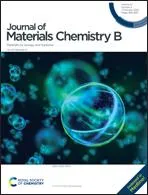
Journal of Materials Chemistry A, B & C cover high quality studies across all fields of materials chemistry. The journals focus on those theoretical or experimental studies that report new understanding, applications, properties and synthesis of materials. The journals have a strong history of publishing quality reports of interest to interdisciplinary communities and providing an efficient and rigorous service through peer review and publication. The journals are led by an international team of Editors-in-Chief and Associate Editors who are all active researchers in their fields. Journal of Materials Chemistry A, B & C are separated by the intended application of the material studied. Broadly, applications in energy and sustainability are of interest to Journal of Materials Chemistry A, applications in biology and medicine are of interest to Journal of Materials Chemistry B, and applications in optical, magnetic and electronic devices are of interest to Journal of Materials Chemistry C. More than one Journal of Materials Chemistry journal may be suitable for certain fields and researchers are encouraged to submit their paper to the journal that they feel best fits for their particular article. Example topic areas within the scope of Journal of Materials Chemistry B are listed below. This list is neither exhaustive nor exclusive. Antifouling coatings Biocompatible materials Bioelectronics Bioimaging Biomimetics Biomineralisation Bionics Biosensors Diagnostics Drug delivery Gene delivery Immunobiology Nanomedicine Regenerative medicine & Tissue engineering Scaffolds Soft robotics Stem cells Therapeutic devices image block All articles published in Journal of Materials Chemistry B from 2019 onwards will be indexed in MEDLINE®. Articles that primarily focus on providing insight into the underlying science and performance of biomaterials within a biological environment are more suited to our companion journal, Biomaterials Science.
![Methyl 2-[5-(3-Phenoxyphenyl)-2H-tetrazol-2-yl]acetate structure](https://static.chemtradehub.com/structs/130/1305320-60-8-84b4.webp "Methyl 2-[5-(3-Phenoxyphenyl)-2H-tetrazol-2-yl]acetate structure")




