












Simultaneous realization of bulk and interface regulation based on 2,4-diamino-6,7-diisopropylpteridine phosphate for efficient and stable inverted perovskite solar cells
Literature Information
Publication Date
2023-12-14
DOI
10.1039/D3TA06808K
Impact Factor
12.732
Authors
Jian Xiong, Yongsong Zhang, Fu Liu, Naihe Liu, Junqian Dai, Yongchao Liang, Zheling Zhang, Dongjie Wang, Yu Huang, Qiaogan Liao, Jian Zhang
View Original
Abstract
Due to strict restrictions on the solubility and solvent choice, it is challenging to achieve an efficient solution-processed cathode interface material for inverted perovskite solar cells (PSCs). Herein, a simple and facile solution-processed interface strategy is proposed based on 2,4-diamino-6,7-diisopropylpteridine phosphate (DPP) to overcome bulk and interface recombination loss issues in inverted PSCs. The performances of the materials, interfaces, and the devices were systemically investigated. The results show that DPP exists at the fullerene/cathode interface and also diffuses throughout the whole perovskite/fullerene heterojunction, which results in the simultaneous realization of bulk and interface regulation. The interface energy mismatch between the (6,6)-phenyl-C61 butyric acid methyl ester (PCBM) and Ag interface, the defect-assisted recombination energy loss, and the residual stress of the perovskite film are all improved by DPP introduction. The power conversion efficiency (PCE) of the devices with DPP is enhanced by 33.49% compared to that of the control devices without DPP. The highest PCE of 20.17% and a hysteresis index of 1.80% were achieved with DPP, which is superior to that of the devices with a conventional bathocuproine (BCP) cathode interface layer. Owing to the DPP introduction, the thermal stability (85 °C in N2) is greatly enhanced and T80 (the time required for the PCE decay to 80% of its initial value) reaches up to 247 h, while T80 of the control devices is only 14 h. This work provides an extremely simple and unique strategy to simultaneously realize bulk and interface regulation with only one material for the construction of efficient and stable inverted PSCs.
Related Literature
A new biotinylated tris bipyridinyl iron(ii) complex as redox biotin-bridge for the construction of supramolecular biosensing architectures
Naoufel Haddour, Chantal Gondran, Serge Cosnier
2004-01-08
Communication
DOI: 10.1039/B311566F
Polyhedral monocarbaborane chemistry. Carboxylic acid derivatives of the [closo-2-CB9H10]− anion
Andreas Franken, Colin A. Kilner, John D. Kennedy
2004-01-08
Communication
DOI: 10.1039/B311853N
Octahedral metal clusters as building units in a neutral layered honeycomb network, [Zn(en)]2[Nb6Cl12(CN)6]
Bangbo Yan, Cynthia S. Day, Abdessadek Lachgar
2004-09-14
Communication
DOI: 10.1039/B408000A
Oxygenation of thiolates to S-bonded sulfinate in an iron(iii) complex related to nitrile hydratase
Erwan Galardon, Michel Giorgi, Isabelle Artaud
2003-12-16
Communication
DOI: 10.1039/B312318A
A new approach to stereospecific synthesis of P-chiral phosphorothioates. Preparation of diastereomeric dithymidyl-(3′-5′) phosphorothioates
Helena Almer, Tomas Szabo
2003-12-19
Communication
DOI: 10.1039/B311912B
A photo-responsive organogel
Julian Eastoe, Margarita Sánchez-Dominguez, Paul Wyatt, Richard K. Heenan
2004-10-01
Communication
DOI: 10.1039/B410158H
Synthesis and Bergman cyclization of a β-extended porphyrenediyne
John D. Spence, Eric D. Cline, Domingo M. LLagostera, Patrick S. O'Toole
2003-12-09
Communication
DOI: 10.1039/B312001E
Unprecedented Barbier-type reactions catalysed by titanocene(iii)
Antonio Rosales, Juan L. Oller-López, José Justicia, Andreas Gansäuer, J. Enrique Oltra, Juan M. Cuerva
2004-10-05
Communication
DOI: 10.1039/B411173G
The Sonogashira coupling reaction catalyzed by ultrafine nickel(0) powder
Pinhua Li, Yicheng Zhang
2004-01-27
Communication
DOI: 10.1039/B314246A
Biomimetic synthesis of the pyrrolobenzoxazine core of paeciloxazine
Dirk Schwaebisch, Kirill Tchabanenko, Robert M. Adlington, Andrew M. Cowley, Jack E. Baldwin
2004-10-25
Communication
DOI: 10.1039/B412300J
You might also like
Compound Q&A
What precautions should be taken when handling 2-Chloro-1,2-bis(4-methylphenyl)ethanone (CAS: 71193-32-3)?
When handling 2-Chloro-1,2-bis(4-methylphenyl)ethanone (CAS: 71193-32-3), it is ...
71193-32-32-Chloro-1,2-bis(4-m...
Compound Q&A
What industries use 4-Ethoxy-3-(5-methyl-4-oxo-7-propyl-1,4-dihydroimidazo[5,1-f][1,2,4]triazin-2-yl)benzenesulfonyl chloride (CAS: 224789-26-8)?
4-Ethoxy-3-(5-methyl-4-oxo-7-propyl-1,4-dihydroimidazo[5,1-f][1,2,4]triazin-2-yl...
224789-26-84-Ethoxy-3-(5-methyl...
Compound Q&A
How should Methyl 3-Oxo-4-Androsten-17-Carboxylate (CAS: 2681-55-2) be stored?
Methyl 3-Oxo-4-Androsten-17-Carboxylate (CAS: 2681-55-2) should be stored in a c...
2681-55-2Methyl 3-Oxo-4-Andro...
Compound Q&A
What are the main uses of (R)-3-Amino-4-(3-hexylphenylamino)-4-oxobutylphosphonic acid (CAS: 909725-61-7)?
(R)-3-Amino-4-(3-hexylphenylamino)-4-oxobutylphosphonic acid is primarily used i...
909725-61-7(R)-3-Amino-4-(3-hex...
Compound Q&A
What regulatory guidelines apply to 2-Methyl-2-propanyl 3-amino-3-carbamoyl-1-azetidinecarboxylate (CAS: 1254120-14-3)?
2-Methyl-2-propanyl 3-amino-3-carbamoyl-1-azetidinecarboxylate (CAS: 1254120-14-...
1254120-14-32-Methyl-2-propanyl ...
Compound Q&A
Are there alternatives to (E)-4-(tert-Butoxy)-4-oxobut-2-enoic acid (CAS: 135355-96-3) in synthesis?
There are alternative reagents that can be used in synthesis instead of (E)-4-(t...
135355-96-3(E)-4-(tert-Butoxy)-...
Compound Q&A
What are the physical and chemical properties of [2-(3-Chlorophenyl)-1,3-thiazol-4-yl]methanol (CAS: 121202-20-8)?
[2-(3-Chlorophenyl)-1,3-thiazol-4-yl]methanol (CAS: 121202-20-8) is a crystallin...
121202-20-8[2-(3-Chlorophenyl)-...
Compound Q&A
What is the market or research trend for Methyl (2S)-[(4S)-2,2-dimethyl-1,3-dioxolan-4-yl]{[(4-methylphenyl)sulfonyl]oxy}acetate (CAS: 166249-17-8)?
The market and research trends for Methyl (2S)-[(4S)-2,2-dimethyl-1,3-dioxolan-4...
166249-17-8Methyl (2S)-[(4S)-2,...
Compound Q&A
What is the market or research trend for 1-Bromo-2-isocyanatoethane (CAS: 42865-19-0)?
The market for 1-Bromo-2-isocyanatoethane (CAS: 42865-19-0) is driven by its use...
42865-19-01-Bromo-2-isocyanato...
Compound Q&A
What are the main uses of 4-Nitro-D-phenylalanine hydrochloride (CAS: 147065-06-3)?
4-Nitro-D-phenylalanine hydrochloride (CAS: 147065-06-3) is primarily used in re...
147065-06-34-Nitro-D-phenylalan...
Source Journal
Journal of Materials Chemistry A

CiteScore:
19.5
Self-citation Rate:
4.7%
Articles per Year:
2211
Journal of Materials Chemistry A, B & C cover high quality studies across all fields of materials chemistry. The journals focus on those theoretical or experimental studies that report new understanding, applications, properties and synthesis of materials. The journals have a strong history of publishing quality reports of interest to interdisciplinary communities and providing an efficient and rigorous service through peer review and publication. The journals are led by an international team of Editors-in-Chief and Associate Editors who are all active researchers in their fields. Journal of Materials Chemistry A, B & C are separated by the intended application of the material studied. Broadly, applications in energy and sustainability are of interest to Journal of Materials Chemistry A, applications in biology and medicine are of interest to Journal of Materials Chemistry B, and applications in optical, magnetic and electronic devices are of interest to Journal of Materials Chemistry C. More than one Journal of Materials Chemistry journal may be suitable for certain fields and researchers are encouraged to submit their paper to the journal that they feel best fits for their particular article. Example topic areas within the scope of Journal of Materials Chemistry A are listed below. This list is neither exhaustive nor exclusive. Artificial photosynthesis Batteries Carbon dioxide conversion Catalysis Fuel cells Gas capture/separation/storage Green/sustainable materials Hydrogen generation Hydrogen storage Photocatalysis Photovoltaics Self-cleaning materials Self-healing materials Sensors Supercapacitors Thermoelectrics Water splitting Water treatment
Recommended Compounds



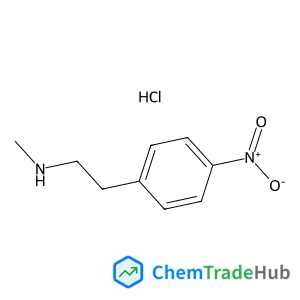
N-Methyl-2-(4-nitrophenyl)ethanamine hydrochloride (1:1)
CAS Number:
166943-39-1
Molecular Formula:
C9H13ClN2O2
Recommended Suppliers




Disclaimer
This page provides academic journal information for reference and research purposes only. We are not affiliated with any journal publishers and do not handle publication submissions. For publication-related inquiries, please contact the respective journal publishers directly.
If you notice any inaccuracies in the information displayed, please contact us at support@chemtradehub.com. We will promptly review and address your concerns.