


![4-(4-{4-[4-Fluoro-3-(trifluoromethyl)phenyl]-1-methyl-1H-imidazol-2-yl}-1-piperidinyl)-1H-pyrazolo[3,4-d]pyrimidine 4-methylbenzenesulfonate (1:1) structure](https://static.chemtradehub.com/structs/108/1082949-68-5-00b6.webp "4-(4-{4-[4-Fluoro-3-(trifluoromethyl)phenyl]-1-methyl-1H-imidazol-2-yl}-1-piperidinyl)-1H-pyrazolo[3,4-d]pyrimidine 4-methylbenzenesulfonate (1:1) structure")
4-(4-{4-[4-Fluoro-3-(trifluoromethyl)phenyl]-1-methyl-1H-imidazol-2-yl}-1-piperidinyl)-1H-pyrazolo[3,4-d]pyrimidine 4-methylbenzenesulfonate (1:1)
CAS Number:
1082949-68-5
Molecular Formula:
C28H27F4N7O3S
Taegon Jeon, Gyeong Ho Cha, Sung Chul Jung
Site disorder between S and Cl anions is an important feature of argyrodite Li6PS5Cl, which is a promising solid electrolyte for all-solid-state batteries. However, the fundamental aspects of the S/Cl disorder in Li6PS5Cl remain veiled. This first-principles study revealed how S/Cl disorder changes the material properties of Li6PS5Cl. The S/Cl disorder greatly enhances the stability of Li6PS5Cl, leading to the formation of the most stable Li6PS5Cl structure when the degree of S/Cl disorder (x), which is defined as the percentage of 4d sites occupied by Cl, is approximately 41%. The improved stability of Li6PS5Cl is attributed to Li redistribution by the S/Cl disorder, which enriches and depletes Li ions around S and Cl, respectively, through the movement of some Li ions from around Cl to around S, maximizing and minimizing the strong Li–S and weak Li–Cl interactions, respectively. The S/Cl disorder significantly increases Li conductivity by activating all three types of Li jumps, i.e., doublet, intracage, and intercage, resulting in the highest conductivity of 4.6 mS cm−1 at x = 50%. The activation of Li jumps, especially intercage jumps, results from the site exchange between S and Cl, which causes an environment in which migrating Li ions break the weak Li–Cl bond rather than the strong Li–S bond, thereby reducing diffusion barriers.

Environmental Toxicology and Pharmacology

Nature Reviews Drug Discovery

Current Pharmaceutical Biotechnology

European Journal of Organic Chemistry

Journal of Enzyme inhibition and Medicinal Chemistry

Physical Chemistry Chemical Physics

Angewandte Chemie International Edition

Lab on a Chip

Photochemical & Photobiological Sciences

Journal of Medical Biochemistry
Carl Henrik Görbitz
DOI: 10.1039/B603080G
Esther Quintanilla, Fabio di Lena, Peter Chen
DOI: 10.1039/B607248H
En-Hua Kang, Pengcheng Jin, Yanqiang Yang, Junqi Sun, Jiacong Shen
DOI: 10.1039/B606927D
Yoshinori Yamanoi, Hiroshi Nishihara
DOI: 10.1039/B703342G
Tuan Anh Pham, Pilnam Kim, Moonkyoo Kwak, Kahp Y. Suh, Dong-Pyo Kim
DOI: 10.1039/B708480C
Frédéric Oswald, Yasuyuki Araki, Vincent Troiani, Ruben Caballero, Pilar de la Cruz, Osamu Ito, Fernando Langa
DOI: 10.1039/B711194K
Mary A. Reppy, Bradford A. Pindzola
DOI: 10.1039/B703691D
Yi Ma, Zhengbo Han, Yongke He, Liguo Yang
DOI: 10.1039/B708479J
Waste containing 2-Ethyl-4-Methyl-1H-Imidazole-5-Carbaldehyde (CAS: 88634-80-4) ...
Triethoxy(octyl)silane (CAS: 1385031-14-0) is widely used in the pharmaceuticals...
Several alternatives to 3-iodo-7-nitro-1H-indazole (CAS: 864724-64-1) exist in t...
Yes, there are alternatives to Benzene, bis[(trimethoxysilyl)ethyl] (CAS: 266317...
Isothiazole-3-carbonitrile (CAS: 1452-17-1) is generally considered safe when us...
(3-Chlorophenyl)methanol (CAS: 873-63-2) is considered low to moderately toxic. ...
(2S,3S)-2-Hydroxy-3-({[(2-methyl-2-propanyl)oxy]carbonyl}amino)-3-(2-naphthyl)pr...
Proper handling of methyl 2-(bromomethyl)-5-methoxybenzoate requires the use of ...
6,8-Dibromoimidazo[1,2-a]pyridine-2-carboxylic acid (CAS: 904805-36-3) is an aro...
3-Amino-5-bromo-2-pyridinecarbonitrile is considered safe when handled under pro...
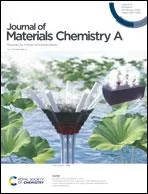
Journal of Materials Chemistry A, B & C cover high quality studies across all fields of materials chemistry. The journals focus on those theoretical or experimental studies that report new understanding, applications, properties and synthesis of materials. The journals have a strong history of publishing quality reports of interest to interdisciplinary communities and providing an efficient and rigorous service through peer review and publication. The journals are led by an international team of Editors-in-Chief and Associate Editors who are all active researchers in their fields. Journal of Materials Chemistry A, B & C are separated by the intended application of the material studied. Broadly, applications in energy and sustainability are of interest to Journal of Materials Chemistry A, applications in biology and medicine are of interest to Journal of Materials Chemistry B, and applications in optical, magnetic and electronic devices are of interest to Journal of Materials Chemistry C. More than one Journal of Materials Chemistry journal may be suitable for certain fields and researchers are encouraged to submit their paper to the journal that they feel best fits for their particular article. Example topic areas within the scope of Journal of Materials Chemistry A are listed below. This list is neither exhaustive nor exclusive. Artificial photosynthesis Batteries Carbon dioxide conversion Catalysis Fuel cells Gas capture/separation/storage Green/sustainable materials Hydrogen generation Hydrogen storage Photocatalysis Photovoltaics Self-cleaning materials Self-healing materials Sensors Supercapacitors Thermoelectrics Water splitting Water treatment
![4-chloro-N-[5-methyl-2-(7H-pyrrolo[2,3-d]pyrimidine-4-carbonyl)-3-pyridyl]-3-(trifluoromethyl)benzenesulfonamide structure](https://static.chemtradehub.com/structs/110/1100318-47-5-127d.webp "4-chloro-N-[5-methyl-2-(7H-pyrrolo[2,3-d]pyrimidine-4-carbonyl)-3-pyridyl]-3-(trifluoromethyl)benzenesulfonamide structure")




