












![L-Threonine, N-[[4,7,10-tris(carboxymethyl)-1,4,7,10-tetraazacyclododec-1-yl]acetyl]-D-phenylalanyl-L-cysteinyl-L-tyrosyl-D-tryptophyl-L-lysyl-L-threonyl-L-cysteinyl-, cyclic (2→7)-disulfide, acetate (salt) (9CI) structure](https://static.chemtradehub.com/structs/177/177943-89-4-6312.webp "L-Threonine, N-[[4,7,10-tris(carboxymethyl)-1,4,7,10-tetraazacyclododec-1-yl]acetyl]-D-phenylalanyl-L-cysteinyl-L-tyrosyl-D-tryptophyl-L-lysyl-L-threonyl-L-cysteinyl-, cyclic (2→7)-disulfide, acetate (salt) (9CI) structure")
A 3D chiral Zn(ii) coordination polymer with triple Zn–oba–Zn helical chains (oba = 4,4′-oxybis(benzoate))
Literature Information
Publication Date
2007-07-30
DOI
10.1039/B708479J
Impact Factor
6.222
Authors
Yi Ma, Zhengbo Han, Yongke He, Liguo Yang
View Original
Abstract
The solvothermal reaction of Zn(II) and 4,4′-oxybis(benzoic acid) in the presence of anhydrous ethanol leads to the generation of a novel 3D chiral coordination polymer with triple helical chains; the resulting crystals were not a racemic mixture but had an enantiomeric excess, which was confirmed by measuring the optical rotation of bulk samples using solid state vibrational circular dichroism (VCD).
Recommended Journals
Related Literature
Prediction of formation constants of metal–ammonia complexes in aqueous solution using density functional theory calculations
Robert D. Hancock, Libero J. Bartolotti
2004-01-27
Communication
DOI: 10.1039/B312518C
Peroxides in ordered nanoporous silicas: clean alternatives to transition metal oxidants for the removal of toxic gases
Michael J. Hudson, Dominic B. Jackson, Jessica L. Ward, Matt J. Chinn
2003-11-07
Communication
DOI: 10.1039/B310872D
Modelling catalytic turnover frequencies in ionic liquids: the determination of the bimolecular rate constant for solvent displacement from [(C6H6)Cr(CO)2Solv] in 1-n-butyl-3-methylimidazolium hexafluorophosphate
Konrad Swiderski, Andrew McLean, Charles M. Gordon, D. H. Vaughan
2004-02-03
Communication
DOI: 10.1039/B315781D
A template-free aqueous route to ZnO nanorod arrays with high optical property
Qun Tang, Wenjia Zhou, Jianmin Shen, Wu Zhang, Lingfen Kong
2004-02-16
Communication
DOI: 10.1039/B313387G
Thioglycosynthases: double mutant glycosidases that serve as scaffolds for thioglycoside synthesis
Jennifer Marles, R. Antony J. Warren
2004-01-05
Communication
DOI: 10.1039/B313155F
Unexpected cleavage of tetrahydrofuran by catalytic reductive lithiation
Stéphane Streiff, Nigel Ribeiro, Laurent Désaubry
2004-01-13
Communication
DOI: 10.1039/B312972A
Rational design of porous titanophosphates
Christian Serre, Francis Taulelle, Gérard Ferey
2003-08-28
Feature Article
DOI: 10.1039/B304703B
Controlled functionalization of gold nanoparticles through a solid phase synthesis approach
James G. Worden, Andrew W. Shaffer, Qun Huo
2004-02-04
Communication
DOI: 10.1039/B312819A
Structure and magnetism of a new pyrazolate bridged iron(II) spin crossover complex displaying a single HS–HS to LS–LS transition
Ben A. Leita, Boujemaa Moubaraki, Keith S. Murray, Jonathan P. Smith, John D. Cashion
2003-11-20
Communication
DOI: 10.1039/B311818E
Electrochemical wiring of α,ω-alkanedithiol molecules into an electrical circuit
Renata Bilewicz, Krzysztof Slowinski
2004-01-23
Communication
DOI: 10.1039/B314815G
You might also like
Compound Q&A
How should waste containing 2-Ethyl-4-Methyl-1H-Imidazole-5-Carbaldehyde (CAS: 88634-80-4) be handled?
Waste containing 2-Ethyl-4-Methyl-1H-Imidazole-5-Carbaldehyde (CAS: 88634-80-4) ...
88634-80-42-Ethyl-4-Methyl-1H-...
Compound Q&A
What industries use Triethoxy(octyl)silane (CAS: 1385031-14-0)?
Triethoxy(octyl)silane (CAS: 1385031-14-0) is widely used in the pharmaceuticals...
1385031-14-0Triethoxy(octyl)sila...
Compound Q&A
Are there alternatives to 3-iodo-7-nitro-1H-indazole (CAS: 864724-64-1) in synthesis?
Several alternatives to 3-iodo-7-nitro-1H-indazole (CAS: 864724-64-1) exist in t...
864724-64-13-iodo-7-nitro-1H-in...
Compound Q&A
Are there alternatives to Benzene, bis[(trimethoxysilyl)ethyl] (CAS: 266317-71-9) in synthesis?
Yes, there are alternatives to Benzene, bis[(trimethoxysilyl)ethyl] (CAS: 266317...
266317-71-9Benzene, bis[(trimet...
Compound Q&A
Is Isothiazole-3-carbonitrile (CAS: 1452-17-1) safe?
Isothiazole-3-carbonitrile (CAS: 1452-17-1) is generally considered safe when us...
1452-17-1Isothiazole-3-carbon...
Compound Q&A
Is (3-Chlorophenyl)methanol (CAS: 873-63-2) safe?
(3-Chlorophenyl)methanol (CAS: 873-63-2) is considered low to moderately toxic. ...
873-63-2(3-Chlorophenyl)meth...
Compound Q&A
How is (2S,3S)-2-Hydroxy-3-({[(2-methyl-2-propanyl)oxy]carbonyl}amino)-3-(2-naphthyl)propanoic acid (CAS: 959583-98-3) typically synthesized?
(2S,3S)-2-Hydroxy-3-({[(2-methyl-2-propanyl)oxy]carbonyl}amino)-3-(2-naphthyl)pr...
959583-98-3(2S,3S)-2-Hydroxy-3-...
Compound Q&A
What precautions should be taken when handling Methyl 2-(bromomethyl)-5-methoxybenzoate (CAS: 788081-99-2)?
Proper handling of methyl 2-(bromomethyl)-5-methoxybenzoate requires the use of ...
788081-99-2Methyl 2-(bromomethy...
Compound Q&A
What is 6,8-Dibromoimidazo[1,2-a]pyridine-2-carboxylic acid (CAS: 904805-36-3)?
6,8-Dibromoimidazo[1,2-a]pyridine-2-carboxylic acid (CAS: 904805-36-3) is an aro...
904805-36-36,8-Dibromoimidazo[1...
Compound Q&A
Is 3-Amino-5-bromo-2-pyridinecarbonitrile (CAS: 573675-27-1) safe?
3-Amino-5-bromo-2-pyridinecarbonitrile is considered safe when handled under pro...
573675-27-13-Amino-5-bromo-2-py...
Source Journal
Chemical Communications

CiteScore:
8.6
Self-citation Rate:
4.7%
Articles per Year:
2458
ChemComm publishes urgent research which is of outstanding significance and interest to experts in the field, while also appealing to the journal’s broad chemistry readership. Our communication format is ideally suited to short, urgent studies that are of such importance that they require accelerated publication. Our scope covers all topics in chemistry, and research at the interface of chemistry and other disciplines (such as materials science, nanoscience, physics, engineering and biology) where there is a significant novelty in the chemistry aspects. Major topic areas covered include: Analytical Chemistry Catalysis Chemical Biology and medicinal chemistry Computational Chemistry and Machine Learning Energy and sustainable chemistry Environmental Chemistry Green Chemistry Inorganic Chemistry Materials Chemistry Nanoscience Organic Chemistry Physical Chemistry Polymer Chemistry Supramolecular Chemistry
Recommended Compounds
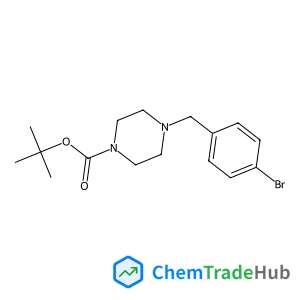
2-Methyl-2-propanyl 4-(4-bromobenzyl)-1-piperazinecarboxylate
CAS Number:
844891-10-7
Molecular Formula:
C16H23BrN2O2
Recommended Suppliers




Disclaimer
This page provides academic journal information for reference and research purposes only. We are not affiliated with any journal publishers and do not handle publication submissions. For publication-related inquiries, please contact the respective journal publishers directly.
If you notice any inaccuracies in the information displayed, please contact us at support@chemtradehub.com. We will promptly review and address your concerns.