












![{3-[Bis(4-hydroxyphenyl)methyl]-1-[2-(dimethylamino)ethyl]-1H-indol-2-yl}[4-(2-chlorophenyl)-1-piperazinyl]methanone structure](https://static.chemtradehub.com/structs/170/170365-25-0-e4d7.webp "{3-[Bis(4-hydroxyphenyl)methyl]-1-[2-(dimethylamino)ethyl]-1H-indol-2-yl}[4-(2-chlorophenyl)-1-piperazinyl]methanone structure")
{3-[Bis(4-hydroxyphenyl)methyl]-1-[2-(dimethylamino)ethyl]-1H-indol-2-yl}[4-(2-chlorophenyl)-1-piperazinyl]methanone
CAS Number:
170365-25-0
Molecular Formula:
C36H37ClN4O3
Jeffrey S. S. K. Formen, Diandra S. Hassan, Christian Wolf
The analysis of mixtures of chiral compounds is a common task in academic and industrial laboratories typically achieved by laborious and time-consuming physical separation of the individual stereoisomers to allow interference-free quantification, for example using chiral chromatography coupled with UV detection. Current practice thus impedes high-throughput and slows down progress in countless chiral compound development projects. Here we describe a chemometric solution to this problem using a redox-responsive naphthoquinone that enables chromatography-free click chemistry sensing of challenging mixtures. The achiral probe covalently binds amino alcohols within a few minutes at room temperature and generates characteristic UVA and CDA spectra that are intentionally altered via sodium borohydride reduction to provide a second, strikingly different chiroptical data set (UVB and CDB). Chemometric partial least squares processing of the chiroptical outputs then enables spectral deconvolution and accurate determination of individual analyte concentrations. The success of this approach is demonstrated with 35 samples covering considerably varied total analyte amounts and stereoisomeric ratios. All chemicals and machine learning algorithms are readily available and can be immediately adapted by any laboratory.
Changjiang Yu, Xingxing Ma, Qiuling Song
DOI: 10.1039/D0QO00775G
Alexandra A. Ageshina, Igor V. Alabugin
DOI: 10.1039/C9OB00615J
Hua Deng, Tian-Tian Liu, Zheng-Dong Ding, Wu-Lin Yang, Xiaoyan Luo
DOI: 10.1039/D0QO00789G
Qilong Li, Yuanyuan Zhang, Zijun Chen, Xiangqiang Pan, Zhengbiao Zhang, Jian Zhu
DOI: 10.1039/D0QO00640H
Jessica A. Hutchinson, Ian W. Hamley, Charlotte J. C. Edwards-Gayle, Valeria Castelletto, Cristian Piras, Rainer Cramer, Radoslaw Kowalczyk, Jani Seitsonen, Janne Ruokolainen, Robert P. Rambo
DOI: 10.1039/C9OB00550A
Meng-Ting Suo, Shuo Yang, Jun-Cheng Yang, Ze-Yu Liu, Jun-Jie Zhang, Li-Na Guo
DOI: 10.1039/D0QO00671H
Adiki Raja Sekhar, Bhagaban Mallik, Vimlesh Kumar, Jeyaraman Sankar
DOI: 10.1039/C9OB00408D
Lin-Sheng Lei, Cao-Gen Xue, Xue-Tao Xu, Da-Ping Jin, Wen Bao, Huan Liang, Kun Zhang, Abdullah M. Asiri
DOI: 10.1039/C9OB00510B
Tao Niu, Shan Yang, Xinxin Wu
DOI: 10.1039/D0QO00952K
Sopan Valiba Shinde, Pinaki Talukdar
DOI: 10.1039/C9OB00554D
2-(2-Chloroacetamido)-3-phenylpropanoic acid (CAS: 7765-11-9) is generally consi...
2-(Benzyloxy)-5-bromobenzoic acid can be handled safely if appropriate precautio...
(4-Methyl-1,2,5-oxadiazol-3-yl)methanamine hydrochloride is a chemical compound ...
2-(5-Hexylthiophen-2-yl)-4,4,5,5-tetramethyl-1,3,2-dioxaborolane (CAS: 917985-54...
While 4-(8-Methyl-9H-1,3-dioxolo[4,5-h][2,3]benzodiazepin-5-yl)benzenamine (CAS:...
The market for tert-butyl 3-hydroxy-4,5,7,8-tetrahydro-2H-pyrazolo[3,4-d]azepine...
Waste containing 3,5-Diamino-1H-pyrazole-4-carbonitrile (CAS: 6844-58-2) should ...
(6-Fluoro-3-pyridinyl)boronic acid can be synthesized through the reaction of 6-...
Dibenzyl carbonimidoylbiscarbamate (CAS: 10065-79-9) finds applications in vario...
The market for (beta,beta,2,3,4,5,6-~2~H_7_)Phenylalanine (CAS: 74228-83-4) is g...
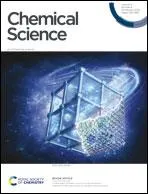
Our journal has a wide-ranging scope which covers the full breadth of the chemical sciences. The research we publish contains the sorts of novel ideas, challenging questions and progressive thinking that bring undiscovered breakthroughs within reach. Your paper could focus on a single area, or cross many. It could be beyond the accepted bounds of the chemical sciences. It might address an immediate challenge, contribute to a future breakthrough or be wholly conceptual. We’re a team from every field of the chemical sciences, and know from experience that breakthroughs that drive the solutions to global challenges can come from anywhere, at any time. You could even start an entirely new area of research. Too bold? Too progressive? No such thing
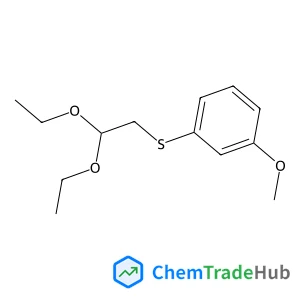
![Heptadecanoic Acid 3-[2-[4-(6-Fluoro-1,2-benzisoxazol-3-yl)-1-piperidinyl]ethyl]-6,7,8,9-tetrahydro-2-methyl-4-oxo-4H-pyrido[1,2-a]pyrimidin-9-yl Ester structure](https://static.chemtradehub.com/structs/140/1404053-62-8-9da4.webp "Heptadecanoic Acid 3-[2-[4-(6-Fluoro-1,2-benzisoxazol-3-yl)-1-piperidinyl]ethyl]-6,7,8,9-tetrahydro-2-methyl-4-oxo-4H-pyrido[1,2-a]pyrimidin-9-yl Ester structure")
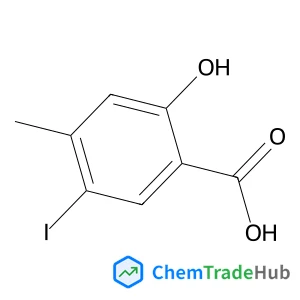
![3,7-Di(1,1':3',1''-terphenyl-5'-yl)-10,11,12,13-tetrahydrodiindeno[7,1-de:1',7'-fg][1,3,2]dioxaphosphocin-5-ol 5-oxide structure](https://static.chemtradehub.com/structs/135/1352810-38-8-3f10.webp "3,7-Di(1,1':3',1''-terphenyl-5'-yl)-10,11,12,13-tetrahydrodiindeno[7,1-de:1',7'-fg][1,3,2]dioxaphosphocin-5-ol 5-oxide structure")




