













Covalent inorganic complexes enabled zinc blende to wurtzite phase changes in CdSe nanoplatelets
Literature Information
Publication Date
2023-11-08
DOI
10.1039/D3SC04296K
Impact Factor
9.825
Authors
Xinke Kong, Lin Ru, Junjun Ge, Yalei Deng, Pan-ke Zhang, Yuanyuan Wang
View Original
Abstract
Phase changes in colloidal semiconductor nanocrystals (NCs) are essential in material design and device applications. However, the transition pathways have yet to be sufficiently studied, and a better understanding of the underlying mechanisms is needed. In this work, a complete ligand-assisted phase transition from zinc blende (ZB) to wurtzite (WZ) is observed in CdSe nanoplatelets (NPLs). By monitoring with in situ absorption spectra along with electrospray ionization mass spectrometry (ESI-MS), we demonstrated that the transition process is a ligand-assisted covalent inorganic complex (CIC)-mediated phase transition pathway, which involves three steps, ligand exchange on ZB CdSe NPLs (Step 1), dissolution of NPLs to form CICs (Step 2), and conversion of CdSe–CIC assemblies to WZ CdSe NPLs (Step 3). In particular, CICs can be directly anisotropically grown to WZ CdSe NPL without other intermediates, following pseudo-first-order kinetics (kobs = 9.17 × 10⁻⁵ s−1). Furthermore, we demonstrated that CICs are also present and play an essential role in the phase transition of ZnS NPLs from WZ to ZB structure. This study proposes a new crystal transformation pathway and elucidates a general phase-transition mechanism, facilitating precise functional nanomaterial design.
Related Literature
Copper-catalyzed domino synthesis of benzo[b]thiophene/imidazo[1,2-a]pyridines by sequential Ullmann-type coupling and intramolecular C(sp2)–H thiolation
Kelu Yan, Daoshan Yang, Wei Wei, Shenglei Lu, Guoqing Li, Caixia Zhao, Qingyun Zhang, Hua Wang
2015-11-17
Research Article
DOI: 10.1039/C5QO00311C
Synthesis of α-enamino esters via Cu(ii)-promoted dehydrogenation of α-amino acid esters: application to the synthesis of polysubstituted pyrroles
Nini Zhou, Zhongle Li, Zhixiang Xie
2015-09-29
Research Article
DOI: 10.1039/C5QO00182J
New anthracene-based organic dyes: the flexible position of the anthracene moiety bearing isolation groups in the conjugated bridge and the adjustable cell performance
Huiyang Li, Manman Fang, Ting Xu, Yingqin Hou, Runli Tang, Junnian Chen, Linfeng Liu, Hongwei Han, Tianyou Peng, Qianqian Li, Zhen Li
2015-12-07
Research Article
DOI: 10.1039/C5QO00377F
Palladium-catalysed coupling reaction of aminals with N-sulfonyl hydrazones to give allylic sulfones
Hanmin Huang
2015-12-22
Research Article
DOI: 10.1039/C5QO00381D
Exploiting ortho-substitution effect on formation of oxygen-containing [10]paracyclophane through ring-closing metathesis
Li Yang, Liqiang Song, Chong Huang, Mingzheng Huang, Bo Liu
2015-12-22
Research Article
DOI: 10.1039/C5QO00373C
An organocatalytic enantioselective vinylogous Mannich reaction of α,α-dicyanoolefins with isatin N-Boc ketimines
Yi Zhu, Yao Li, Qingbin Meng, Xin Li
2016-03-29
Research Article
DOI: 10.1039/C6QO00038J
Metal-free oxidative hydrophosphinylation of 1,7-enynes
De-Cai Wang, Bo Jiang, Wen-Juan Hao, Ping Wei, Ai-Fang Wang, Shu-Jiang Tu
2016-01-25
Research Article
DOI: 10.1039/C5QO00430F
Controlled TfOH- or AuCl-catalyzed cycloisomerization and tandem hydrolytic defluorination of 1,2-allenyl perfluoroalkyl ketones
Can Xue, Xin Huang, Shangze Wu, Chunling Fu, Shengming Ma
2016-03-30
Research Article
DOI: 10.1039/C6QO00001K
You might also like
Compound Q&A
What is Ethyl 3-cyclohexylpropanoate (CAS: 10094-36-7)?
Ethyl 3-cyclohexylpropanoate is a clear, colorless to light yellow liquid with a...
10094-36-7Ethyl 3-cyclohexylpr...
Compound Q&A
How should waste containing 2-(Hydroxymethyl)-5-(methoxycarbonyl)-6-methyl-4-(2-nitrophenyl)nicotinic acid (CAS: 34783-31-8) be handled?
Waste containing 2-(Hydroxymethyl)-5-(methoxycarbonyl)-6-methyl-4-(2-nitrophenyl...
34783-31-82-(Hydroxymethyl)-5-...
Compound Q&A
How should waste containing 2,4,6-Tris(pentafluoroethyl)-1,3,5-triazine (CAS: 858-46-8) be handled?
Waste containing 2,4,6-Tris(pentafluoroethyl)-1,3,5-triazine (CAS: 858-46-8) sho...
858-46-82,4,6-Tris(pentafluo...
Compound Q&A
What precautions should be taken when handling Chloroac-nle-oh (CAS: 56787-36-1)?
When handling Chloroac-nle-oh (CAS: 56787-36-1), it is essential to wear appropr...
56787-36-1Chloroac-nle-oh
Compound Q&A
What industries use Ethyl 6-phenylimidazo[2,1-b][1,3]thiazole-3-carboxylate (CAS: 752244-05-6)?
Ethyl 6-phenylimidazo[2,1-b][1,3]thiazole-3-carboxylate is primarily used in the...
752244-05-6Ethyl 6-phenylimidaz...
Compound Q&A
Are there alternatives to alpha-(2-Bromophenyl)benzylamine (CAS: 55095-15-3) in synthesis?
Alternatives to alpha-(2-Bromophenyl)benzylamine (CAS: 55095-15-3) in synthesis ...
55095-15-3alpha-(2-Bromophenyl...
Compound Q&A
How should waste containing 2-Chloro-5-methoxypyridine (CAS: 139585-48-1) be handled?
Waste containing 2-Chloro-5-methoxypyridine (CAS: 139585-48-1) should be managed...
139585-48-12-Chloro-5-methoxypy...
Compound Q&A
What industries use 1-(4-Methoxyphenyl)-2,5-dimethyl-1H-pyrrole (CAS: 5044-27-9)?
1-(4-Methoxyphenyl)-2,5-dimethyl-1H-pyrrole (CAS: 5044-27-9) is used in various ...
5044-27-91-(4-Methoxyphenyl)-...
Compound Q&A
Are there alternatives to 3-Bromo-5-(N-Boc)aminomethylisoxazole (CAS: 903131-45-3) in synthesis?
There are alternative reagents and compounds that can be used in the synthesis o...
903131-45-33-Bromo-5-(N-Boc)ami...
Compound Q&A
What is Tungsten(IV) oxide (CAS: 12036-22-5)?
Tungsten(IV) oxide, also known as tungsten dioxide, is a chemical compound with ...
12036-22-5Tungsten(IV) oxide
Source Journal
Chemical Science
CiteScore:
14.4
Self-citation Rate:
3.9%
Articles per Year:
1413
Our journal has a wide-ranging scope which covers the full breadth of the chemical sciences. The research we publish contains the sorts of novel ideas, challenging questions and progressive thinking that bring undiscovered breakthroughs within reach. Your paper could focus on a single area, or cross many. It could be beyond the accepted bounds of the chemical sciences. It might address an immediate challenge, contribute to a future breakthrough or be wholly conceptual. We’re a team from every field of the chemical sciences, and know from experience that breakthroughs that drive the solutions to global challenges can come from anywhere, at any time. You could even start an entirely new area of research. Too bold? Too progressive? No such thing
Recommended Compounds

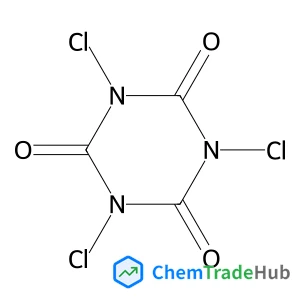


Recommended Suppliers





Disclaimer
This page provides academic journal information for reference and research purposes only. We are not affiliated with any journal publishers and do not handle publication submissions. For publication-related inquiries, please contact the respective journal publishers directly.
If you notice any inaccuracies in the information displayed, please contact us at support@chemtradehub.com. We will promptly review and address your concerns.