












![N-{15-[(2,5-Dioxo-1-pyrrolidinyl)oxy]-15-oxo-3,6,9,12-tetraoxapentadec-1-yl}-2-(2-propyn-1-yloxy)acetamide structure](https://static.chemtradehub.com/structs/210/2101206-92-0-2eb5.webp "N-{15-[(2,5-Dioxo-1-pyrrolidinyl)oxy]-15-oxo-3,6,9,12-tetraoxapentadec-1-yl}-2-(2-propyn-1-yloxy)acetamide structure")
N-{15-[(2,5-Dioxo-1-pyrrolidinyl)oxy]-15-oxo-3,6,9,12-tetraoxapentadec-1-yl}-2-(2-propyn-1-yloxy)acetamide
CAS Number:
2101206-92-0
Molecular Formula:
C20H30N2O10
Zijie Zhou, Ling Ye, Lu Yang, Xinying Li, Zhigang Zhao, Xuefeng Li
A three-component Povarov reaction has been established to enantioselectively construct pyrroloquinolines in the presence of a chiral phosphoric acid. This one-pot process affords the structurally important pyrroloquinolines exclusively as a single diastereomer in 53 to >99% yields with 55 to 99% ee. This catalytic protocol provides concise access to enantioenriched pyrroloquinolines, enabling the regiospecific construction of three types of annulated cycles in the carbocyclic ring of indole. This approach presents an alternative methodology for the straightforward functionalization of the carbocyclic ring of indoles.
S. A. Paniagua, E. L. Li, S. R. Marder
DOI: 10.1039/C3CP54637C
Jingde Li, Eric Croiset, Luis Ricardez-Sandoval
DOI: 10.1039/C3CP54376E
Yuqi Wu, Gongxuan Lu
DOI: 10.1039/C3CP54461C
Ewelina Szymańska, Iztok Čadež, E. Krishnakumar, Nigel J. Mason
DOI: 10.1039/C3CP54459A
DOI: 10.1039/C3CP54065K
Matthieu Sala, Oliver M. Kirkby, Stéphane Guérin, Helen H. Fielding
DOI: 10.1039/C3CP54418D
Hong-Guang Xu, Wei-Jun Zheng, Jun Li
DOI: 10.1039/C3CP54478H
Shih-Yun Chen, Ren-Jie Chen, William Lee, Chung-Li Dong, Alexandre Gloter
DOI: 10.1039/C3CP54613F
Jin Wang, Brahmananda Chakraborty, Jacob Eapen
DOI: 10.1039/C3CP52632A
N-(4-Methoxybenzyl)-2-pyridinamine (CAS: 52818-63-0) is increasingly being used ...
When handling Ethyl 4-(2-chlorophenyl)-1,3-thiazole-2-carboxylate, appropriate p...
Diethyldiselane (CAS: 628-39-7) is classified under the Globally Harmonized Syst...
The market for oxocopper (CAS: 12053-18-8) is primarily driven by its use in cat...
The market for 5-{[(2-Methyl-2-propanyl)oxy]carbonyl}-5-azaspiro[2.4]heptane-7-c...
2-(1-Pyrrolidinyl)-4-pyridinamine is a chemical compound with the CAS number 359...
2-(3-Pyridinyl)-1-azabicyclo[2.2.2]octane (CAS: 91556-75-1) is a crystalline sol...
(S)-Alpha-allyl-proline hydrochloride is usually synthesized via a Wittig reacti...
3-Methyl-1,2-oxazole-5-carboxylic acid (CAS: 4857-42-5) is an organic compound w...
Lys-SMCC-DM1 is synthesized via a multi-step process involving the coupling of S...

Organic Chemistry Frontiers publishes high-quality research from across organic chemistry. Emphases are placed on studies that make significant contributions to the field of organic chemistry by reporting either new or significantly improved protocols or methodologies. Topics include, but are not limited to the following: Organic synthesis Development of synthetic methodologies Catalysis Natural products Functional organic materials Supramolecular and macromolecular chemistry Physical and computational organic chemistry
![N-{[(2-Methyl-2-propanyl)oxy]carbonyl}-L-methionylglycine structure](https://static.chemtradehub.com/structs/234/23446-03-9-e1e5.webp "N-{[(2-Methyl-2-propanyl)oxy]carbonyl}-L-methionylglycine structure")
![1,10-bis(3,5-dimethylphenyl)-12-hydroxy-4,5,6,7-tetrahydroiindeno[7,1-de:1',7'-fg][1,3,2]dioxaphosphocine 12-oxide structure](https://static.chemtradehub.com/structs/141/1412439-82-7-b9a9.webp "1,10-bis(3,5-dimethylphenyl)-12-hydroxy-4,5,6,7-tetrahydroiindeno[7,1-de:1',7'-fg][1,3,2]dioxaphosphocine 12-oxide structure")
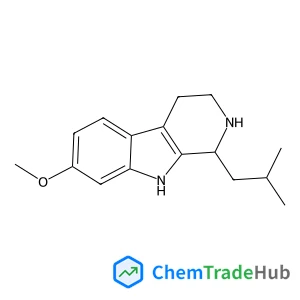
![1-[6-(1H-Imidazol-1-yl)-3-pyridinyl]methanamine structure](https://static.chemtradehub.com/structs/914/914637-08-4-8825.webp "1-[6-(1H-Imidazol-1-yl)-3-pyridinyl]methanamine structure")






