


A non-diazo approach to functionalized (2-furyl)-2-pyrrolidines through a cascade reaction of enynal-derived zinc carbenoids with β-arylaminoketones
Literature Information
Publication Date
2023-10-12
DOI
10.1039/D3QO01354E
Impact Factor
5.281
Authors
Chenxin Ou, Bidhan Ghosh, Indrajeet Sharma
View Original
Abstract
This study introduces a cascade approach for synthesizing functionalized (2-furyl)-2-pyrrolidines, showcasing both convergence and remarkable stereoselectivity. This domino process proceeds through an N–H insertion into an enynal-derived metal–carbenoid, followed by an intramolecular aldol reaction to provide pyrrolidines with high diastereoselectivity (98 : 2). This chemistry utilizes Earth-abundant zinc chloride as a catalyst with loading as low as 1 mol%. This method operates under mild conditions and demonstrates high chemoselectivity by accommodating substrates bearing functionalities such as free alcohols, alkenes, and alkynes.
Recommended Journals

CrystEngComm

European Journal of Organic Chemistry

Current Pharmaceutical Biotechnology

Journal of Enzyme inhibition and Medicinal Chemistry

Faraday Discussions

Environmental Toxicology and Pharmacology

Photochemical & Photobiological Sciences

Coloration Technology

Molecular Diversity

Mini-Reviews in Medicinal Chemistry
Related Literature
Contribution of hydrogen bonding to charge-transfer induced surface-enhanced Raman scattering of an intermolecular system comprising p-aminothiophenol and benzoic acid
Yue Wang, Wei Ji, Zhi Yu, Ran Li, Xu Wang, Wei Song, Weidong Ruan, Bing Zhao, Yukihiro Ozaki
2013-12-09
Paper
DOI: 10.1039/C3CP54856B
New insight into the potential energy landscape and relaxation pathways of photoexcited aniline from CASSCF and XMCQDPT2 electronic structure calculations
Matthieu Sala, Oliver M. Kirkby, Stéphane Guérin, Helen H. Fielding
2014-01-02
Paper
DOI: 10.1039/C3CP54418D
Optimization of amorphous silicon double junction solar cells for an efficient photoelectrochemical water splitting device based on a bismuth vanadate photoanode
Lihao Han, Paula Perez Rodriguez, Bernard Dam, Miro Zeman, Arno H. M. Smets
2014-01-02
Paper
DOI: 10.1039/C3CP55035D
Progress on extending the light absorption spectra of photocatalysts
Zeyan Wang, Yuanyuan Liu, Baibiao Huang, Ying Dai, Zaizhu Lou, Gang Wang, Xiaoyang Zhang, Xiaoyan Qin
2013-11-11
Perspective
DOI: 10.1039/C3CP53817F
The relationship between enhanced enzyme activity and structural dynamics in ionic liquids: a combined computational and experimental study
Sung Ho Ha, Latsavongsakda Sethaphong, Yoon-Mo Koo, Yaroslava G. Yingling
2013-12-02
Paper
DOI: 10.1039/C3CP52516C
Promising electrochemical hydrogen storage properties of thick Mg–Pd films obtained by insertion of thin Ti interlayers
Gongbiao Xin, Yanyan Wang, He Fu, Jie Zheng, Xingguo Li
2013-12-09
Paper
DOI: 10.1039/C3CP54714K
Mapping the structure of amyloid nucleation precursors by protein engineering kinetic analysis
David Ruzafa, Lorena Varela, Ana I. Azuaga, Francisco Conejero-Lara, Bertrand Morel
2013-12-06
Paper
DOI: 10.1039/C3CP54383H
Formation of hydroxyacetonitrile (HOCH2CN) and polyoxymethylene (POM)-derivatives in comets from formaldehyde (CH2O) and hydrogen cyanide (HCN) activated by water
Grégoire Danger, Albert Rimola, Ninette Abou Mrad, Fabrice Duvernay, Gaël Roussin, Patrice Theule, Thierry Chiavassa
2013-10-18
Paper
DOI: 10.1039/C3CP54034K
Reply to the ‘Comment on “Volume shrinkage of a metal–organic framework host induced by the dispersive attraction of guest gas molecules”’ by F.-X. Coudert, A. H. Fuchs, and A. V. Neimark, Phys. Chem. Chem. Phys.
Jaeyong Joo, Hyungjun Kim, Sang Soo Han
2014-01-07
Comment
DOI: 10.1039/C3CP54473G
You might also like
Compound Q&A
What is the market or research trend for N-(4-Methoxybenzyl)-2-pyridinamine (CAS: 52818-63-0)?
N-(4-Methoxybenzyl)-2-pyridinamine (CAS: 52818-63-0) is increasingly being used ...
52818-63-0N-(4-Methoxybenzyl)-...
Compound Q&A
What precautions should be taken when handling Ethyl 4-(2-chlorophenyl)-1,3-thiazole-2-carboxylate (CAS: 1050507-06-6)?
When handling Ethyl 4-(2-chlorophenyl)-1,3-thiazole-2-carboxylate, appropriate p...
1050507-06-6Ethyl 4-(2-chlorophe...
Compound Q&A
What regulatory guidelines apply to diethyldiselane (CAS: 628-39-7)?
Diethyldiselane (CAS: 628-39-7) is classified under the Globally Harmonized Syst...
628-39-7Diethyldiselane
Compound Q&A
What is the market or research trend for oxocopper (CAS: 12053-18-8)?
The market for oxocopper (CAS: 12053-18-8) is primarily driven by its use in cat...
12053-18-8oxocopper; oxo-(oxoc...
Compound Q&A
What is the market or research trend for 5-{[(2-Methyl-2-propanyl)oxy]carbonyl}-5-azaspiro[2.4]heptane-7-carboxylic acid?
The market for 5-{[(2-Methyl-2-propanyl)oxy]carbonyl}-5-azaspiro[2.4]heptane-7-c...
1268519-54-55-{[(2-Methyl-2-prop...
Compound Q&A
What is 2-(1-Pyrrolidinyl)-4-pyridinamine (CAS: 35981-63-6)?
2-(1-Pyrrolidinyl)-4-pyridinamine is a chemical compound with the CAS number 359...
35981-63-62-(1-Pyrrolidinyl)-4...
Compound Q&A
What are the physical and chemical properties of 2-(3-Pyridinyl)-1-azabicyclo[2.2.2]octane (CAS: 91556-75-1)?
2-(3-Pyridinyl)-1-azabicyclo[2.2.2]octane (CAS: 91556-75-1) is a crystalline sol...
91556-75-12-(3-Pyridinyl)-1-az...
Compound Q&A
How is (S)-Alpha-allyl-proline hydrochloride (CAS: 129704-91-2) typically synthesized?
(S)-Alpha-allyl-proline hydrochloride is usually synthesized via a Wittig reacti...
129704-91-2(S)-Alpha-allyl-prol...
Compound Q&A
What is 3-Methyl-1,2-oxazole-5-carboxylic acid (CAS: 4857-42-5)?
3-Methyl-1,2-oxazole-5-carboxylic acid (CAS: 4857-42-5) is an organic compound w...
4857-42-53-Methyl-1,2-oxazole...
Compound Q&A
How is Lys-SMCC-DM1 (CAS: 1281816-04-3) typically synthesized?
Lys-SMCC-DM1 is synthesized via a multi-step process involving the coupling of S...
1281816-04-3Lys-SMCC-DM1
Source Journal
Organic Chemistry Frontiers

CiteScore:
7.8
Self-citation Rate:
8.7%
Articles per Year:
724
Organic Chemistry Frontiers publishes high-quality research from across organic chemistry. Emphases are placed on studies that make significant contributions to the field of organic chemistry by reporting either new or significantly improved protocols or methodologies. Topics include, but are not limited to the following: Organic synthesis Development of synthetic methodologies Catalysis Natural products Functional organic materials Supramolecular and macromolecular chemistry Physical and computational organic chemistry
Recommended Compounds
![5'-Fluoro-[2,3'-biindolinylidene]-2',3-dione structure](https://static.chemtradehub.com/structs/251/251903-00-1-9cb1.webp "5'-Fluoro-[2,3'-biindolinylidene]-2',3-dione structure")
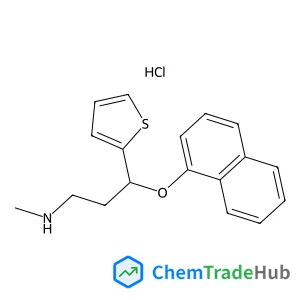
N-Methyl-3-(1-naphthyloxy)-3-(2-thienyl)-1-propanamine hydrochloride (1:1)
CAS Number:
1188266-11-6
Molecular Formula:
C18H20ClNOS
![N-{[(2-Methyl-2-propanyl)oxy]carbonyl}-L-methionylglycine structure](https://static.chemtradehub.com/structs/234/23446-03-9-e1e5.webp "N-{[(2-Methyl-2-propanyl)oxy]carbonyl}-L-methionylglycine structure")
N-{[(2-Methyl-2-propanyl)oxy]carbonyl}-L-methionylglycine
CAS Number:
23446-03-9
Molecular Formula:
C12H22N2O5S
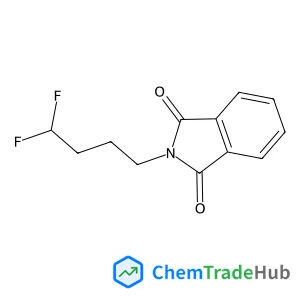
2-(4,4-Difluorobutyl)-1H-isoindole-1,3(2H)-dione
CAS Number:
1265341-14-7
Molecular Formula:
C12H11F2NO2
Recommended Suppliers





Disclaimer
This page provides academic journal information for reference and research purposes only. We are not affiliated with any journal publishers and do not handle publication submissions. For publication-related inquiries, please contact the respective journal publishers directly.
If you notice any inaccuracies in the information displayed, please contact us at support@chemtradehub.com. We will promptly review and address your concerns.