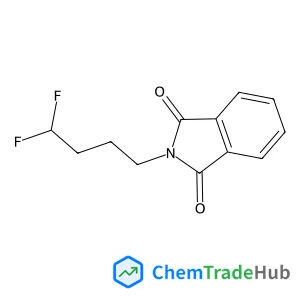
2-(4,4-Difluorobutyl)-1H-isoindole-1,3(2H)-dione
CAS Number:
1265341-14-7
Molecular Formula:
C12H11F2NO2
Yue Wang, Wei Ji, Zhi Yu, Ran Li, Xu Wang, Wei Song, Weidong Ruan, Bing Zhao, Yukihiro Ozaki
We investigated the influence of hydrogen bonds (H-bonds) on the intermolecular interactions of a system comprising p-aminothiophenol (PATP) and benzoic acid (BA) using surface-enhanced Raman scattering (SERS) for the first time. In this system, H-bonds form through intermolecular interactions between the –NH2 and –COOH groups and promote the charge-transfer (CT) transition from the Ag substrate to the adsorbed PATP molecules. Accordingly, the intensities of the non-totally symmetric vibrations (the b2-type bands) of PATP are influenced through the Herzberg–Teller contribution. This is clearly a BA concentration-dependent phenomenon. This behaviour can be attributed to an increase in the degree of conjugation of the system, which facilitates the CT process in the system with H-bonds. Furthermore, temperature-dependent SERS experiments and their two-dimensional (2D) correlation analysis confirmed that the formation of H-bonds facilitated the CT transition between the adsorbed molecules and substrate. The degree of CT was reduced by H-bond breakage that occurred with increasing temperature. An additional SERS experiment involving substituted BA molecules yielded similar conclusions.

Journal of Heterocyclic Chemistry

Planta Medica

European Journal of Wood and Wood Products

Journal of Organometallic Chemistry

Science

Journal of Medicinal Chemistry

Molecular Pharmacology

Pharmacological Reviews

Proceedings of the National Academy of Sciences of the United States of America

Journal of Catalysis
Naoki Komatsu
DOI: 10.1039/B208107E
Ji Liu, Qing-Yun Liu, Xing-Xiao Fang, Gong-Qing Liu, Yong Ling
DOI: 10.1039/C8OB02161A
Karim Muratov, Ekaterina Kuchuk, Sreekumar Vellalath, Oleg I. Afanasyev, Alexei P. Moskovets, Gleb Denisov, Denis Chusov
DOI: 10.1039/C8OB01992D
Carsten Bolm, Li Xiao, Martin Kesselgruber
DOI: 10.1039/B208345K
Yu Wang, Chenlong Wei, Ruyun Tang, Haosheng Zhan, Jing Lin, Zhenhua Liu, Weihua Tao, Zhongxue Fang
DOI: 10.1039/C8OB01749B
Tine Risgaard, Kurt V. Gothelf, Karl Anker Jørgensen
DOI: 10.1039/B208859M
Biao Wang, Yifeng Wang, Yidong Jiang, Mingming Chu, Suosuo Qi, Wanzhen Ju, Danqian Xu
DOI: 10.1039/C8OB01943F
Eugenius Butkus, Julė Malinauskienė, Sigitas Stončius
DOI: 10.1039/B208422H
Dianpeng Chen, Xuejun Sun, Yingying Shan, Jinmao You
DOI: 10.1039/C8OB02078G
N-(4-Methoxybenzyl)-2-pyridinamine (CAS: 52818-63-0) is increasingly being used ...
When handling Ethyl 4-(2-chlorophenyl)-1,3-thiazole-2-carboxylate, appropriate p...
Diethyldiselane (CAS: 628-39-7) is classified under the Globally Harmonized Syst...
The market for oxocopper (CAS: 12053-18-8) is primarily driven by its use in cat...
The market for 5-{[(2-Methyl-2-propanyl)oxy]carbonyl}-5-azaspiro[2.4]heptane-7-c...
2-(1-Pyrrolidinyl)-4-pyridinamine is a chemical compound with the CAS number 359...
2-(3-Pyridinyl)-1-azabicyclo[2.2.2]octane (CAS: 91556-75-1) is a crystalline sol...
(S)-Alpha-allyl-proline hydrochloride is usually synthesized via a Wittig reacti...
3-Methyl-1,2-oxazole-5-carboxylic acid (CAS: 4857-42-5) is an organic compound w...
Lys-SMCC-DM1 is synthesized via a multi-step process involving the coupling of S...

Physical Chemistry Chemical Physics (PCCP) is an international journal co-owned by 19 physical chemistry and physics societies from around the world. This journal publishes original, cutting-edge research in physical chemistry, chemical physics and biophysical chemistry. To be suitable for publication in PCCP, articles must include significant innovation and/or insight into physical chemistry; this is the most important criterion that reviewers and Editors will judge against when evaluating submissions. The journal has a broad scope and welcomes contributions spanning experiment, theory, computation and data science. Topical coverage includes spectroscopy, dynamics, kinetics, statistical mechanics, thermodynamics, electrochemistry, catalysis, surface science, quantum mechanics, quantum computing and machine learning. Interdisciplinary research areas such as polymers and soft matter, materials, nanoscience, energy, surfaces/interfaces, and biophysical chemistry are welcomed if they demonstrate significant innovation and/or insight into physical chemistry. Joined experimental/theoretical studies are particularly appreciated when complementary and based on up-to-date approaches.
![5'-Fluoro-[2,3'-biindolinylidene]-2',3-dione structure](https://static.chemtradehub.com/structs/251/251903-00-1-9cb1.webp "5'-Fluoro-[2,3'-biindolinylidene]-2',3-dione structure")