












Formation of hydroxyacetonitrile (HOCH2CN) and polyoxymethylene (POM)-derivatives in comets from formaldehyde (CH2O) and hydrogen cyanide (HCN) activated by water
Literature Information
Publication Date
2013-10-18
DOI
10.1039/C3CP54034K
Impact Factor
3.676
Authors
Grégoire Danger, Albert Rimola, Ninette Abou Mrad, Fabrice Duvernay, Gaël Roussin, Patrice Theule, Thierry Chiavassa
View Original
Abstract
Studying chemical reactivity is an important way to improve our understanding of the origin of organic matter in astrophysical environments such as molecular clouds, protoplanetary disks, and possibly, as a final destination, in our solar system bodies such as in comets. Laboratory simulations on the reactivity of ice analogs can provide important insights into this complex reactivity. Here, the role of water as a catalytic agent is investigated under the conditions of simulated interstellar and cometary grains in the formation of complex organic molecules: the hydroxyacetonitrile (HOCH2CN) and formaldehyde polymers (polyoxymethylene POM). Using infrared spectroscopy and mass spectrometry, we show that HCN reacts with CH2O only in the presence of H2O, whereas in the absence of H2O, HCN is not sufficiently reactive to promote this reaction. Furthermore, depending on the dilution of CH2O and HCN in the water matrix, 1-cyanopolyoxymethylene polymers can also be formed (H–(O–CH2)n–CN, POM–CN), as confirmed by mass spectrometry using the HC15N isotopologue. Moreover, quantum chemical calculations allowed us to suggest mechanistic proposals for these reactions, the first step being the activation of HCN by water forming H3O+ and CN−, which subsequently condense on a neighbouring CH2O promoting the formation of −OCH2CN. Once −OCH2CN is formed, it can either recover a proton by reacting with H3O+ or condense on CH2O molecules leading to POM–CN structures. Implications of this work for the forthcoming Rosetta mission are also addressed.
Related Literature
Ruthenium(ii)-catalyzed synthesis of indazolone-fused cinnolines via C–H coupling with diazo compounds
Lin Su, Zheng Yu, Peiling Ren, Zhi Luo, Wei Hou, Hongtao Xu
2018-09-13
Paper
DOI: 10.1039/C8OB02071J
Dependence of selective enclathration on types of cholic acid crystals
Nungruethai Yoswathananont, Kazuki Sada, Mikiji Miyata, Shigendo Akita, Kazunori Nakano
2002-11-29
Paper
DOI: 10.1039/B210544F
Assignment of absolute configuration of a chiral phenyl-substituted dihydrofuroangelicin
Gennaro Pescitelli, Nina Berova, Tom L. Xiao, Roman V. Rozhkov, Richard C. Larock, Daniel W. Armstrong
2002-12-03
Paper
DOI: 10.1039/B207652G
An effective preparation of both 1,3-diketones and nitriles from alkynones with oximes as hydroxide sources
Pei Chen, Qian-Qian Zhang, Jia Guo, Lu-Lu Chen, Yan-Bo Wang, Xiao Zhang
2018-09-03
Paper
DOI: 10.1039/C8OB01861H
Ni(ii)-Catalyzed intermolecular selective Heck-type arylation of unactivated alkenes with arylboronic acids
Cong Lin, Sai Chen, Yihua Wang, Fei Gao, Liang Shen
2021-12-01
Research Article
DOI: 10.1039/D1QO01579F
Optimized synthesis and indium complex formation with the bifunctional chelator NODIA-Me
Jason P. Holland, Harald Scherer, Stephan Maus, Tobias Stemler, Hendrik Bohnenberger, Samer Ezziddin, Philipp Kurz
2018-09-24
Paper
DOI: 10.1039/C8OB01981A
Dual function of amino acid ionic liquids (Bmim[AA]) on the degradation of the organophosphorus pesticide, Paraoxon®
Javiera I. Morales, Roberto Figueroa, Mabel Rojas, Daniela Millán, Ricardo A. Tapia, Paulina Pavez
2018-09-18
Paper
DOI: 10.1039/C8OB01928B
Synthesis of two novel [18F]fluorobenzene-containing radiotracers via spirocyclic iodonium ylides and positron emission tomography imaging of translocator protein (18 kDa) in ischemic brain
Masayuki Fujinaga, Katsushi Kumata, Yiding Zhang, Akiko Hatori, Tomoteru Yamasaki, Wakana Mori, Lin Xie, Ming-Rong Zhang
2018-08-31
Paper
DOI: 10.1039/C8OB01700J
Ring forming reactions of imines of 2-aminobenzaldehyde and related compounds
Per Wiklund, Jan Bergman
2002-12-09
Paper
DOI: 10.1039/B209505J
You might also like
Compound Q&A
What is the market or research trend for N-(4-Methoxybenzyl)-2-pyridinamine (CAS: 52818-63-0)?
N-(4-Methoxybenzyl)-2-pyridinamine (CAS: 52818-63-0) is increasingly being used ...
52818-63-0N-(4-Methoxybenzyl)-...
Compound Q&A
What precautions should be taken when handling Ethyl 4-(2-chlorophenyl)-1,3-thiazole-2-carboxylate (CAS: 1050507-06-6)?
When handling Ethyl 4-(2-chlorophenyl)-1,3-thiazole-2-carboxylate, appropriate p...
1050507-06-6Ethyl 4-(2-chlorophe...
Compound Q&A
What regulatory guidelines apply to diethyldiselane (CAS: 628-39-7)?
Diethyldiselane (CAS: 628-39-7) is classified under the Globally Harmonized Syst...
628-39-7Diethyldiselane
Compound Q&A
What is the market or research trend for oxocopper (CAS: 12053-18-8)?
The market for oxocopper (CAS: 12053-18-8) is primarily driven by its use in cat...
12053-18-8oxocopper; oxo-(oxoc...
Compound Q&A
What is the market or research trend for 5-{[(2-Methyl-2-propanyl)oxy]carbonyl}-5-azaspiro[2.4]heptane-7-carboxylic acid?
The market for 5-{[(2-Methyl-2-propanyl)oxy]carbonyl}-5-azaspiro[2.4]heptane-7-c...
1268519-54-55-{[(2-Methyl-2-prop...
Compound Q&A
What is 2-(1-Pyrrolidinyl)-4-pyridinamine (CAS: 35981-63-6)?
2-(1-Pyrrolidinyl)-4-pyridinamine is a chemical compound with the CAS number 359...
35981-63-62-(1-Pyrrolidinyl)-4...
Compound Q&A
What are the physical and chemical properties of 2-(3-Pyridinyl)-1-azabicyclo[2.2.2]octane (CAS: 91556-75-1)?
2-(3-Pyridinyl)-1-azabicyclo[2.2.2]octane (CAS: 91556-75-1) is a crystalline sol...
91556-75-12-(3-Pyridinyl)-1-az...
Compound Q&A
How is (S)-Alpha-allyl-proline hydrochloride (CAS: 129704-91-2) typically synthesized?
(S)-Alpha-allyl-proline hydrochloride is usually synthesized via a Wittig reacti...
129704-91-2(S)-Alpha-allyl-prol...
Compound Q&A
What is 3-Methyl-1,2-oxazole-5-carboxylic acid (CAS: 4857-42-5)?
3-Methyl-1,2-oxazole-5-carboxylic acid (CAS: 4857-42-5) is an organic compound w...
4857-42-53-Methyl-1,2-oxazole...
Compound Q&A
How is Lys-SMCC-DM1 (CAS: 1281816-04-3) typically synthesized?
Lys-SMCC-DM1 is synthesized via a multi-step process involving the coupling of S...
1281816-04-3Lys-SMCC-DM1
Source Journal
Physical Chemistry Chemical Physics

CiteScore:
5.5
Self-citation Rate:
10.3%
Articles per Year:
3036
Physical Chemistry Chemical Physics (PCCP) is an international journal co-owned by 19 physical chemistry and physics societies from around the world. This journal publishes original, cutting-edge research in physical chemistry, chemical physics and biophysical chemistry. To be suitable for publication in PCCP, articles must include significant innovation and/or insight into physical chemistry; this is the most important criterion that reviewers and Editors will judge against when evaluating submissions. The journal has a broad scope and welcomes contributions spanning experiment, theory, computation and data science. Topical coverage includes spectroscopy, dynamics, kinetics, statistical mechanics, thermodynamics, electrochemistry, catalysis, surface science, quantum mechanics, quantum computing and machine learning. Interdisciplinary research areas such as polymers and soft matter, materials, nanoscience, energy, surfaces/interfaces, and biophysical chemistry are welcomed if they demonstrate significant innovation and/or insight into physical chemistry. Joined experimental/theoretical studies are particularly appreciated when complementary and based on up-to-date approaches.
Recommended Compounds
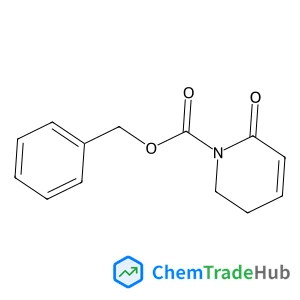
Benzyl 6-oxo-3,6-dihydro-1(2H)-pyridinecarboxylate
CAS Number:
725746-35-0
Molecular Formula:
C13H13NO3
Recommended Suppliers




Disclaimer
This page provides academic journal information for reference and research purposes only. We are not affiliated with any journal publishers and do not handle publication submissions. For publication-related inquiries, please contact the respective journal publishers directly.
If you notice any inaccuracies in the information displayed, please contact us at support@chemtradehub.com. We will promptly review and address your concerns.