












One-pot and sustainable liquid-phase peptide extension for synthesis of C-terminal amidation peptides aided by small molecular tags
Literature Information
Publication Date
2023-10-25
DOI
10.1039/D3QO01248D
Impact Factor
5.281
Authors
Haidi Li, Yuankui Jin, Lianjun Wang, Linyan Zhang, Tianyu Liu, Yu Liu, Taigang Liang
View Original
Abstract
The development of greener and more economical methods for peptide synthesis has been a driving force in promoting the large-scale production of peptide drugs. In this study, we present a series of small-molecule C-terminal amidation tags based on phosphonate or aliphatic moieties. These tags were prepared using a simple method with high yields and employed to facilitate the sustainable preparation of C-terminal amidation peptides via an Fmoc strategy liquid-phase one-pot process. The Fmoc group was deprotected using DEA/ACN and subsequently reacted with mercaptosuccinic acid or cysteine to capture and remove the Fmoc-residue. In the continuous one-pot peptide chain coupling and de-Fmoc reactions, each peptide intermediate can be easily purified through sequential washing with HCl aq. and Na2CO3 aq. solutions, allowing subsequent amino acid couplings to proceed in the original reaction solvent. Using the one-pot peptide synthesis strategy, both eptifibatide and the TREM-1 inhibitor LR12 were efficiently synthesized. Compared to LPPS and SPPS, this protocol achieves a more environmentally friendly and cost-effective method for preparing amidated peptides, making it suitable for large-scale production of peptide APIs.
Recommended Journals
Related Literature
Promising electrochemical hydrogen storage properties of thick Mg–Pd films obtained by insertion of thin Ti interlayers
Gongbiao Xin, Yanyan Wang, He Fu, Jie Zheng, Xingguo Li
2013-12-09
Paper
DOI: 10.1039/C3CP54714K
CO2-induced micelle to vesicle transition in zwitterionic–anionic surfactant systems
Wei Li, Yanjuan Yang, Tian Luo, Jianling Zhang, Buxing Han
2013-12-18
Paper
DOI: 10.1039/C3CP54537G
Atomistic insights into the nanohelix of hydrogenated graphene: formation, characterization and application
Liuyang Zhang, Xianqiao Wang
2013-11-19
Paper
DOI: 10.1039/C3CP53978D
Highly porous structure strategy to improve the SnO2 electrode performance for lithium-ion batteries
Ting Yang, Bingan Lu
2013-12-02
Paper
DOI: 10.1039/C3CP54144D
X-ray absorption spectroscopy and resonant inelastic scattering study of the first lithiation cycle of the Li-ion battery cathode Li2−xMnSiO4
M. Dahbi, T. Gustafsson, K. Edström, D. Newby, K. E. Smith, L.-C. Duda
2013-12-18
Paper
DOI: 10.1039/C3CP54103G
Cysteine inhibits the fibrillisation and cytotoxicity of amyloid-β 40 and 42: implications for the contribution of the thiophilic interaction
Eisuke Takai, Ken Uda, Tamotsu Zako, Kentaro Shiraki
2014-01-13
Paper
DOI: 10.1039/C3CP54245A
Photodissociation of singlet oxygen in the UV region
Zahid Farooq, Dimitri A. Chestakov, Bin Yan, Gerrit C. Groenenboom, Wim J. van der Zande, David H. Parker
2013-12-16
Paper
DOI: 10.1039/C3CP54696A
Catalyst and electrolyte synergy in Li–O2 batteries
Forrest S. Gittleson, Ryan C. Sekol, Marcelo Linardi, André D. Taylor
2013-12-19
Paper
DOI: 10.1039/C3CP54555E
The unimolecular chemistry of [Zn(amino acid)2-H]+ in the gas phase: H2 elimination when the amino acid is a secondary amine
Ameneh Gholami, Travis D. Fridgen
2014-01-06
Paper
DOI: 10.1039/C3CP53716A
Electronic and magnetic structures of coronene-based graphitic nanoribbons
Aldilene Saraiva-Souza, Zachary Bullard, Dayvison Weber Maia, Antônio Gomes Souza Filho, Eduardo Costa Girão
2013-12-16
Paper
DOI: 10.1039/C3CP54496F
You might also like
Compound Q&A
What is the market or research trend for N-(4-Methoxybenzyl)-2-pyridinamine (CAS: 52818-63-0)?
N-(4-Methoxybenzyl)-2-pyridinamine (CAS: 52818-63-0) is increasingly being used ...
52818-63-0N-(4-Methoxybenzyl)-...
Compound Q&A
What precautions should be taken when handling Ethyl 4-(2-chlorophenyl)-1,3-thiazole-2-carboxylate (CAS: 1050507-06-6)?
When handling Ethyl 4-(2-chlorophenyl)-1,3-thiazole-2-carboxylate, appropriate p...
1050507-06-6Ethyl 4-(2-chlorophe...
Compound Q&A
What regulatory guidelines apply to diethyldiselane (CAS: 628-39-7)?
Diethyldiselane (CAS: 628-39-7) is classified under the Globally Harmonized Syst...
628-39-7Diethyldiselane
Compound Q&A
What is the market or research trend for oxocopper (CAS: 12053-18-8)?
The market for oxocopper (CAS: 12053-18-8) is primarily driven by its use in cat...
12053-18-8oxocopper; oxo-(oxoc...
Compound Q&A
What is the market or research trend for 5-{[(2-Methyl-2-propanyl)oxy]carbonyl}-5-azaspiro[2.4]heptane-7-carboxylic acid?
The market for 5-{[(2-Methyl-2-propanyl)oxy]carbonyl}-5-azaspiro[2.4]heptane-7-c...
1268519-54-55-{[(2-Methyl-2-prop...
Compound Q&A
What is 2-(1-Pyrrolidinyl)-4-pyridinamine (CAS: 35981-63-6)?
2-(1-Pyrrolidinyl)-4-pyridinamine is a chemical compound with the CAS number 359...
35981-63-62-(1-Pyrrolidinyl)-4...
Compound Q&A
What are the physical and chemical properties of 2-(3-Pyridinyl)-1-azabicyclo[2.2.2]octane (CAS: 91556-75-1)?
2-(3-Pyridinyl)-1-azabicyclo[2.2.2]octane (CAS: 91556-75-1) is a crystalline sol...
91556-75-12-(3-Pyridinyl)-1-az...
Compound Q&A
How is (S)-Alpha-allyl-proline hydrochloride (CAS: 129704-91-2) typically synthesized?
(S)-Alpha-allyl-proline hydrochloride is usually synthesized via a Wittig reacti...
129704-91-2(S)-Alpha-allyl-prol...
Compound Q&A
What is 3-Methyl-1,2-oxazole-5-carboxylic acid (CAS: 4857-42-5)?
3-Methyl-1,2-oxazole-5-carboxylic acid (CAS: 4857-42-5) is an organic compound w...
4857-42-53-Methyl-1,2-oxazole...
Compound Q&A
How is Lys-SMCC-DM1 (CAS: 1281816-04-3) typically synthesized?
Lys-SMCC-DM1 is synthesized via a multi-step process involving the coupling of S...
1281816-04-3Lys-SMCC-DM1
Source Journal
Organic Chemistry Frontiers

CiteScore:
7.8
Self-citation Rate:
8.7%
Articles per Year:
724
Organic Chemistry Frontiers publishes high-quality research from across organic chemistry. Emphases are placed on studies that make significant contributions to the field of organic chemistry by reporting either new or significantly improved protocols or methodologies. Topics include, but are not limited to the following: Organic synthesis Development of synthetic methodologies Catalysis Natural products Functional organic materials Supramolecular and macromolecular chemistry Physical and computational organic chemistry
Recommended Compounds
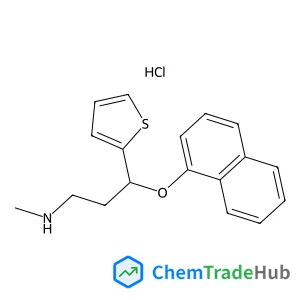
N-Methyl-3-(1-naphthyloxy)-3-(2-thienyl)-1-propanamine hydrochloride (1:1)
CAS Number:
1188266-11-6
Molecular Formula:
C18H20ClNOS
Recommended Suppliers








Disclaimer
This page provides academic journal information for reference and research purposes only. We are not affiliated with any journal publishers and do not handle publication submissions. For publication-related inquiries, please contact the respective journal publishers directly.
If you notice any inaccuracies in the information displayed, please contact us at support@chemtradehub.com. We will promptly review and address your concerns.