












Cysteine inhibits the fibrillisation and cytotoxicity of amyloid-β 40 and 42: implications for the contribution of the thiophilic interaction
Literature Information
Publication Date
2014-01-13
DOI
10.1039/C3CP54245A
Impact Factor
3.676
Authors
Eisuke Takai, Ken Uda, Tamotsu Zako, Kentaro Shiraki
View Original
Abstract
Inhibitors of amyloid fibril formation have been at the centre of intense research efforts for the prevention of amyloidosis. Here, we hypothesise that a specific non-covalent interaction, the thiophilic interaction between the side chain of an aromatic residue in a polypeptide and a sulphur atom of the compound, effectively inhibits amyloid fibril formation. Fluorescence spectroscopy and transmission electron microscopy revealed that sulphur compounds, particularly Cys, inhibit the fibrillisation of amyloid-β 1–40 (Aβ40) and 1–42 (Aβ42). Interestingly, aggregates of Aβ40 and Aβ42 induced by Cys were less cytotoxic than those induced by catechin, which is the most typical inhibitor of amyloid fibril formation. Because the essential amino acid, Cys, is an abundant molecule in the blood and cytosol, our data provide a new basis for the prevention of amyloid-related diseases and the elucidation of the mechanism of these diseases.
Recommended Journals
Related Literature
Metal- and base-free synthesis of functionalized α,α-difluoroimines via electrophilic fluorination of N-substituted enamines
Fangyi Li, Changfu Qiu, Guangwei Yin, Chunhua Wang, Zheng Li
2018-09-13
Communication
DOI: 10.1039/C8OB01941J
Molecular tweezers with a rotationally restricted linker and freely rotating porphyrin moieties
Rhys B. Murphy, Duc-Truc Pham, Jonathan M. White, Stephen F. Lincoln, Martin R. Johnston
2018-08-14
Paper
DOI: 10.1039/C8OB00944A
Chemoselective synthesis of isolated and fused fluorenones and their photophysical and antiviral properties
Ismail Althagafi, Ranjay Shaw, Rahul Panwar, Shally, Chanda Sinha, Amit Kumar, Yong-Tang Zheng, Ramendra Pratap
2018-09-19
Paper
DOI: 10.1039/C8OB01733F
Organic dye-photocatalyzed fluoroalkylation of heteroarene-N-oxide derivatives
Beatriz Lantaño, Sebastián Barata-Vallejo, Al Postigo
2018-08-29
Paper
DOI: 10.1039/C8OB01653D
Fluorinated triazole-containing sphingosine analogues. Syntheses and in vitro evaluation as SPHK inhibitors
Margarita Escudero-Casao, Adrià Cardona, Raúl Beltrán-Debón, Yolanda Díaz, M. Isabel Matheu, Sergio Castillón
2018-09-24
Paper
DOI: 10.1039/C8OB01867G
Rhodium-catalyzed cyclization of acceptor-substituted biphenyl α-diazoketones: a study of the substitution effect on chemoselectivity
Kuo-Hsin Chen, Yi-Jung Chiang, Jia-Liang Zhu
2018-09-04
Paper
DOI: 10.1039/C8OB01489B
Azodicarboxylate-free esterification with triphenylphosphine mediated by flavin and visible light: method development and stereoselectivity control
Michal März, Michal Kohout, Tomáš Neveselý, Josef Chudoba, Dorota Prukała, Stanislaw Niziński, Marek Sikorski, Gotard Burdziński, Radek Cibulka
2018-09-03
Paper
DOI: 10.1039/C8OB01822G
Dual function of amino acid ionic liquids (Bmim[AA]) on the degradation of the organophosphorus pesticide, Paraoxon®
Javiera I. Morales, Roberto Figueroa, Mabel Rojas, Daniela Millán, Ricardo A. Tapia, Paulina Pavez
2018-09-18
Paper
DOI: 10.1039/C8OB01928B
Möbius bis and tris-spiroaromatic systems
David Hall, Henry S. Rzepa
2002-12-02
Paper
DOI: 10.1039/B210415F
Cross coupling reactions of organozinc iodides with solid-supported electrophiles: synthesis of 4-substituted benzoic and 3-substituted (E)- and (Z)-propenoic acids and amides
Leslie J. Oates, Richard F. W. Jackson, Michael H. Block
2002-11-29
Paper
DOI: 10.1039/B208632H
You might also like
Compound Q&A
What is the market or research trend for N-(4-Methoxybenzyl)-2-pyridinamine (CAS: 52818-63-0)?
N-(4-Methoxybenzyl)-2-pyridinamine (CAS: 52818-63-0) is increasingly being used ...
52818-63-0N-(4-Methoxybenzyl)-...
Compound Q&A
What precautions should be taken when handling Ethyl 4-(2-chlorophenyl)-1,3-thiazole-2-carboxylate (CAS: 1050507-06-6)?
When handling Ethyl 4-(2-chlorophenyl)-1,3-thiazole-2-carboxylate, appropriate p...
1050507-06-6Ethyl 4-(2-chlorophe...
Compound Q&A
What regulatory guidelines apply to diethyldiselane (CAS: 628-39-7)?
Diethyldiselane (CAS: 628-39-7) is classified under the Globally Harmonized Syst...
628-39-7Diethyldiselane
Compound Q&A
What is the market or research trend for oxocopper (CAS: 12053-18-8)?
The market for oxocopper (CAS: 12053-18-8) is primarily driven by its use in cat...
12053-18-8oxocopper; oxo-(oxoc...
Compound Q&A
What is the market or research trend for 5-{[(2-Methyl-2-propanyl)oxy]carbonyl}-5-azaspiro[2.4]heptane-7-carboxylic acid?
The market for 5-{[(2-Methyl-2-propanyl)oxy]carbonyl}-5-azaspiro[2.4]heptane-7-c...
1268519-54-55-{[(2-Methyl-2-prop...
Compound Q&A
What is 2-(1-Pyrrolidinyl)-4-pyridinamine (CAS: 35981-63-6)?
2-(1-Pyrrolidinyl)-4-pyridinamine is a chemical compound with the CAS number 359...
35981-63-62-(1-Pyrrolidinyl)-4...
Compound Q&A
What are the physical and chemical properties of 2-(3-Pyridinyl)-1-azabicyclo[2.2.2]octane (CAS: 91556-75-1)?
2-(3-Pyridinyl)-1-azabicyclo[2.2.2]octane (CAS: 91556-75-1) is a crystalline sol...
91556-75-12-(3-Pyridinyl)-1-az...
Compound Q&A
How is (S)-Alpha-allyl-proline hydrochloride (CAS: 129704-91-2) typically synthesized?
(S)-Alpha-allyl-proline hydrochloride is usually synthesized via a Wittig reacti...
129704-91-2(S)-Alpha-allyl-prol...
Compound Q&A
What is 3-Methyl-1,2-oxazole-5-carboxylic acid (CAS: 4857-42-5)?
3-Methyl-1,2-oxazole-5-carboxylic acid (CAS: 4857-42-5) is an organic compound w...
4857-42-53-Methyl-1,2-oxazole...
Compound Q&A
How is Lys-SMCC-DM1 (CAS: 1281816-04-3) typically synthesized?
Lys-SMCC-DM1 is synthesized via a multi-step process involving the coupling of S...
1281816-04-3Lys-SMCC-DM1
Source Journal
Physical Chemistry Chemical Physics

CiteScore:
5.5
Self-citation Rate:
10.3%
Articles per Year:
3036
Physical Chemistry Chemical Physics (PCCP) is an international journal co-owned by 19 physical chemistry and physics societies from around the world. This journal publishes original, cutting-edge research in physical chemistry, chemical physics and biophysical chemistry. To be suitable for publication in PCCP, articles must include significant innovation and/or insight into physical chemistry; this is the most important criterion that reviewers and Editors will judge against when evaluating submissions. The journal has a broad scope and welcomes contributions spanning experiment, theory, computation and data science. Topical coverage includes spectroscopy, dynamics, kinetics, statistical mechanics, thermodynamics, electrochemistry, catalysis, surface science, quantum mechanics, quantum computing and machine learning. Interdisciplinary research areas such as polymers and soft matter, materials, nanoscience, energy, surfaces/interfaces, and biophysical chemistry are welcomed if they demonstrate significant innovation and/or insight into physical chemistry. Joined experimental/theoretical studies are particularly appreciated when complementary and based on up-to-date approaches.
Recommended Compounds

2-Methyl-2-propanyl 2-carbamimidoyl-1-piperidinecarboxylate
CAS Number:
1258640-98-0
Molecular Formula:
C11H21N3O2
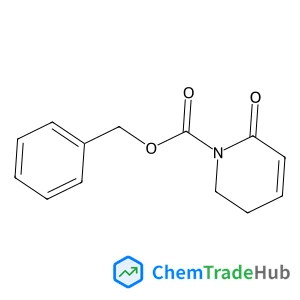
Benzyl 6-oxo-3,6-dihydro-1(2H)-pyridinecarboxylate
CAS Number:
725746-35-0
Molecular Formula:
C13H13NO3

Recommended Suppliers






Disclaimer
This page provides academic journal information for reference and research purposes only. We are not affiliated with any journal publishers and do not handle publication submissions. For publication-related inquiries, please contact the respective journal publishers directly.
If you notice any inaccuracies in the information displayed, please contact us at support@chemtradehub.com. We will promptly review and address your concerns.