













Solvent-free synthesis and in-silico molecular docking study of (E)-3-(β-C-glycosylmethylidene)-N-aryl/alkyl succinimides‡
Literature Information
Publication Date
2023-11-09
DOI
10.1039/D3OB01252B
Impact Factor
3.876
Authors
Tejveer Singh, Banty Kumar, Aditi Arora, Sumit Kumar, Brajendra K. Singh
View Original
Abstract
Globally, human papillomavirus (HPV) infection is the leading cause of mortality associated with cervical cancer, oral cancer (oropharyngeal), and head and neck squamous cell carcinoma (HNSCC). It is essential to explore anti-cancer drugs against life-threatening HPV infections. Aiming to search for potentially better anticancer agents, a small library of β-C-glycosylated methylidene succinimides have been synthesized under bulk and mechanical grinding conditions using the Wittig olefination reaction. Thus, the reaction of different 2,3,4,6-tetra-O-benzyl-C-glycosyl aldehydes with N-aryl/alkyl maleimides in the presence of PPh3 at 25 °C under bulk and mechanical grinding conditions results in the formation of stereochemically defined (E)-3-(2,3,4,6-tetra-O-benzyl-C-glycosylmethylidene)-N-alkyl/phenyl succinimides, which upon debenzylation with 1 M BCl3 in DCM at −78 °C lead to the synthesis of (E)-3-(C-glycosylmethylidene)-N-alkyl/phenyl succinimides in good to excellent yields. The developed methodology is efficient and environmentally benign because there is no use of organic solvents, and the products are obtained in a stereochemically defined form and in high yields. The aqueous solubility of all synthesized β-C-glycosylated methylidene succinimides makes them potential candidates for the evaluation of their different biological activities. In the present work, the synthesized glycosylated alkylidine succinimides were subjected to an in-silico molecular docking study against the E6 oncoprotein of high-risk type HPV16, which is responsible for the inactivation of the tumor suppressor p53 protein. Analysis of the molecular docking data revealed that the synthesized compounds are effective inhibitors of HPV infection, which is the cause of oral, head and neck, and cervical cancer. In comparison with the positive control 5-FU, an anti-cancer drug used in chemotherapy, more than fifteen compounds were found to be better E6 protein inhibitors.
Related Literature
The influence of chain elongation on Karplus-type relationships: a DFT study of scalar coupling constants in polyacetylene derivatives
Ibon Alkorta, José Elguero
2003-01-06
Paper
DOI: 10.1039/B208803G
Detection of a metallo-β-lactamase (IMP-1) by fluorescent probes having dansyl and thiol groups
Hiromasa Kurosaki, Hisami Yasuzawa, Yoshihiro Yamaguchi, Wanchun Jin, Yoshichika Arakawa, Masafumi Goto
2002-11-08
Communication
DOI: 10.1039/B209086D
HIV-1 protease: mechanism and drug discovery
Ashraf Brik, Chi-Huey Wong
2002-11-26
Perspective
DOI: 10.1039/B208248A
Synthesis of a tweezer-like bis(arylthiaalkoxy)calix[4]arene as a cation sensor for ion-selective electrodes: an investigation of the influence of neighboring halogen atoms on cation selectivity‡
Xianshun Zeng, Langxing Chen, Xuebing Leng, Fengbo Xu, Qinshan Li, Xiwen He, Wenqin Zhang, Zheng-Zhi Zhang
2003-02-25
Paper
DOI: 10.1039/B211381C
Non-steady-state kinetic study of the SN2 reaction between p-nitrophenoxide ion and methyl iodide in aprotic solvents containing water. Evidence for a 2-step mechanism
Yun Lu, Kishan L. Handoo, Vernon D. Parker
2002-11-08
Communication
DOI: 10.1039/B208635B
From central to planar chirality, the first example of atropenantioselective cycloetherification
Gabriela Islas-Gonzalez, Michèle Bois-Choussy, Jieping Zhu
2002-11-08
Communication
DOI: 10.1039/B208905J
Biomimetic synthesis of the bisindole framework present in sciodole, an alkaloid from Tricholoma sciodes
Joshua A. Homer, Jonathan Sperry
2018-09-14
Communication
DOI: 10.1039/C8OB02142B
Ester derivatives of hexahomotrioxacalix[3]naphthalenes: conformational and binding properties with alkali metal cations
Muhammad Ashram, Shehadeh Mizyed, Paris E. Georghiou
2003-01-08
Paper
DOI: 10.1039/B209046P
Radicals derived from uric acid and its methyl derivatives in aqueous solution: an EPR spectroscopy and theoretical study
2002-12-23
Paper
DOI: 10.1039/B208827B
Competition between two cysteines in covalent binding of biliverdin to phytochrome domains
Anna M. Kulakova
2018-09-25
Paper
DOI: 10.1039/C8OB02262C
You might also like
Compound Q&A
How should 2-Methylbenzene-1,4-diamine dihydrochloride (CAS: 615-45-2) be stored?
2-Methylbenzene-1,4-diamine dihydrochloride (CAS: 615-45-2) should be stored in ...
615-45-22-Methylbenzene-1,4-...
Compound Q&A
Is (1S,4S)-2,5-Diazabicyclo[2.2.1]heptane dihydrobromide (CAS: 132747-20-7) safe?
(1S,4S)-2,5-Diazabicyclo[2.2.1]heptane dihydrobromide is generally considered sa...
132747-20-7(1S,4S)-2,5-Diazabic...
Compound Q&A
What industries use (6-Chloropyridazin-3-YL)methanamine (CAS: 871826-15-2)?
(6-Chloropyridazin-3-YL)methanamine finds applications in the pharmaceutical ind...
871826-15-2(6-Chloropyridazin-3...
Compound Q&A
What are the main uses of 2-Fluoro-3-methylphenol (CAS: 77772-72-6)?
2-Fluoro-3-methylphenol is primarily used in the synthesis of pharmaceuticals, p...
77772-72-62-Fluoro-3-methylphe...
Compound Q&A
What precautions should be taken when handling 3-Methoxy-4-nitrobenzonitrile (CAS: 177476-75-4)?
When handling 3-Methoxy-4-nitrobenzonitrile, it is important to wear appropriate...
177476-75-43-Methoxy-4-nitroben...
Compound Q&A
What precautions should be taken when handling 1,3-Oxazolo[4,5-b]pyridine-2(3H)-thione (CAS: 211949-57-4)?
When handling 1,3-Oxazolo[4,5-b]pyridine-2(3H)-thione (CAS: 211949-57-4), it is ...
211949-57-4[1,3]Oxazolo[4,5-b]p...
Compound Q&A
What regulatory guidelines apply to 4-Ethynylbenzamide (CAS: 90347-86-7)?
4-Ethynylbenzamide (CAS: 90347-86-7) falls under various regulatory guidelines i...
90347-86-74-Ethynylbenzamide
Compound Q&A
What are the main uses of 3-(2-Ethylphenyl)-2-thioxo-4-imidazolidinone (CAS: 186822-57-1)?
3-(2-Ethylphenyl)-2-thioxo-4-imidazolidinone is primarily used as an intermediat...
186822-57-13-(2-Ethylphenyl)-2-...
Compound Q&A
What is (2-Fluoro-6-methoxyphenyl)acetic acid (CAS: 500912-19-6)?
(2-Fluoro-6-methoxyphenyl)acetic acid, also known as 4-fluoro-3-methoxybenzoic a...
500912-19-6(2-Fluoro-6-methoxyp...
Compound Q&A
What is the market or research trend for 2-[4-(Hydroxymethyl)phenoxy]ethanol (CAS: 102196-18-9)?
Market trends for 2-[4-(Hydroxymethyl)phenoxy]ethanol (CAS: 102196-18-9) indicat...
102196-18-92-[4-(Hydroxymethyl)...
Source Journal
Organic & Biomolecular Chemistry

CiteScore:
3.4
Self-citation Rate:
10.3%
Articles per Year:
1041
Organic & Biomolecular Chemistry (OBC) publishes original and high impact research and reviews in organic chemistry. We welcome research that shows new or significantly improved protocols or methodologies in total synthesis, synthetic methodology or physical and theoretical organic chemistry as well as research that shows a significant advance in the organic chemistry or molecular design aspects of chemical biology, catalysis, supramolecular and macromolecular chemistry, theoretical chemistry, mechanism-oriented physical organic chemistry, medicinal chemistry or natural products. Articles published in the journal should report new work which makes a highly-significant impact in the field. Routine and incremental work is generally not suitable for publication in the journal. More details about key areas of our scope are below. In all cases authors should include in their article clear rationale for why their research has been carried out.
Recommended Compounds

(S)-1-(3-(Benzyloxy)phenyl)-3-(dimethylamino)-2-methylpropan-1-one (2r,3r)-2,3-bis(benzoyloxy)succinate
CAS Number:
1004315-81-4
Molecular Formula:
C37H37NO10
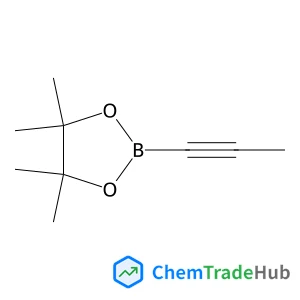
4,4,5,5-Tetramethyl-2-(1-propyn-1-YL)-1,3,2-dioxaborolane
CAS Number:
347389-75-7
Molecular Formula:
C9H15BO2
Recommended Suppliers





Disclaimer
This page provides academic journal information for reference and research purposes only. We are not affiliated with any journal publishers and do not handle publication submissions. For publication-related inquiries, please contact the respective journal publishers directly.
If you notice any inaccuracies in the information displayed, please contact us at support@chemtradehub.com. We will promptly review and address your concerns.