












Radicals derived from uric acid and its methyl derivatives in aqueous solution: an EPR spectroscopy and theoretical study
Literature Information
Publication Date
2002-12-23
DOI
10.1039/B208827B
Impact Factor
3.876
Authors
View Original
Abstract
The oxidation of uric acid and of four N-methyluric acids in aqueous solution was studied by EPR spectroscopy. The primary oxidising radicals react with uric acid and its methyl derivatives by formal hydrogen abstraction from an NH group to yield radical-anions in neutral or moderately basic solutions and the respective radical-dianions in basic media. In the case of uric acid, the radical-trianion was detected at very high pH. The pKa values of the radical-anions were determined to be in the range 9.5–11.2. The pKa of uric acid radical-dianion was estimated to be 13.0. DFT calculations were performed to assign the hyperfine coupling constants and to determine the predominant tautomeric structure of the radicals. The uric acid radical-anion exists as the N1H, N9H tautomer, while in the radical-dianion the N1H structure is the most stable one. The intrinsic acidity of the NH protons both in uric acid and in its radicals seems to follow the order N1H < N9H < N3H
Related Literature
Selective extraction of metals using ionic liquids for nickel metal hydride battery recycling
Kristian Larsson, Koen Binnemans
2014-07-31
Paper
DOI: 10.1039/C3GC41930D
Towards the synthesis of glycosylated dihydrochalcone natural products using glycosyltransferase-catalysed cascade reactions
Alexander Gutmann, Linda Bungaruang, Hansjoerg Weber, Mario Leypold, Rolf Breinbauer
2014-07-25
Paper
DOI: 10.1039/C4GC00960F
Furfural from corn stover hemicelluloses. A mineral acid-free approach
Hilda Gómez Bernal, Luca Bernazzani
2014-05-15
Communication
DOI: 10.1039/C4GC00450G
An aza-Michael addition protocol to fluoroalkylated β-amino acid derivatives and enantiopure trifluoromethylated N-heterocycles
Xing Yang, Zhuo Chen, Yuan Cai, Yi-Yong Huang, Norio Shibata
2014-08-15
Communication
DOI: 10.1039/C4GC01357C
Transitioning organic synthesis from organic solvents to water. What's your E Factor?
Bruce H. Lipshutz, Subir Ghorai
2014-07-02
Critical Review
DOI: 10.1039/C4GC00503A
Palladium nanoparticles supported on triazine functionalised mesoporous covalent organic polymers as efficient catalysts for Mizoroki–Heck cross coupling reaction
Pillaiyar Puthiaraj
2014-06-12
Paper
DOI: 10.1039/C4GC00412D
Visible-light-induced photocatalytic formyloxylation reactions of 3-bromooxindoles with water and DMF: the scope and mechanism
You-Quan Zou, Wei Guo, Feng-Lei Liu, Liang-Qiu Lu, Jia-Rong Chen
2014-05-08
Paper
DOI: 10.1039/C4GC00647J
A recoverable Pd nanocatalyst for selective semi-hydrogenation of alkynes: hydrogenation of benzyl-propargylamines as a challenging model
Paula M. Uberman, Natalia J. S. Costa, Rafaela C. Carmona, Alcindo A. Dos Santos, Liane M. Rossi
2014-07-22
Paper
DOI: 10.1039/C4GC00669K
Structural–functional evaluation of ionic liquid libraries for the design of co-solvents in lipase-catalysed reactions
João V. Rodrigues, Diana Ruivo, Ana Rodríguez, Francisco J. Deive, José M. S. S. Esperança, Isabel M. Marrucho, Cláudio M. Gomes, Luís Paulo N. Rebelo
2014-08-04
Communication
DOI: 10.1039/C4GC01329H
Hydrothermal decarboxylation of amino acid derived imidazolium zwitterions: a sustainable approach towards ionic liquids
Sarah Kirchhecker, Markus Antonietti, Davide Esposito
2014-05-08
Communication
DOI: 10.1039/C4GC00564C
You might also like
Compound Q&A
How should 2-Methylbenzene-1,4-diamine dihydrochloride (CAS: 615-45-2) be stored?
2-Methylbenzene-1,4-diamine dihydrochloride (CAS: 615-45-2) should be stored in ...
615-45-22-Methylbenzene-1,4-...
Compound Q&A
Is (1S,4S)-2,5-Diazabicyclo[2.2.1]heptane dihydrobromide (CAS: 132747-20-7) safe?
(1S,4S)-2,5-Diazabicyclo[2.2.1]heptane dihydrobromide is generally considered sa...
132747-20-7(1S,4S)-2,5-Diazabic...
Compound Q&A
What industries use (6-Chloropyridazin-3-YL)methanamine (CAS: 871826-15-2)?
(6-Chloropyridazin-3-YL)methanamine finds applications in the pharmaceutical ind...
871826-15-2(6-Chloropyridazin-3...
Compound Q&A
What are the main uses of 2-Fluoro-3-methylphenol (CAS: 77772-72-6)?
2-Fluoro-3-methylphenol is primarily used in the synthesis of pharmaceuticals, p...
77772-72-62-Fluoro-3-methylphe...
Compound Q&A
What precautions should be taken when handling 3-Methoxy-4-nitrobenzonitrile (CAS: 177476-75-4)?
When handling 3-Methoxy-4-nitrobenzonitrile, it is important to wear appropriate...
177476-75-43-Methoxy-4-nitroben...
Compound Q&A
What precautions should be taken when handling 1,3-Oxazolo[4,5-b]pyridine-2(3H)-thione (CAS: 211949-57-4)?
When handling 1,3-Oxazolo[4,5-b]pyridine-2(3H)-thione (CAS: 211949-57-4), it is ...
211949-57-4[1,3]Oxazolo[4,5-b]p...
Compound Q&A
What regulatory guidelines apply to 4-Ethynylbenzamide (CAS: 90347-86-7)?
4-Ethynylbenzamide (CAS: 90347-86-7) falls under various regulatory guidelines i...
90347-86-74-Ethynylbenzamide
Compound Q&A
What are the main uses of 3-(2-Ethylphenyl)-2-thioxo-4-imidazolidinone (CAS: 186822-57-1)?
3-(2-Ethylphenyl)-2-thioxo-4-imidazolidinone is primarily used as an intermediat...
186822-57-13-(2-Ethylphenyl)-2-...
Compound Q&A
What is (2-Fluoro-6-methoxyphenyl)acetic acid (CAS: 500912-19-6)?
(2-Fluoro-6-methoxyphenyl)acetic acid, also known as 4-fluoro-3-methoxybenzoic a...
500912-19-6(2-Fluoro-6-methoxyp...
Compound Q&A
What is the market or research trend for 2-[4-(Hydroxymethyl)phenoxy]ethanol (CAS: 102196-18-9)?
Market trends for 2-[4-(Hydroxymethyl)phenoxy]ethanol (CAS: 102196-18-9) indicat...
102196-18-92-[4-(Hydroxymethyl)...
Source Journal
Organic & Biomolecular Chemistry

CiteScore:
3.4
Self-citation Rate:
10.3%
Articles per Year:
1041
Organic & Biomolecular Chemistry (OBC) publishes original and high impact research and reviews in organic chemistry. We welcome research that shows new or significantly improved protocols or methodologies in total synthesis, synthetic methodology or physical and theoretical organic chemistry as well as research that shows a significant advance in the organic chemistry or molecular design aspects of chemical biology, catalysis, supramolecular and macromolecular chemistry, theoretical chemistry, mechanism-oriented physical organic chemistry, medicinal chemistry or natural products. Articles published in the journal should report new work which makes a highly-significant impact in the field. Routine and incremental work is generally not suitable for publication in the journal. More details about key areas of our scope are below. In all cases authors should include in their article clear rationale for why their research has been carried out.
Recommended Compounds
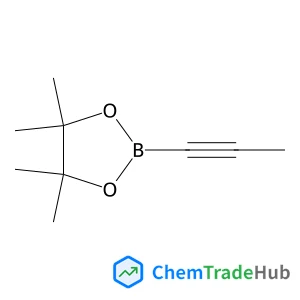
4,4,5,5-Tetramethyl-2-(1-propyn-1-YL)-1,3,2-dioxaborolane
CAS Number:
347389-75-7
Molecular Formula:
C9H15BO2

Recommended Suppliers




Disclaimer
This page provides academic journal information for reference and research purposes only. We are not affiliated with any journal publishers and do not handle publication submissions. For publication-related inquiries, please contact the respective journal publishers directly.
If you notice any inaccuracies in the information displayed, please contact us at support@chemtradehub.com. We will promptly review and address your concerns.