












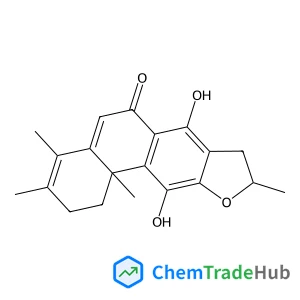
Phenanthro(3,2-b)furan-6(2H)-one, 1,8,9,11b-tetrahydro-7,11-dihydroxy-3,4,9,11b-tetramethyl-, cis-
CAS Number:
99624-92-7
Molecular Formula:
C20H22O4
Asha Raveendran, Mijun Chandran, Soo Chool Lee, Masoom Raza Siddiqui, Saikh Mohammad Wabaidur
Across numerous industrial domains, including renewable energy systems, developing affordable, stable, long-lasting, and active electrocatalysts is imperative. Conventional catalysts have weak water splitting activity in alkaline medium because of their slow kinetics, high cost, and limited availability for large-scale production. A detailed investigation was conducted into the impact of copper (Cu) as a redox additive on the performance of a polydiphenylamine (PDPA) and three-dimensional copper/polydiphenylamine was electrodeposited potentiodynamically on nickel foam (NF) to achieve a binder-free electrocatalyst. This study describes the remarkable multifunctional capability of Cu/PDPA/NF for the hydrogen and oxygen evolution reaction, methanol & ethanol electro-oxidation and supercapacitor applications. The prepared electrode materials were characterized by X-ray diffraction (XRD), Fourier transform infrared (FTIR) and Raman spectroscopy, scanning electron microscopy & X-ray photoelectron spectroscopy (XPS) to analyse the structural and morphological characteristics. The excellent electrocatalytic activity of the Cu/PDPA/NF heterostructure for the hydrogen evolution reaction (HER) and oxygen evolution reaction (OER) was observed with the overpotential and small Tafel slope values of 235.85 mV and 75 mV dec−1 to reach 10 mA cm−2 current density for the HER and 320 mV and 33.7 mV dec−1 to reach 10 mA cm−2 current density for the OER, respectively, in 1 M KOH electrolyte. In terms of their role in direct alcohol fuel cells (DAFCs) as anode catalysts, Cu/PDPA/NF exhibits the highest oxidation peak current density at 370 mA cm−2, while for the ethanol oxidation reaction, the forward oxidation peak current density was 101.96 mA cm−2. The synergistic effect of the polymer polydiphenylamine and copper also led to remarkable performance in terms of the areal capacitance of the material at 668 mF cm−2 at a current density of 0.5 A cm−2 with the capacitance retention of 81.3% after 5000 cycles at a current density of 10 A cm−2, thus exhibiting energy storage capacity. The coral-like Cu/PDPA/NF designed in this study showcases improved electrochemical activity, which can lead to its usage in the broader applications of energy conversion and storage applications.
Vincent Darcos, Sarah Antoniacomi, Cédric Paniagua, Jean Coudane
DOI: 10.1039/C1PY00414J
Julia N. Dobish, Sharon K. Hamilton, Eva Harth
DOI: 10.1039/C2PY00606E
Hirofumi Tsuruta, Yoshihisa Fujii, Keiji Tanaka
DOI: 10.1039/C1PY00488C
Takahiro Fukumaru, Tsuyohiko Fujigaya
DOI: 10.1039/C1PY00470K
Meina Liu, Johannes van Hensbergen, Robert P. Burford, Andrew B. Lowe
DOI: 10.1039/C2PY20155K
Udo Armbruster, Hanan Atia, Ursula Bentrup, Binh Minh Quoc Phan, Reinhard Eckelt, Luong Huu Nguyen, Duc Anh Nguyen, Andreas Martin
DOI: 10.1039/C5RE00068H
Daniel J. Krasznai, Timothy F. L. McKenna, Michael F. Cunningham, Pascale Champagne, Niels M. B. Smeets
DOI: 10.1039/C2PY00601D
DOI: 10.1039/C2PY00588C
Issam Blidi, Roland Geagea, Olivier Coutelier, Stéphane Mazières, Frédéric Violleau, Mathias Destarac
DOI: 10.1039/C2PY00541G
4-(4-tert-Butylphenyl)-1H-pyrazol-3-amine finds applications in various industri...
H3TATAB is used in the pharmaceutical industry for the synthesis of certain orga...
1-Ethyl-3-fluorobenzene (CAS: 696-39-9) is primarily used as a precursor in the ...
1-(tert-Butoxycarbonyl)-4-(4-methoxyphenyl)pyrrolidine-3-carboxylic acid is prim...
1-Cyclobutyl-4-piperidinone (CAS: 359880-05-0) is a colorless or white crystalli...
Pyridine-2,6-dicarboxylic acid mono-tert-butyl ester (CAS: 575433-76-0) is a che...
The market for 2,3-Difluorophenylalanine (CAS: 236754-62-4) is growing with incr...
(2-Hydroxy-1-naphthyl)boronic acid can be synthesized through the reduction of 2...
This compound is a crystalline solid with a molecular weight of approximately 52...
While 5,7-Dihydroxy-4-oxo-2-(3,4,5-trihydroxyphenyl)-4H-chromen-3-yl beta-D-gluc...

NJC (New Journal of Chemistry) is a broad-based primary journal encompassing all branches of chemistry and its sub-disciplines. It contains full research articles, communications, perspectives and focus articles. This well-established journal, owned by the Centre National de la Recherche Scientifique (CNRS) of France, has been co-published with the Royal Society of Chemistry since January 1998. NJC is the forum for the publication of high-quality, original and significant work that opens new directions in chemistry or other scientific disciplines. In addition to having a significant chemical component, work published in NJC must demonstrate that it will have an impact on areas of research other than that of the reported work.
![(3aR,7R,7aR)-2,2-Diethyl-3a,6,7,7a-tetrahydro-7-[(methylsulfonyl)oxy]-1,3-benzodioxole-5-carboxylic Acid Ethyl Ester structure](https://static.chemtradehub.com/structs/204/204254-90-0-7172.webp "(3aR,7R,7aR)-2,2-Diethyl-3a,6,7,7a-tetrahydro-7-[(methylsulfonyl)oxy]-1,3-benzodioxole-5-carboxylic Acid Ethyl Ester structure")
![4-[2-(3,4-Dihydro-2H-chromen-6-yl)-1,3-oxazol-5-yl]-1-(3-{[(2,5-dioxo-1-pyrrolidinyl)oxy]carbonyl}benzyl)pyridinium bromide structure](https://static.chemtradehub.com/structs/155/155863-03-9-8183.webp "4-[2-(3,4-Dihydro-2H-chromen-6-yl)-1,3-oxazol-5-yl]-1-(3-{[(2,5-dioxo-1-pyrrolidinyl)oxy]carbonyl}benzyl)pyridinium bromide structure")



