


![4-[(2-Oxo-1,2,3,4-tetrahydroquinolin-7-yl)oxy]butanoic acid structure](https://static.chemtradehub.com/structs/588/58899-27-7-1f86.webp "4-[(2-Oxo-1,2,3,4-tetrahydroquinolin-7-yl)oxy]butanoic acid structure")
4-[(2-Oxo-1,2,3,4-tetrahydroquinolin-7-yl)oxy]butanoic acid
CAS Number:
58899-27-7
Molecular Formula:
C18H24N2O7
Ning Zhang, Qingling Zeng, Chunhua Yin
A long afterglow material CaAl2O4:Eu2+,Pr3+ emitting blue light has been synthesized by a high-temperature solid-phase method. The effect of a series of preparation conditions on CaAl2O4:Eu2+,Pr3+ was first investigated using a single-factor preference method, and the optimal synthesis conditions were then obtained through orthogonal tests. The target products were characterized by X-ray diffraction (XRD), scanning electron microscopy (SEM), energy dispersive spectroscopy (EDS), elemental mapping, fluorescence spectroscopy, and afterglow properties. The XRD results indicate the successful synthesis of CaAl2O4:Eu2+,Pr3+ materials, which was further verified by XPS analysis. The afterglow properties of the target products were further improved by doping with Nd3+ under optimum conditions obtained from orthogonal tests. The improvement was analyzed through XRD, fluorescence, afterglow and thermoluminescence analysis. The results indicate that doping with Nd3+ in CaAl2O4:Eu2+,Pr3+ materials significantly enhanced the afterglow properties, including an initial brightness of 2318 mcd m−2 and a duration of 26.5 hours. Thanks to its excellent blue long afterglow luminescence, the material is anticipated to have applications in energy-efficient lighting systems and solar energy systems.

Acta Metallurgica Sinica-English Letters

Journal of Asian Natural Products Research

Herald of the Russian Academy of Sciences

Journal of Chemical Sciences

Heteroatom Chemistry

Chinese Journal of Chemistry

Medicinal Chemistry Research

Critical Reviews in Solid State and Materials Sciences

Bioorganic & Medicinal Chemistry

Main Group Chemistry
Jonelle Harvey, Richard P. Tuckett, Andras Bodi
DOI: 10.1039/C4CP03009E
Nathan D. Kirchhofer, Xiaofen Chen, Enrico Marsili, James J. Sumner, Frederick W. Dahlquist
DOI: 10.1039/C4CP03197K
Pratap Vishnoi, Mrinalini G. Walawalkar, Saumik Sen, Anindya Datta, G. Naresh Patwari, Ramaswamy Murugavel
DOI: 10.1039/C4CP00930D
Valeria Tagliazucca, Matteo Leoni, Claudia Weidenthaler
DOI: 10.1039/C4CP90131B
Deya Das, Sang Soo Han, Kwang-Ryeol Lee, Abhishek K. Singh
DOI: 10.1039/C4CP03251A
Julian Few, Gus Hancock
DOI: 10.1039/C4CP00740A
R. Stephen Berry, Boris M. Smirnov
DOI: 10.1039/C3CP54550D
Jorge L. Cholula-Díaz, José Barzola-Quiquia, Christian Kranert, Tom Michalsky, Pablo Esquinazi, Marius Grundmann, Harald Krautscheid
DOI: 10.1039/C4CP03103B
Zachary M. Gibbs, Heng Wang, Yemao Han, Caini Xin, Laifeng Li
DOI: 10.1039/C4CP02091J
Teresa Fornaro, Malgorzata Biczysko, Vincenzo Barone
DOI: 10.1039/C3CP54724H
4-(4-tert-Butylphenyl)-1H-pyrazol-3-amine finds applications in various industri...
H3TATAB is used in the pharmaceutical industry for the synthesis of certain orga...
1-Ethyl-3-fluorobenzene (CAS: 696-39-9) is primarily used as a precursor in the ...
1-(tert-Butoxycarbonyl)-4-(4-methoxyphenyl)pyrrolidine-3-carboxylic acid is prim...
1-Cyclobutyl-4-piperidinone (CAS: 359880-05-0) is a colorless or white crystalli...
Pyridine-2,6-dicarboxylic acid mono-tert-butyl ester (CAS: 575433-76-0) is a che...
The market for 2,3-Difluorophenylalanine (CAS: 236754-62-4) is growing with incr...
(2-Hydroxy-1-naphthyl)boronic acid can be synthesized through the reduction of 2...
This compound is a crystalline solid with a molecular weight of approximately 52...
While 5,7-Dihydroxy-4-oxo-2-(3,4,5-trihydroxyphenyl)-4H-chromen-3-yl beta-D-gluc...

NJC (New Journal of Chemistry) is a broad-based primary journal encompassing all branches of chemistry and its sub-disciplines. It contains full research articles, communications, perspectives and focus articles. This well-established journal, owned by the Centre National de la Recherche Scientifique (CNRS) of France, has been co-published with the Royal Society of Chemistry since January 1998. NJC is the forum for the publication of high-quality, original and significant work that opens new directions in chemistry or other scientific disciplines. In addition to having a significant chemical component, work published in NJC must demonstrate that it will have an impact on areas of research other than that of the reported work.
![4-[2-(3,4-Dihydro-2H-chromen-6-yl)-1,3-oxazol-5-yl]-1-(3-{[(2,5-dioxo-1-pyrrolidinyl)oxy]carbonyl}benzyl)pyridinium bromide structure](https://static.chemtradehub.com/structs/155/155863-03-9-8183.webp "4-[2-(3,4-Dihydro-2H-chromen-6-yl)-1,3-oxazol-5-yl]-1-(3-{[(2,5-dioxo-1-pyrrolidinyl)oxy]carbonyl}benzyl)pyridinium bromide structure")
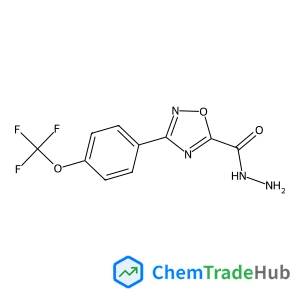
![6-[2-(Trifluoromethoxy)phenyl]-2-pyridinecarboxylic acid structure](https://static.chemtradehub.com/structs/887/887983-48-4-f6ac.webp "6-[2-(Trifluoromethoxy)phenyl]-2-pyridinecarboxylic acid structure")
![6-Nitro-2-(4-nitrophenyl)imidazo[1,2-a]pyridine structure](https://static.chemtradehub.com/structs/118/118000-57-0-cb82.webp "6-Nitro-2-(4-nitrophenyl)imidazo[1,2-a]pyridine structure")





