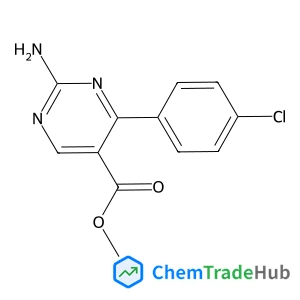
Methyl 2-amino-4-(4-chlorophenyl)-5-pyrimidinecarboxylate
CAS Number:
1133115-56-6
Molecular Formula:
C12H10ClN3O2
Robert Zaleśny, Marta Chołuj, Justyna Kozłowska, Wojciech Bartkowiak, Josep M. Luis
This study focuses on the theoretical description of the influence of spatial confinement on the electronic and vibrational contributions to (hyper)polarizabilities of two dimeric hydrogen bonded systems, namely HCN⋯HCN and HCN⋯HNC. A two-dimensional analytical potential is employed to render the confining environment (e.g. carbon nanotube). Based on the results of the state-of-the-art calculations, performed at the CCSD(T)/aug-cc-pVTZ level of theory, we established that: (i) the influence of spatial confinement increases with increasing order of the electrical properties, (ii) the effect of spatial confinement is much larger in the case of the electronic than vibrational contribution (this holds for each order of the electrical properties) and (iii) the decrease in the static nuclear relaxation first hyperpolarizability upon the increase of confinement strength is mainly due to changes in the harmonic term, however, in the case of nuclear relaxation second hyperpolarizability the anharmonic terms contribute more to the drop of this property.

Proceedings of the National Academy of Sciences of the United States of America

Fibre Chemistry

Journal of Medicinal Chemistry

Science

Journal of Catalysis

Molecular Pharmacology

Israel Journal of Chemistry

Journal of Physics and Chemistry of Solids

Pure and Applied Chemistry

Organic Preparations and Procedures International
Carlos A. Echeverry-Gonzalez, Carlos E. Puerto-Galvis, Carlos H. Borca, Martín A. Mosquera, Andrés F. Luis-Robles, Vladimir V. Kouznetsov
DOI: 10.1039/C9QO00870E
Lin Wang, Pi Cheng, Xinhao Wang, Wei Wang, Jianguo Zeng, Yun Liang, Oliver Reiser
DOI: 10.1039/C9QO01119F
Ting Wang, Zhenyu An, Zhenjie Qi, Daijiao Zhuang, Aosheng Chang, Yunxia Yang, Rulong Yan
DOI: 10.1039/C9QO01014A
Zhengjie Le, Jun Ying
DOI: 10.1039/C9QO00779B
Jiaxin Zhong, Haibing He
DOI: 10.1039/C9QO01111K
Libo Cai, Xiaoyi Zhu, Jiayi Chen, Aijun Lin, Hequan Yao
DOI: 10.1039/C9QO00830F
Meng-Ting Chen, Yang Zhang, Myroslav O. Vysotsky, Joachim O. Lindner, Meng-Hua Li, Mei-Jin Lin, Frank Würthner
DOI: 10.1039/C9QO01090D
6-(3-Fluorophenyl)picolinic acid is generally considered safe for laboratory use...
(3R)-3-Pyrrolidinol is used in the pharmaceutical industry as a precursor for dr...
When handling (4R,5R)-4,5-Diethoxycarbonyl-2,2-dimethyldioxolane (CAS: 59779-75-...
1-(6-Chloroimidazo[1,2-b]pyridazin-3-yl)ethanone is often synthesized via a mult...
The market for N-Ethyl-3,4-dimethylbenzylamine (CAS: 39180-83-1) remains steady,...
Tert-butyl 3-(pyrrolidin-1-yl)azetidine-1-carboxylate is a chemical compound wit...
1-Bromo-3-chloro-2,4-dimethoxybenzene (CAS: 1228956-93-1) falls under the classi...
The safety of 8-Bromo-2-methyl-3,4-dihydroisoquinolin-1(2H)-one (CAS: 1368622-07...
Benzyl [(3S)-2,6-dioxo-3-piperidinyl]carbamate is generally safe when handled wi...
1-{[4-(4,4,5,5-Tetramethyl-1,3,2-dioxaborolan-2-yl)phenyl]sulfonyl}pyrrolidine s...

Physical Chemistry Chemical Physics (PCCP) is an international journal co-owned by 19 physical chemistry and physics societies from around the world. This journal publishes original, cutting-edge research in physical chemistry, chemical physics and biophysical chemistry. To be suitable for publication in PCCP, articles must include significant innovation and/or insight into physical chemistry; this is the most important criterion that reviewers and Editors will judge against when evaluating submissions. The journal has a broad scope and welcomes contributions spanning experiment, theory, computation and data science. Topical coverage includes spectroscopy, dynamics, kinetics, statistical mechanics, thermodynamics, electrochemistry, catalysis, surface science, quantum mechanics, quantum computing and machine learning. Interdisciplinary research areas such as polymers and soft matter, materials, nanoscience, energy, surfaces/interfaces, and biophysical chemistry are welcomed if they demonstrate significant innovation and/or insight into physical chemistry. Joined experimental/theoretical studies are particularly appreciated when complementary and based on up-to-date approaches.
![5-Bromo-3-isopropyl-1H-pyrrolo[2,3-b]pyridine structure](https://static.chemtradehub.com/structs/125/1256819-54-1-8620.webp "5-Bromo-3-isopropyl-1H-pyrrolo[2,3-b]pyridine structure")
![1-Benzyl-1,7-diazaspiro[4.4]nonane dihydrochloride structure](https://static.chemtradehub.com/structs/115/1159822-71-5-0320.webp "1-Benzyl-1,7-diazaspiro[4.4]nonane dihydrochloride structure")