












Enhanced catalytic performance of Co3O4/Eu2O3 with sulfur-modification in activating peroxymonosulfate for removal of methylene blue
Literature Information
Publication Date
2024-01-09
DOI
10.1039/D3NJ02953K
Impact Factor
3.591
Authors
Haili Shen, Ying Wei, Qiang Xia, Jun Shen
View Original
Abstract
Co3O4 is a promising heterogeneous catalyst for activating peroxymonosulfate (PMS) to degrade refractory organic wastewater. However, a further improvement in its catalytic performance towards PMS is highly needed for practical applications. For this goal, we prepared sulfur-modified Co3O4/Eu2O3 nanocomposite as the PMS activator using a facile oxalate-pyrolysis approach with thiosulfate as the sulfur source in this study. Methylene blue (MB), a typical cation dye used in diverse applications, was chosen as the degradation model to evaluate the performance of the catalysts. Under the conditions of catalyst dosage of 0.04 g L−1, PMS concentration of 0.6 mmol L−1 and reaction temperature of 25 °C, an MB degradation ratio up to 99.49% was achieved in the sulfur-modified Co3O4/Eu2O3-PMS reaction system within 30 min. Impressively, the reaction rate constant for MB degradation in this system was 0.1704 min−1, which was vastly higher than that in the systems of Co3O4/Eu2O3-PMS and single PMS. In addition, it was confirmed that sulfur was bonded on the surface of Co3O4/Eu2O3 in the form of SO42−. The increased specific surface area and enhanced polarization effect towards PMS caused by the modification of sulfate were regarded as the main reasons for the boosted catalytic performance of Co3O4/Eu2O3. Moreover, it was proven that MB degradation in the sulfur-modified Co3O4/Eu2O3-PMS system was the result of co-action of ˙SO4−, ˙OH, ˙O2− and 1O2 according to the electron paramagnetic resonance (EPR) tests. This work offers a new concept for the design and preparation of non-metal functionalized heterogeneous cobalt-based catalysts for effective PMS activation and rapid removal of recalcitrant pollutants.
Related Literature
Theoretical study of the infrared and Raman line shapes of liquid methanol
Renhui Zheng, Yuanyuan Sun, Qiang Shi
2010-11-09
Paper
DOI: 10.1039/C0CP01145B
Should negative electron affinities be used for evaluating the chemical hardness?
Carlos Cárdenas, Paul Ayers, Frank De Proft, David J. Tozer, Paul Geerlings
2010-11-26
Paper
DOI: 10.1039/C0CP01785J
Drop sizes and particle coverage in emulsions stabilised solely by silicananoparticles of irregular shape
Bernard P. Binks, Paul D. I. Fletcher, Benjamin L. Holt, James Parker, Pascal Beaussoubre, Kenneth Wong
2010-08-13
Paper
DOI: 10.1039/C0CP00581A
Photochemical induced growth and aggregation of metal nanoparticles in diode-array spectrophotometer via excited dimethyl-sulfoxide
Tomer Zidki
2010-08-31
Paper
DOI: 10.1039/C0CP01037E
The role of aromatic interactions in the structure and energetics of benzyl ketones
Carlos F. R. A. C. Lima, Carlos A. D. Sousa, José E. Rodriguez-Borges, André Melo, John N. Low, Luís M. N. B. F. Santos
2010-07-28
Paper
DOI: 10.1039/C003941A
Facile approaches to build ordered amphiphilic tris(phthalocyaninato) europium triple-decker complex thin films and their comparative performances in ozone sensing
Yanli Chen, Marcel Bouvet, Thibaut Sizun, Yingning Gao, Cedric Plassard, Eric Lesniewska, Jianzhuang Jiang
2010-08-27
Paper
DOI: 10.1039/C0CP00381F
Seeing the forest for the trees: fluorescence studies of single enzymes in the context of ensemble experiments
Yan-Wen Tan, Haw Yang
2010-12-23
Perspective
DOI: 10.1039/C0CP02412K
Diblock copolymer membranes investigated by single-particle tracking
Chandrashekara R. Haramagatti, Felix H. Schacher, Axel H. E. Müller, Jürgen Köhler
2010-11-29
Paper
DOI: 10.1039/C0CP01658F
Mesoscopic non-equilibrium thermodynamics of non-isothermal reaction-diffusion
I. Pagonabarraga, J. M. Ortiz de Zárate, J. V. Sengers
2010-08-27
Paper
DOI: 10.1039/C0CP00289E
Rules for selectivity in oxidation processes on RuO2(110)
Núria López, Gerard Novell-Leruth
2010-08-18
Paper
DOI: 10.1039/C0CP00176G
You might also like
Compound Q&A
What precautions should be taken when handling lithium chloride hydrate (1:1:1) (CAS: 16712-20-2)?
When handling lithium chloride hydrate (1:1:1) (CAS: 16712-20-2), it is importan...
16712-20-2Lithium chloride hyd...
Compound Q&A
Is 4-(4H-1,2,4-Triazol-4-yl)piperidine (CAS: 690261-92-8) safe?
4-(4H-1,2,4-Triazol-4-yl)piperidine is generally considered safe for use in phar...
690261-92-84-(4H-1,2,4-Triazol-...
Compound Q&A
How should waste containing 1,3-Thiazole-2-carboxamide (CAS: 16733-85-0) be handled?
Waste containing 1,3-Thiazole-2-carboxamide (CAS: 16733-85-0) should be collecte...
16733-85-01,3-Thiazole-2-carbo...
Compound Q&A
What regulatory guidelines apply to 5-(Difluoromethyl)-2-fluorobenzonitrile (CAS: 934175-58-3)?
5-(Difluoromethyl)-2-fluorobenzonitrile (CAS: 934175-58-3) is subject to regulat...
934175-58-35-(Difluoromethyl)-2...
Compound Q&A
How is Methyl 3-acetamido-2-thiophenecarboxylate (CAS: 22288-79-5) typically synthesized?
Methyl 3-acetamido-2-thiophenecarboxylate can be synthesized by the reaction of ...
22288-79-5Methyl 3-acetamido-2...
Compound Q&A
What is 4-Isoquinolinecarbonitrile (CAS: 34846-65-6)?
4-Isoquinolinecarbonitrile is a chemical compound with the CAS number 34846-65-6...
34846-65-64-Isoquinolinecarbon...
Compound Q&A
How should Methyl 1H-1,2,3-triazole-4-carboxylate (CAS: 877309-59-6) be stored?
Store Methyl 1H-1,2,3-triazole-4-carboxylate (CAS: 877309-59-6) in a cool, dry p...
877309-59-6Methyl 1H-1,2,3-tria...
Compound Q&A
What regulatory guidelines apply to 6-Bromo[1,3]thiazolo[5,4-b]pyridin-2-amine (CAS: 1160791-13-8)?
6-Bromo[1,3]thiazolo[5,4-b]pyridin-2-amine (CAS: 1160791-13-8) is subject to the...
1160791-13-86-Bromo[1,3]thiazolo...
Compound Q&A
Is (2S,3S)-2-Ammonio-3-(3,4-dihydroxyphenyl)-3-hydroxypropanoate (CAS: 23651-95-8) safe?
(2S,3S)-2-Ammonio-3-(3,4-dihydroxyphenyl)-3-hydroxypropanoate (CAS: 23651-95-8) ...
23651-95-8(2S,3S)-2-Ammonio-3-...
Compound Q&A
What are the physical and chemical properties of 7-bromo-3-methyl-3,4-dihydroquinazolin-4-one (CAS: 1293987-84-4)?
7-Bromo-3-methyl-3,4-dihydroquinazolin-4-one is a solid with a crystalline form....
1293987-84-47-bromo-3-methyl-3,4...
Source Journal
New Journal of Chemistry

CiteScore:
5.3
Self-citation Rate:
3.7%
Articles per Year:
2153
NJC (New Journal of Chemistry) is a broad-based primary journal encompassing all branches of chemistry and its sub-disciplines. It contains full research articles, communications, perspectives and focus articles. This well-established journal, owned by the Centre National de la Recherche Scientifique (CNRS) of France, has been co-published with the Royal Society of Chemistry since January 1998. NJC is the forum for the publication of high-quality, original and significant work that opens new directions in chemistry or other scientific disciplines. In addition to having a significant chemical component, work published in NJC must demonstrate that it will have an impact on areas of research other than that of the reported work.
Recommended Compounds
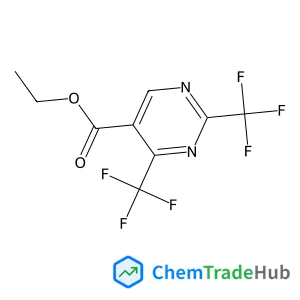
Ethyl 2,4-bis(trifluoromethyl)-5-pyrimidinecarboxylate
CAS Number:
188781-15-9
Molecular Formula:
C9H6F6N2O2
Recommended Suppliers





Disclaimer
This page provides academic journal information for reference and research purposes only. We are not affiliated with any journal publishers and do not handle publication submissions. For publication-related inquiries, please contact the respective journal publishers directly.
If you notice any inaccuracies in the information displayed, please contact us at support@chemtradehub.com. We will promptly review and address your concerns.