












![5,10-Dihydroindeno[2,1-a]indene structure](https://static.chemtradehub.com/structs/654/6543-29-9-71ca.webp "5,10-Dihydroindeno[2,1-a]indene structure")
Drop sizes and particle coverage in emulsions stabilised solely by silicananoparticles of irregular shape
Literature Information
Publication Date
2010-08-13
DOI
10.1039/C0CP00581A
Impact Factor
3.676
Authors
Bernard P. Binks, Paul D. I. Fletcher, Benjamin L. Holt, James Parker, Pascal Beaussoubre, Kenneth Wong
View Original
Abstract
We have investigated emulsions stabilised solely by partially-hydrophobised fumed silica particles which consist of a mixture of primary particles and irregularly-shaped fused aggregates and larger agglomerates. The particle wettability is controlled by varying the extent of hydrophobisation of their surfaces. This, in turn, controls the contact angle between the oil–water interface and the particle surface (θow) which affects the particle adsorption energy and the type of emulsion formed (oil-in-water, o/w or water-in-oil, w/o). Progressive particle hydrophobisation causes transitional phase inversion of the emulsions from o/w to w/o which occurs when θow = 90° and the energy of particle adsorption to the oil–water interface is maximally favourable. The key problem addressed here is to understand why the emulsion drop size passes through a minimum at the point of emulsion phase inversion. In principle, this effect could be the result of particle desorption, changes in the extent of close-packing of the adsorbed particle film (at constant particle orientation), particle re-orientation or a combination of these processes. Using measurements of emulsion drop size and the extent of particle desorption, we have derived adsorbed particle surface concentrations as a function of the energy of desorption of the particles from the oil–water interface for a range of particle concentrations and different oil–water systems. The main conclusion is that the minimum in emulsion drop size through phase inversion is mainly caused by re-orientation of the particles from a high surface area orientation when the energy of desorption is high to a low surface area orientation when the energy of desorption is low. Some particle desorption occurs but this is a secondary effect.
Related Literature
Advances in the synthesis of silyl-modified polymers (SMPs)
2018-03-19
Review Article
DOI: 10.1039/C8PY00265G
Synthesis, properties, and crystallization of the alternating stereocopolymer poly(l-lactic acid-alt-d-lactic acid) [syndiotactic poly(lactic acid)] and its blend with isotactic poly(lactic acid)
Hideto Tsuji, Yuki Arakawa
2018-04-10
Paper
DOI: 10.1039/C8PY00391B
Establishment of a molecular design to obtain visible-light-activated azoxy polymer actuators
Yang Chen, Laibing Wang, Xiangqiang Pan, Jin'an Wu, Wei Zhang, Zhengbiao Zhang, Xiulin Zhu
2018-03-15
Paper
DOI: 10.1039/C8PY00199E
Control of the primary and secondary structure of polymer brushes by surface-initiated living/controlled polymerization
2017-07-14
Review Article
DOI: 10.1039/C7PY00956A
Synthesis of indocyanine green functionalized comblike poly(aspartic acid) derivatives for enhanced cancer cell ablation by targeting the endoplasmic reticulum
Jiaxun Wan, Luyan Sun, Pan Wu, Fang Wang, Jia Guo, Jianjun Cheng, Changchun Wang
2018-02-06
Paper
DOI: 10.1039/C7PY01994G
Covalently assembled polymer nanocapsules: a novel scaffold for light-harvesting
Xiaotong Fan, Ruizhen Tian, Shengda Liu, Shanpeng Qiao, Quan Luo, Tengfei Yan, Shuang Fu, Xin Zhang, Jiayun Xu, Junqiu Liu
2018-02-22
Communication
DOI: 10.1039/C7PY02068F
Palladium-polymer nanoreactors for the aqueous asymmetric synthesis of therapeutic flavonoids
E. Lestini, L. D. Blackman, C. M. Zammit, R. J. Williams, M. Inam, B. Couturaud, R. K. O'Reilly
2018-01-30
Communication
DOI: 10.1039/C7PY02050C
Biomimetic antimicrobial polymers: recent advances in molecular design
Cansu Ergene, Kazuma Yasuhara, Edmund F. Palermo
2018-04-23
Review Article
DOI: 10.1039/C8PY00012C
Homogenous photopolymerization of acrylic monomers initiated with ZnO-methacrylate in non-aqueous medium and production of luminescent nanocomposites
Irem Ulku, Fabrice Morlet-Savary, Jacques Lalevée
2018-01-19
Communication
DOI: 10.1039/C7PY02030A
You might also like
Compound Q&A
What precautions should be taken when handling lithium chloride hydrate (1:1:1) (CAS: 16712-20-2)?
When handling lithium chloride hydrate (1:1:1) (CAS: 16712-20-2), it is importan...
16712-20-2Lithium chloride hyd...
Compound Q&A
Is 4-(4H-1,2,4-Triazol-4-yl)piperidine (CAS: 690261-92-8) safe?
4-(4H-1,2,4-Triazol-4-yl)piperidine is generally considered safe for use in phar...
690261-92-84-(4H-1,2,4-Triazol-...
Compound Q&A
How should waste containing 1,3-Thiazole-2-carboxamide (CAS: 16733-85-0) be handled?
Waste containing 1,3-Thiazole-2-carboxamide (CAS: 16733-85-0) should be collecte...
16733-85-01,3-Thiazole-2-carbo...
Compound Q&A
What regulatory guidelines apply to 5-(Difluoromethyl)-2-fluorobenzonitrile (CAS: 934175-58-3)?
5-(Difluoromethyl)-2-fluorobenzonitrile (CAS: 934175-58-3) is subject to regulat...
934175-58-35-(Difluoromethyl)-2...
Compound Q&A
How is Methyl 3-acetamido-2-thiophenecarboxylate (CAS: 22288-79-5) typically synthesized?
Methyl 3-acetamido-2-thiophenecarboxylate can be synthesized by the reaction of ...
22288-79-5Methyl 3-acetamido-2...
Compound Q&A
What is 4-Isoquinolinecarbonitrile (CAS: 34846-65-6)?
4-Isoquinolinecarbonitrile is a chemical compound with the CAS number 34846-65-6...
34846-65-64-Isoquinolinecarbon...
Compound Q&A
How should Methyl 1H-1,2,3-triazole-4-carboxylate (CAS: 877309-59-6) be stored?
Store Methyl 1H-1,2,3-triazole-4-carboxylate (CAS: 877309-59-6) in a cool, dry p...
877309-59-6Methyl 1H-1,2,3-tria...
Compound Q&A
What regulatory guidelines apply to 6-Bromo[1,3]thiazolo[5,4-b]pyridin-2-amine (CAS: 1160791-13-8)?
6-Bromo[1,3]thiazolo[5,4-b]pyridin-2-amine (CAS: 1160791-13-8) is subject to the...
1160791-13-86-Bromo[1,3]thiazolo...
Compound Q&A
Is (2S,3S)-2-Ammonio-3-(3,4-dihydroxyphenyl)-3-hydroxypropanoate (CAS: 23651-95-8) safe?
(2S,3S)-2-Ammonio-3-(3,4-dihydroxyphenyl)-3-hydroxypropanoate (CAS: 23651-95-8) ...
23651-95-8(2S,3S)-2-Ammonio-3-...
Compound Q&A
What are the physical and chemical properties of 7-bromo-3-methyl-3,4-dihydroquinazolin-4-one (CAS: 1293987-84-4)?
7-Bromo-3-methyl-3,4-dihydroquinazolin-4-one is a solid with a crystalline form....
1293987-84-47-bromo-3-methyl-3,4...
Source Journal
Physical Chemistry Chemical Physics

CiteScore:
5.5
Self-citation Rate:
10.3%
Articles per Year:
3036
Physical Chemistry Chemical Physics (PCCP) is an international journal co-owned by 19 physical chemistry and physics societies from around the world. This journal publishes original, cutting-edge research in physical chemistry, chemical physics and biophysical chemistry. To be suitable for publication in PCCP, articles must include significant innovation and/or insight into physical chemistry; this is the most important criterion that reviewers and Editors will judge against when evaluating submissions. The journal has a broad scope and welcomes contributions spanning experiment, theory, computation and data science. Topical coverage includes spectroscopy, dynamics, kinetics, statistical mechanics, thermodynamics, electrochemistry, catalysis, surface science, quantum mechanics, quantum computing and machine learning. Interdisciplinary research areas such as polymers and soft matter, materials, nanoscience, energy, surfaces/interfaces, and biophysical chemistry are welcomed if they demonstrate significant innovation and/or insight into physical chemistry. Joined experimental/theoretical studies are particularly appreciated when complementary and based on up-to-date approaches.
Recommended Compounds
![(R)-N-[(S)-1-[2-(Diphenylphosphino)phenyl]ethyl]-2-methylpropane-2-sulfinamide structure](https://static.chemtradehub.com/structs/159/1595319-98-4-33e7.webp "(R)-N-[(S)-1-[2-(Diphenylphosphino)phenyl]ethyl]-2-methylpropane-2-sulfinamide structure")
(R)-N-[(S)-1-[2-(Diphenylphosphino)phenyl]ethyl]-2-methylpropane-2-sulfinamide
CAS Number:
1595319-98-4
Molecular Formula:
C24H28NOPS
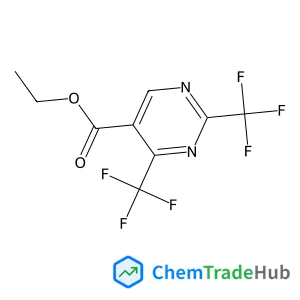
Ethyl 2,4-bis(trifluoromethyl)-5-pyrimidinecarboxylate
CAS Number:
188781-15-9
Molecular Formula:
C9H6F6N2O2
Recommended Suppliers








Disclaimer
This page provides academic journal information for reference and research purposes only. We are not affiliated with any journal publishers and do not handle publication submissions. For publication-related inquiries, please contact the respective journal publishers directly.
If you notice any inaccuracies in the information displayed, please contact us at support@chemtradehub.com. We will promptly review and address your concerns.