












The role of aromatic interactions in the structure and energetics of benzyl ketones
Literature Information
Publication Date
2010-07-28
DOI
10.1039/C003941A
Impact Factor
3.676
Authors
Carlos F. R. A. C. Lima, Carlos A. D. Sousa, José E. Rodriguez-Borges, André Melo, John N. Low, Luís M. N. B. F. Santos
View Original
Abstract
A qualitative and quantitative energetic and structural study of dibenzyl ketone (DBK) and benzyl ethyl ketone (BEK) was carried out in order to obtain insights into the type and magnitude of aromatic interactions that these systems present in their different phases. The crystal structure of DBK was obtained by X-ray crystallography, and it shows that the conformation adopted in the crystalline state is governed by the intermolecular interactions. The standard (p0 = 105 Pa) molar enthalpy of formation in the gaseous state at T = 298.15 K was derived by Calvet and combustion calorimetry. Using a homodesmic reaction scheme, the first calorimetric evaluation of the interaction enthalpy between two stacked phenyl rings is presented. A stabilizing enthalpic effect of (12.9 ± 4.9) kJ mol−1 associated with the intramolecular π–π interaction in DBK was found. The gas phase intramolecular π⋯π interaction in DBK is in agreement with quantum chemical calculations at B3LYP/6-311++G(d,p) and MP2 with various basis-sets. An intramolecular π⋯π interaction in DBK and a weak C–H⋯π interaction in BEK were found by variable-temperature 1H-NMR spectroscopy in MeOD. These observations are consistent with a hindered rotor interpretation, supported by ab initio calculations for the gas phase at the MP2/cc-pVDZ level. The global results indicate a distinct molecular structure on going from crystalline DBK to liquid, gas, and solution phases, ruled by the overall contribution of the intra- and intermolecular interactions.
Related Literature
One-pot preparation of polylactic acid-ibuprofen conjugates and their performance characterization
Liang Cao, Qun-Fang Wang, Zhi-Feng Hao, Le Jing, Zhao-Yang Wang
2017-10-24
Paper
DOI: 10.1039/C7PY01213F
Synthesis of indocyanine green functionalized comblike poly(aspartic acid) derivatives for enhanced cancer cell ablation by targeting the endoplasmic reticulum
Jiaxun Wan, Luyan Sun, Pan Wu, Fang Wang, Jia Guo, Jianjun Cheng, Changchun Wang
2018-02-06
Paper
DOI: 10.1039/C7PY01994G
A novel radical polymerization system initiated by a redox reaction with NHPI and xanthone
2017-09-19
Communication
DOI: 10.1039/C7PY01329A
Thermo- and redox-responsive dendronized polymer hydrogels
Xiacong Zhang, Yu Yin, Jiatao Yan, Afang Zhang
2018-01-10
Paper
DOI: 10.1039/C7PY01284E
Nano-porous structures via self-assembly of amphiphilic triblock copolymers: influence of solvent and molecular weight
S. Nehache, M. Semsarilar, A. Deratani, M. In, P. Dieudonné-George, J. Lai Kee Him, P. Bron, D. Quémener
2017-12-01
Paper
DOI: 10.1039/C7PY01853C
Bio-inspired peptide decorated dendrimers for a robust antibacterial coating on hydroxyapatite
Xiao Yang, Libang He, Xinyuan Xu, Yanpeng Liu, Yuebo Liu, Yuan Gao, Qin Huang, Kunneng Liang, Chunmei Ding, Jiyao Li, Changsheng Zhao, Jianshu Li
2017-06-23
Paper
DOI: 10.1039/C7PY00811B
Encapsulation property of hyperbranched polyglycerols as prospective drug delivery systems
Ting Yin, Ke Li, Ruibin Wang, Yantian Chen, Lili Jing
2017-12-04
Paper
DOI: 10.1039/C7PY01419H
Synthesis of linear and star poly(ε-caprolactone) with controlled and high molecular weights via cyclic trimeric phosphazene base catalyzed ring-opening polymerization
Huaike Li, Na Zhao, Chuanli Ren, Shaofeng Liu, Zhibo Li
2017-11-13
Paper
DOI: 10.1039/C7PY01673E
Bio-inks for 3D bioprinting: recent advances and future prospects
2017-07-10
Review Article
DOI: 10.1039/C7PY00826K
Rapid synthesis of well-defined all-acrylic diblock copolymer nano-objects via alcoholic photoinitiated polymerization-induced self-assembly (photo-PISA)
Jun He, Xueliang Li, Qin Xu, Chundong Huang, Dongdong Liu
2017-11-01
Paper
DOI: 10.1039/C7PY01652B
You might also like
Compound Q&A
What precautions should be taken when handling lithium chloride hydrate (1:1:1) (CAS: 16712-20-2)?
When handling lithium chloride hydrate (1:1:1) (CAS: 16712-20-2), it is importan...
16712-20-2Lithium chloride hyd...
Compound Q&A
Is 4-(4H-1,2,4-Triazol-4-yl)piperidine (CAS: 690261-92-8) safe?
4-(4H-1,2,4-Triazol-4-yl)piperidine is generally considered safe for use in phar...
690261-92-84-(4H-1,2,4-Triazol-...
Compound Q&A
How should waste containing 1,3-Thiazole-2-carboxamide (CAS: 16733-85-0) be handled?
Waste containing 1,3-Thiazole-2-carboxamide (CAS: 16733-85-0) should be collecte...
16733-85-01,3-Thiazole-2-carbo...
Compound Q&A
What regulatory guidelines apply to 5-(Difluoromethyl)-2-fluorobenzonitrile (CAS: 934175-58-3)?
5-(Difluoromethyl)-2-fluorobenzonitrile (CAS: 934175-58-3) is subject to regulat...
934175-58-35-(Difluoromethyl)-2...
Compound Q&A
How is Methyl 3-acetamido-2-thiophenecarboxylate (CAS: 22288-79-5) typically synthesized?
Methyl 3-acetamido-2-thiophenecarboxylate can be synthesized by the reaction of ...
22288-79-5Methyl 3-acetamido-2...
Compound Q&A
What is 4-Isoquinolinecarbonitrile (CAS: 34846-65-6)?
4-Isoquinolinecarbonitrile is a chemical compound with the CAS number 34846-65-6...
34846-65-64-Isoquinolinecarbon...
Compound Q&A
How should Methyl 1H-1,2,3-triazole-4-carboxylate (CAS: 877309-59-6) be stored?
Store Methyl 1H-1,2,3-triazole-4-carboxylate (CAS: 877309-59-6) in a cool, dry p...
877309-59-6Methyl 1H-1,2,3-tria...
Compound Q&A
What regulatory guidelines apply to 6-Bromo[1,3]thiazolo[5,4-b]pyridin-2-amine (CAS: 1160791-13-8)?
6-Bromo[1,3]thiazolo[5,4-b]pyridin-2-amine (CAS: 1160791-13-8) is subject to the...
1160791-13-86-Bromo[1,3]thiazolo...
Compound Q&A
Is (2S,3S)-2-Ammonio-3-(3,4-dihydroxyphenyl)-3-hydroxypropanoate (CAS: 23651-95-8) safe?
(2S,3S)-2-Ammonio-3-(3,4-dihydroxyphenyl)-3-hydroxypropanoate (CAS: 23651-95-8) ...
23651-95-8(2S,3S)-2-Ammonio-3-...
Compound Q&A
What are the physical and chemical properties of 7-bromo-3-methyl-3,4-dihydroquinazolin-4-one (CAS: 1293987-84-4)?
7-Bromo-3-methyl-3,4-dihydroquinazolin-4-one is a solid with a crystalline form....
1293987-84-47-bromo-3-methyl-3,4...
Source Journal
Physical Chemistry Chemical Physics

CiteScore:
5.5
Self-citation Rate:
10.3%
Articles per Year:
3036
Physical Chemistry Chemical Physics (PCCP) is an international journal co-owned by 19 physical chemistry and physics societies from around the world. This journal publishes original, cutting-edge research in physical chemistry, chemical physics and biophysical chemistry. To be suitable for publication in PCCP, articles must include significant innovation and/or insight into physical chemistry; this is the most important criterion that reviewers and Editors will judge against when evaluating submissions. The journal has a broad scope and welcomes contributions spanning experiment, theory, computation and data science. Topical coverage includes spectroscopy, dynamics, kinetics, statistical mechanics, thermodynamics, electrochemistry, catalysis, surface science, quantum mechanics, quantum computing and machine learning. Interdisciplinary research areas such as polymers and soft matter, materials, nanoscience, energy, surfaces/interfaces, and biophysical chemistry are welcomed if they demonstrate significant innovation and/or insight into physical chemistry. Joined experimental/theoretical studies are particularly appreciated when complementary and based on up-to-date approaches.
Recommended Compounds
![6,6-Dimethylbicyclo[3.1.1]hept-2-ene-2-carbaldehyde structure](https://static.chemtradehub.com/structs/564/564-94-3-e746.webp "6,6-Dimethylbicyclo[3.1.1]hept-2-ene-2-carbaldehyde structure")
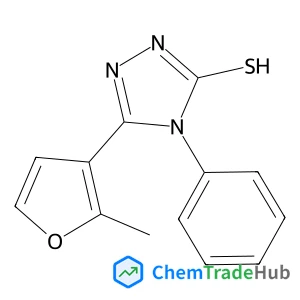
5-(2-Methyl-3-furyl)-4-phenyl-2,4-dihydro-3H-1,2,4-triazole-3-thione
CAS Number:
346464-59-3
Molecular Formula:
C13H11N3OS
Recommended Suppliers







Disclaimer
This page provides academic journal information for reference and research purposes only. We are not affiliated with any journal publishers and do not handle publication submissions. For publication-related inquiries, please contact the respective journal publishers directly.
If you notice any inaccuracies in the information displayed, please contact us at support@chemtradehub.com. We will promptly review and address your concerns.