













![4-[(2-Oxo-1,2,3,4-tetrahydroquinolin-7-yl)oxy]butanoic acid structure](https://static.chemtradehub.com/structs/588/58899-27-7-1f86.webp "4-[(2-Oxo-1,2,3,4-tetrahydroquinolin-7-yl)oxy]butanoic acid structure")
4-[(2-Oxo-1,2,3,4-tetrahydroquinolin-7-yl)oxy]butanoic acid
CAS Number:
58899-27-7
Molecular Formula:
C18H24N2O7
Amir Mohammad Ghafari, Michele Catacchio, Emil Rosqvist, Axel Luukkonen, Anni Eklund, Kim Björkström, Ronald Österbacka
Organic electrochemical transistors (OECTs) are widely employed in several bioelectronic applications such as biosensors, logic circuits, and neuromorphic engineering, providing a seamless link between the realm of biology and electronics. More specifically, OECTs are endowed with remarkable signal amplification, the ability to operate in an aqueous environment, and the effective transduction of ionic to electrical signals. One main limiting factor preventing OECTs’ wide use is the need for microfabrication processes, typically requiring specialized equipment. From this perspective, a robust and cost-effective production protocol to achieve high-performing OECT would be desirable. Herein, a straightforward stencil-printed OECT fabrication procedure is proposed, where the electrical performance can be controlled by adjusting the electronic channel fabrication conditions. An experimental design approach is undertaken to optimize OECT figures of merit by varying key parameters such as the annealing temperature and time, as well as the transistor active channel length. The resulting OECT devices, fabricated through a high-yield, cost-effective, and fast stencil printing technique, feature large transconductance values at low operating voltages. The experimental design allowed for minimizing the threshold voltage (VT = 260 mV) while keeping a high on/off ratio (7 × 10³). A signal-to-noise ratio as high as 40 dB was obtained, which is among the highest for OECTs, operating in an aqueous electrolyte operated in a DC mode. An atomic force microscopy (AFM) characterization has been undertaken to analyze the channel morphology in the OECTs, correlating the annealing conditions with the charge transport properties.
Lihai Ma, Wenlong Song, Yaqin Xing, Kangzhou Wang, Xinhua Gao, Qingxiang Ma, Jianli Zhang, Jingjing Ma, Qingjie Guo
DOI: 10.1039/D3NJ04905A
Maryam Ramezani, Mary Beth Browning Monroe
DOI: 10.1039/D3TB02472E
Rüveyda Ağcaabat, Cemile Seslikaya, Volkan Fındık, Safiye Sağ Erdem, Zafer Odabaş
DOI: 10.1039/D3NJ03944G
Yige Ma, Jinxin Ye, Guofeng Li, Xiaoxu Kang, Wensheng Xie, Xing Wang
DOI: 10.1039/D3TB02362A
Lingdong Li, Songwei Zhang, Zhongtian Du, Hande Wang, Hao Zhou
DOI: 10.1039/D3NJ04005D
Xi Wang, Zhao Li, Lei Liu, Jiuqing Hu, Haobo Shen, Rongrong Li, Zhiqiang Geng, Zunlong Jin, Changliang Wang
DOI: 10.1039/D3NJ05117J
Irene Diaz-Herrezuelo, Gonzalo Vega, Marina Navarro, Pilar Miranzo, M. Isabel Osendi, Jose A. Casas, Asuncion Quintanilla, Manuel Belmonte
DOI: 10.1039/D3TA05644A
Yuqian Mao, Huihui Zhao, Lemin Zhang, Long Xiong, Zhisheng Long
DOI: 10.1039/D3TB02600K
4-(4-tert-Butylphenyl)-1H-pyrazol-3-amine finds applications in various industri...
H3TATAB is used in the pharmaceutical industry for the synthesis of certain orga...
1-Ethyl-3-fluorobenzene (CAS: 696-39-9) is primarily used as a precursor in the ...
1-(tert-Butoxycarbonyl)-4-(4-methoxyphenyl)pyrrolidine-3-carboxylic acid is prim...
1-Cyclobutyl-4-piperidinone (CAS: 359880-05-0) is a colorless or white crystalli...
Pyridine-2,6-dicarboxylic acid mono-tert-butyl ester (CAS: 575433-76-0) is a che...
The market for 2,3-Difluorophenylalanine (CAS: 236754-62-4) is growing with incr...
(2-Hydroxy-1-naphthyl)boronic acid can be synthesized through the reduction of 2...
This compound is a crystalline solid with a molecular weight of approximately 52...
While 5,7-Dihydroxy-4-oxo-2-(3,4,5-trihydroxyphenyl)-4H-chromen-3-yl beta-D-gluc...
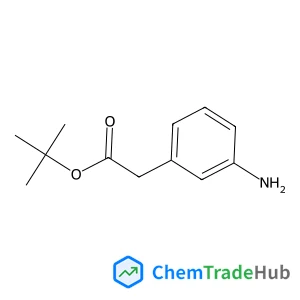
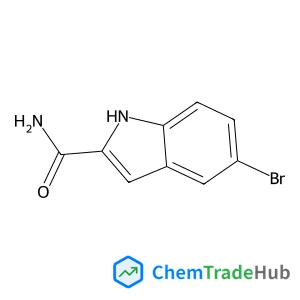
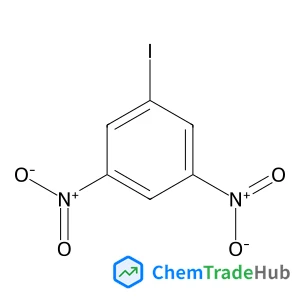
![7-Amino-5-methyl-5,7-dihydro-6H-dibenzo[b,d]azepin-6-one hydrochloride (1:1) structure](https://static.chemtradehub.com/structs/209/209984-32-7-9912.webp "7-Amino-5-methyl-5,7-dihydro-6H-dibenzo[b,d]azepin-6-one hydrochloride (1:1) structure")




