













High-performance polyimine vitrimers from an aromatic bio-based scaffold
Literature Information
Publication Date
2023-07-20
DOI
10.1039/D3LP00019B
Impact Factor
0
Authors
Kevin A. Stewart, Jacob J. Lessard, Alexander J. Cantor, John F. Rynk, Laura S. Bailey, Brent S. Sumerlin
View Original
Abstract
Bio-based vitrimers represent a promising class of thermosetting polymer materials, pairing the recyclability of dynamic covalent networks with the renewability of non-fossil fuel feedstocks. Vanillin, a low-cost lignin derivative, enables facile construction of polyimine networks marked by rapid exchange and sensitivity to acid-catalyzed hydrolysis. Furthermore, the aromatic structure makes it a promising candidate for the design of highly aromatic networks capable of high-performance thermal and dimensional stability. Such properties are paramount in polymeric thermal protection systems. Here, we report on the fabrication of polyimine networks with particularly high aromatic content from a novel trifunctional vanillin monomer prepared from the nucleophilic aromatic substitution of perfluoropyridine (PFP) on a multi-gram scale (>20 g) in high yield (86%). The trifunctional aromatic scaffold was then crosslinked with various diamines to demonstrate tunable viscoelastic behavior and thermal properties, with glass transition temperatures (Tg) ranging from 9 to 147 °C, degradation temperatures (5% mass loss) up to approximately 370 °C, and excellent char yields up to 68% at 650 °C under nitrogen. Moreover, the vitrimers displayed mechanical reprocessability over five destruction/healing cycles and rapid chemical recyclability following acidic hydrolysis at mild temperatures. Our findings indicate that vitrimers possessing tunable properties and high-performance thermomechanical behavior can be easily constructed from vanillin and electrophilic aromatic scaffolds for applications in heat-shielding materials and ablative coatings.
Related Literature
Correction: Reactions of 2-aza-21-carbaporphyrin with aniline derivatives
Demin Ren, Bin Liu, Xiaofang Li, Sebastian Koniarz, Miłosz Pawlicki, Piotr J. Chmielewski
2019-03-18
Correction
DOI: 10.1039/C9QO90026H
Rapid glycosylation of 2′-benzoylphenyl glycosides promoted by TfOH
Da-Ke Liu, De-Cai Xiong, Xia Wu, Qin Li, Xin-Shan Ye
2019-06-19
Research Article
DOI: 10.1039/C9QO00629J
Effect of fluorine substitution in organoboron electron acceptors for photovoltaic application
Fangbin Liu, Jun Liu, Lixiang Wang
2019-04-17
Research Article
DOI: 10.1039/C9QO00286C
Synthesis of a sumanenyl hafnocene complex‡
Toru Amaya, Shun Katoh, Toshiyuki Moriuchi, Toshikazu Hirao
2019-03-13
Research Article
DOI: 10.1039/C9QO00140A
Copper-catalysed C(sp3)–N coupling initiated by selective C–C bond cleavage of cyclobutanone oxime esters
Qing-Qiang Min, Na Li, Guang-Le Chen
2019-02-27
Research Article
DOI: 10.1039/C9QO00235A
Progress in the synthesis of perylene bisimide dyes
Agnieszka Nowak-Król, Frank Würthner
2019-03-07
Review Article
DOI: 10.1039/C8QO01368C
Transition metal catalysed C7 and ortho-selective halogenation of 2-arylbenzo[d]oxazoles
Xi Hong, Quan Zhou, Shuang Huang, He-Zhen Cui, Zhi-Ming Li, Xiu-Feng Hou
2019-04-30
Research Article
DOI: 10.1039/C9QO00429G
Catalytic enantioselective cross-dehydrogenative coupling of 3,6-dihydro-2H-pyrans with aldehydes
Xiaodong Xin, Xinhui Pan, Zhilin Meng, Xigong Liu
2019-03-20
Research Article
DOI: 10.1039/C9QO00123A
Synthesis of an open-cage fullerene-based unidirectional H-bonding network and its coordination with titanium
Hao Zhang, Jie Su, Changwang Pan, Xing Lu
2019-03-05
Research Article
DOI: 10.1039/C9QO00188C
Cu(ii)- or Co(ii)-Catalyzed C(SP3)–H oxidation of N,N-dimethylaminoethanol: facile synthesis of methylene-bridged biindoles and 3-formylindoles selectively
Robert C. Hider
2019-03-01
Research Article
DOI: 10.1039/C9QO00097F
You might also like
Compound Q&A
How should waste containing (6-Bromo-2-naphthyl)oxy](dimethyl)(2-methyl-2-propanyl)silane be handled?
Waste containing (6-Bromo-2-naphthyl)oxy](dimethyl)(2-methyl-2-propanyl)silane (...
100751-65-3[(6-Bromo-2-naphthyl...
Compound Q&A
How is 7-Fluoro-4-isoquinolinecarboxylic acid (CAS: 1841081-40-0) typically synthesized?
7-Fluoro-4-isoquinolinecarboxylic acid can be synthesized via a multi-step proce...
1841081-40-07-Fluoro-4-isoquinol...
Compound Q&A
What are the physical and chemical properties of 2,3,5,6-Tetrabromothieno[3,2-b]thiophene (CAS: 124638-53-5)?
2,3,5,6-Tetrabromothieno[3,2-b]thiophene is a crystalline compound with a high m...
124638-53-52,3,5,6-Tetrabromoth...
Compound Q&A
Is 1-[4-(Benzylamino)-7,8-dihydro-5H-pyrano[4,3-d]pyrimidin-2-yl]-2-methyl-1H-indole-4-carboxamide (CAS: 1542705-92-9) safe?
1-[4-(Benzylamino)-7,8-dihydro-5H-pyrano[4,3-d]pyrimidin-2-yl]-2-methyl-1H-indol...
1542705-92-91-[4-(Benzylamino)-7...
Compound Q&A
What is the market or research trend for imidazo[5,1-d]-1,2,3,5-tetrazine-8-carboxylic acid, 3,4-dihydro-3-methyl-4-oxo- (CAS: 113942-30-6)?
The market for imidazo[5,1-d]-1,2,3,5-tetrazine-8-carboxylic acid, 3,4-dihydro-3...
113942-30-6Imidazo[5,1-d]-1,2,3...
Compound Q&A
What is 3-(Triisopropylsilyl)propiolaldehyde (CAS: 163271-80-5)?
3-(Triisopropylsilyl)propiolaldehyde is a synthetic organic compound with the CA...
163271-80-53-(Triisopropylsilyl...
Compound Q&A
What regulatory guidelines apply to 6-Nitro-2H-1,4-benzoxazin-3(4H)-one (CAS: 81721-87-1)?
6-Nitro-2H-1,4-benzoxazin-3(4H)-one (CAS: 81721-87-1) is subject to various regu...
81721-87-16-Nitro-2H-1,4-benzo...
Compound Q&A
How should waste containing (3-Fluorophenyl)(4-{[(2-methyl-2-propanyl)oxy]carbonyl}-1-piperazinyl)acetic acid (CAS: 885272-91-3) be handled?
Waste containing (3-Fluorophenyl)(4-{[(2-methyl-2-propanyl)oxy]carbonyl}-1-piper...
885272-91-3(3-Fluorophenyl)(4-{...
Compound Q&A
What are the physical and chemical properties of N,N'-4,4'-Biphenyldiyldiisonicotinamide (CAS: 55119-40-9)?
N,N'-4,4'-Biphenyldiyldiisonicotinamide is a white crystalline solid with a mole...
55119-40-9N,N'-4,4'-Biphenyldi...
Compound Q&A
What industries use 6-Bromo-8-fluoro-2-quinazolinol (CAS: 1036756-15-6)?
6-Bromo-8-fluoro-2-quinazolinol is primarily used in the pharmaceutical industry...
1036756-15-66-Bromo-8-fluoro-2-q...
Source Journal
Recommended Compounds
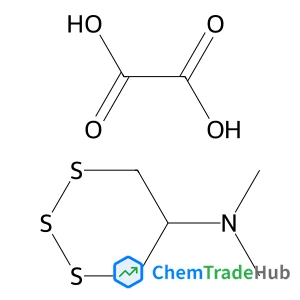
Oxalic acid compound with cyclohexylsulfamothioic O-acid (11)
CAS Number:
31895-22-4
Molecular Formula:
C7H13NO4S3
Recommended Suppliers







Disclaimer
This page provides academic journal information for reference and research purposes only. We are not affiliated with any journal publishers and do not handle publication submissions. For publication-related inquiries, please contact the respective journal publishers directly.
If you notice any inaccuracies in the information displayed, please contact us at support@chemtradehub.com. We will promptly review and address your concerns.