













OER highly active encapsulants to improve the electrochemical anticorrosion of Fe–N–C for ultralong-lifespan and high-rate rechargeable zinc–air batteries
Literature Information
Publication Date
2023-07-29
DOI
10.1039/D3EY00160A
Impact Factor
0
Authors
Jiale Li, Niu Huang, Minghui Lv, Na Su, Chao Li, Yingping Huang, Yongye Wang, Yong Zheng, Wei Liu, Tianyi Ma, Liqun Ye
View Original
Abstract
Fe–N–C has been exploited as a promising oxygen reduction reaction (ORR) electrocatalyst. However, carbon corrosion and corresponding coordination structure destruction inevitably happen upon exposure at high potentials. Even under low potentials, the byproduct peroxide generated in 2-electron ORR processes produces radicals such as ˙OH and ˙OOH with Fe-center allies via Fenton-like reactions to destroy catalyst structures. In this work, we designed a composite, wherein each N-doped carbon nanotube with Fe nanoparticles encapsulated in the Fe-NCNT is uniformly and tightly wrapped by vertically grown NiFe-layered double hydroxide (LDH) nanosheets. During the charging process of Zn–air batteries (ZABs), the external NiFe-LDH preferentially catalyzes oxygen evolution reactions (OERs), and thus the internal Fe-NCNT could simply act as a carbon skeleton to transfer electrons. Moreover, the Fe-NCNT@NiFe-LDH displays a strikingly high peroxide disproportionation rate and superior electrocatalytic activities towards peroxide reduction and oxidation reactions. Thus, the radical corrosion is enormously reduced. The Fe-NCNT@NiFe-LDH delivers a record-refresh overpotential difference of 0.52 V, surpassing that of recently reported state-of-the-art bifunctional oxygen electrocatalysts. The composite-based ZABs demonstrate long discharging/charging lifespans and excellent rate performances, e.g. over 5000 cycles (near 1743 h) at 50 mA cm−2.
Related Literature
Synergistic effect of the Pd–Ni bimetal/carbon nanofiber composite catalyst in Suzuki coupling reaction
Guangyang Bao, Jie Bai, Chunping Li
2018-12-10
Research Article
DOI: 10.1039/C8QO01100A
Highly efficient copper-catalyzed direct C–H amidation of quinoxalin-2(1H)-ones with amidates under microwave irradiation
Jinwei Yuan, Junliang Zhu, Junhao Fu, Liangru Yang, Yongmei Xiao, Pu Mao, Xue Du
2019-02-12
Research Article
DOI: 10.1039/C9QO00063A
Copper-catalysed C(sp3)–N coupling initiated by selective C–C bond cleavage of cyclobutanone oxime esters
Qing-Qiang Min, Na Li, Guang-Le Chen
2019-02-27
Research Article
DOI: 10.1039/C9QO00235A
Ruthenium(ii)-catalyzed selective C–H bond activation of imidamides and coupling with sulfoxonium ylides: an efficient approach for the synthesis of highly functional 3-ketoindoles
Jianhui Zhou, Guoxue He, Huihui Li, Qiaolan Yang, Run Wang, Yu Zhou
2019-02-27
Research Article
DOI: 10.1039/C9QO00048H
Synthesis, photophysical properties, and self-dimerization studies of 2-λ5-phosphaquinolin-2-ones
Jeremy P. Bard, Chun-Lin Deng, Hannah C. Richardson, Jacob M. Odulio, Joshua E. Barker, Lev N. Zakharov, Paul H.-Y. Cheong, Darren W. Johnson, Michael M. Haley
2019-03-25
Research Article
DOI: 10.1039/C9QO00199A
Insights into highly selective ring expansion of oxaziridines under Lewis base catalysis: a DFT study
Qiao-Chu Zhang, Xue Li, Xinghua Wang, Shi-Jun Li, Ling-Bo Qu, Donghui Wei
2019-01-25
Research Article
DOI: 10.1039/C8QO01370E
Enantioselective synthesis of trifluoromethylated dihydroquinoxalinones via palladium-catalyzed hydrogenation
Zhihong Deng, Qin Yang, Jian Huang, Yiyuan Peng
2019-01-31
Research Article
DOI: 10.1039/C8QO01361F
Synthesis of azuleno[2,1-b]thiophenes by cycloaddition of azulenylalkynes with elemental sulfur and their structural, optical and electrochemical properties
Taku Shoji, Kota Miura, Akira Ohta, Ryuta Sekiguchi, Shunji Ito, Yuya Endo, Tatsuki Nagahata, Shigeki Mori, Tetsuo Okujima
2019-06-20
Research Article
DOI: 10.1039/C9QO00593E
Transition metal catalysed C7 and ortho-selective halogenation of 2-arylbenzo[d]oxazoles
Xi Hong, Quan Zhou, Shuang Huang, He-Zhen Cui, Zhi-Ming Li, Xiu-Feng Hou
2019-04-30
Research Article
DOI: 10.1039/C9QO00429G
You might also like
Compound Q&A
How should waste containing (6-Bromo-2-naphthyl)oxy](dimethyl)(2-methyl-2-propanyl)silane be handled?
Waste containing (6-Bromo-2-naphthyl)oxy](dimethyl)(2-methyl-2-propanyl)silane (...
100751-65-3[(6-Bromo-2-naphthyl...
Compound Q&A
How is 7-Fluoro-4-isoquinolinecarboxylic acid (CAS: 1841081-40-0) typically synthesized?
7-Fluoro-4-isoquinolinecarboxylic acid can be synthesized via a multi-step proce...
1841081-40-07-Fluoro-4-isoquinol...
Compound Q&A
What are the physical and chemical properties of 2,3,5,6-Tetrabromothieno[3,2-b]thiophene (CAS: 124638-53-5)?
2,3,5,6-Tetrabromothieno[3,2-b]thiophene is a crystalline compound with a high m...
124638-53-52,3,5,6-Tetrabromoth...
Compound Q&A
Is 1-[4-(Benzylamino)-7,8-dihydro-5H-pyrano[4,3-d]pyrimidin-2-yl]-2-methyl-1H-indole-4-carboxamide (CAS: 1542705-92-9) safe?
1-[4-(Benzylamino)-7,8-dihydro-5H-pyrano[4,3-d]pyrimidin-2-yl]-2-methyl-1H-indol...
1542705-92-91-[4-(Benzylamino)-7...
Compound Q&A
What is the market or research trend for imidazo[5,1-d]-1,2,3,5-tetrazine-8-carboxylic acid, 3,4-dihydro-3-methyl-4-oxo- (CAS: 113942-30-6)?
The market for imidazo[5,1-d]-1,2,3,5-tetrazine-8-carboxylic acid, 3,4-dihydro-3...
113942-30-6Imidazo[5,1-d]-1,2,3...
Compound Q&A
What is 3-(Triisopropylsilyl)propiolaldehyde (CAS: 163271-80-5)?
3-(Triisopropylsilyl)propiolaldehyde is a synthetic organic compound with the CA...
163271-80-53-(Triisopropylsilyl...
Compound Q&A
What regulatory guidelines apply to 6-Nitro-2H-1,4-benzoxazin-3(4H)-one (CAS: 81721-87-1)?
6-Nitro-2H-1,4-benzoxazin-3(4H)-one (CAS: 81721-87-1) is subject to various regu...
81721-87-16-Nitro-2H-1,4-benzo...
Compound Q&A
How should waste containing (3-Fluorophenyl)(4-{[(2-methyl-2-propanyl)oxy]carbonyl}-1-piperazinyl)acetic acid (CAS: 885272-91-3) be handled?
Waste containing (3-Fluorophenyl)(4-{[(2-methyl-2-propanyl)oxy]carbonyl}-1-piper...
885272-91-3(3-Fluorophenyl)(4-{...
Compound Q&A
What are the physical and chemical properties of N,N'-4,4'-Biphenyldiyldiisonicotinamide (CAS: 55119-40-9)?
N,N'-4,4'-Biphenyldiyldiisonicotinamide is a white crystalline solid with a mole...
55119-40-9N,N'-4,4'-Biphenyldi...
Compound Q&A
What industries use 6-Bromo-8-fluoro-2-quinazolinol (CAS: 1036756-15-6)?
6-Bromo-8-fluoro-2-quinazolinol is primarily used in the pharmaceutical industry...
1036756-15-66-Bromo-8-fluoro-2-q...
Source Journal
Recommended Compounds

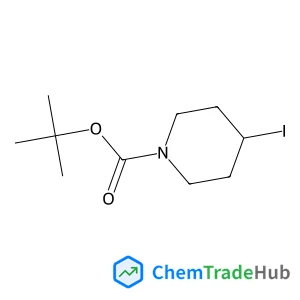
2-Methyl-2-propanyl 4-iodo-1-piperidinecarboxylate
CAS Number:
301673-14-3
Molecular Formula:
C10H18INO2
Recommended Suppliers






Disclaimer
This page provides academic journal information for reference and research purposes only. We are not affiliated with any journal publishers and do not handle publication submissions. For publication-related inquiries, please contact the respective journal publishers directly.
If you notice any inaccuracies in the information displayed, please contact us at support@chemtradehub.com. We will promptly review and address your concerns.