












Ruthenium(ii)-catalyzed selective C–H bond activation of imidamides and coupling with sulfoxonium ylides: an efficient approach for the synthesis of highly functional 3-ketoindoles
Literature Information
Publication Date
2019-02-27
DOI
10.1039/C9QO00048H
Impact Factor
5.281
Authors
Jianhui Zhou, Guoxue He, Huihui Li, Qiaolan Yang, Run Wang, Yu Zhou
View Original
Abstract
Ruthenium-catalyzed selective C–H bond activation of imidamides and annulation of sulfoxonium ylides were achieved, which afforded a series of 3-ketoindole derivatives in good yields, with good functional group compatibility. The catalytic system generated an indole scaffold by C–N and C–S bond cleavage. This reaction constitutes the first intermolecular coupling of ylides with arenes to afford a 3-ketoindole skeleton by ruthenium-catalyzed C–H activation and annulation cascade.
Related Literature
New insight into selective catalytic reduction of nitrogen oxides by ammonia over H-form zeolites: a theoretical study
Jun Li, Shuhua Li
2007-05-18
Paper
DOI: 10.1039/B700161D
A site-selective spectroscopy of naphthalene and quinoline in TEOS/MTEOS xerogels
C. Crépin, V. Dubois, F. Goldfarb, F. Chaput, J. P. Boilot
2005-03-21
Paper
DOI: 10.1039/B500578G
Confinement effects in quasi-stoichiometric CeO2nanoparticles
María D. Hernández-Alonso, Ana Belén Hungría, Arturo Martínez-Arias, Juan M. Coronado, José Carlos Conesa, Javier Soria, Marcos Fernández-García
2004-05-12
Paper
DOI: 10.1039/B403202K
The nature of the oxidation states of gold on ZnO
N. S. Phala, G. Klatt, E. van Steen, S. A. French, A. A. Sokol
2005-05-16
Paper
DOI: 10.1039/B501266J
A SERRS spectroscopic investigation of nickel(ii) porphyrin complexes adsorbed at electrochemical interfaces
Joseph A. Crayston
2004-04-29
Paper
DOI: 10.1039/B401817F
A critical assessment on two predictive models of binary vapor–liquid equilibrium
Hansong Cheng, Virpul Parekh, Brian Peterson, Kamil Klier
2004-06-10
Paper
DOI: 10.1039/B400322E
Theoretical studies of the unimolecular and bimolecular tautomerization of cytosine
Zhibo Yang, M. T. Rodgers
2004-03-09
Paper
DOI: 10.1039/B315089E
Accurate and effective calculation of amide proton magnetic shieldings in a calcium binding peptide
Caterina Benzi, Maurizio Cossi, Vincenzo Barone
2004-04-15
Paper
DOI: 10.1039/B316718F
You might also like
Compound Q&A
How should waste containing (6-Bromo-2-naphthyl)oxy](dimethyl)(2-methyl-2-propanyl)silane be handled?
Waste containing (6-Bromo-2-naphthyl)oxy](dimethyl)(2-methyl-2-propanyl)silane (...
100751-65-3[(6-Bromo-2-naphthyl...
Compound Q&A
How is 7-Fluoro-4-isoquinolinecarboxylic acid (CAS: 1841081-40-0) typically synthesized?
7-Fluoro-4-isoquinolinecarboxylic acid can be synthesized via a multi-step proce...
1841081-40-07-Fluoro-4-isoquinol...
Compound Q&A
What are the physical and chemical properties of 2,3,5,6-Tetrabromothieno[3,2-b]thiophene (CAS: 124638-53-5)?
2,3,5,6-Tetrabromothieno[3,2-b]thiophene is a crystalline compound with a high m...
124638-53-52,3,5,6-Tetrabromoth...
Compound Q&A
Is 1-[4-(Benzylamino)-7,8-dihydro-5H-pyrano[4,3-d]pyrimidin-2-yl]-2-methyl-1H-indole-4-carboxamide (CAS: 1542705-92-9) safe?
1-[4-(Benzylamino)-7,8-dihydro-5H-pyrano[4,3-d]pyrimidin-2-yl]-2-methyl-1H-indol...
1542705-92-91-[4-(Benzylamino)-7...
Compound Q&A
What is the market or research trend for imidazo[5,1-d]-1,2,3,5-tetrazine-8-carboxylic acid, 3,4-dihydro-3-methyl-4-oxo- (CAS: 113942-30-6)?
The market for imidazo[5,1-d]-1,2,3,5-tetrazine-8-carboxylic acid, 3,4-dihydro-3...
113942-30-6Imidazo[5,1-d]-1,2,3...
Compound Q&A
What is 3-(Triisopropylsilyl)propiolaldehyde (CAS: 163271-80-5)?
3-(Triisopropylsilyl)propiolaldehyde is a synthetic organic compound with the CA...
163271-80-53-(Triisopropylsilyl...
Compound Q&A
What regulatory guidelines apply to 6-Nitro-2H-1,4-benzoxazin-3(4H)-one (CAS: 81721-87-1)?
6-Nitro-2H-1,4-benzoxazin-3(4H)-one (CAS: 81721-87-1) is subject to various regu...
81721-87-16-Nitro-2H-1,4-benzo...
Compound Q&A
How should waste containing (3-Fluorophenyl)(4-{[(2-methyl-2-propanyl)oxy]carbonyl}-1-piperazinyl)acetic acid (CAS: 885272-91-3) be handled?
Waste containing (3-Fluorophenyl)(4-{[(2-methyl-2-propanyl)oxy]carbonyl}-1-piper...
885272-91-3(3-Fluorophenyl)(4-{...
Compound Q&A
What are the physical and chemical properties of N,N'-4,4'-Biphenyldiyldiisonicotinamide (CAS: 55119-40-9)?
N,N'-4,4'-Biphenyldiyldiisonicotinamide is a white crystalline solid with a mole...
55119-40-9N,N'-4,4'-Biphenyldi...
Compound Q&A
What industries use 6-Bromo-8-fluoro-2-quinazolinol (CAS: 1036756-15-6)?
6-Bromo-8-fluoro-2-quinazolinol is primarily used in the pharmaceutical industry...
1036756-15-66-Bromo-8-fluoro-2-q...
Source Journal
Organic Chemistry Frontiers

CiteScore:
7.8
Self-citation Rate:
8.7%
Articles per Year:
724
Organic Chemistry Frontiers publishes high-quality research from across organic chemistry. Emphases are placed on studies that make significant contributions to the field of organic chemistry by reporting either new or significantly improved protocols or methodologies. Topics include, but are not limited to the following: Organic synthesis Development of synthetic methodologies Catalysis Natural products Functional organic materials Supramolecular and macromolecular chemistry Physical and computational organic chemistry
Recommended Compounds
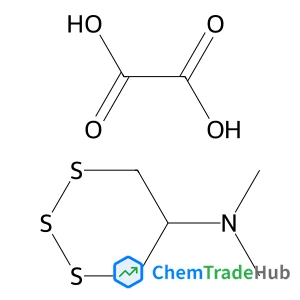
Oxalic acid compound with cyclohexylsulfamothioic O-acid (11)
CAS Number:
31895-22-4
Molecular Formula:
C7H13NO4S3
Recommended Suppliers





Disclaimer
This page provides academic journal information for reference and research purposes only. We are not affiliated with any journal publishers and do not handle publication submissions. For publication-related inquiries, please contact the respective journal publishers directly.
If you notice any inaccuracies in the information displayed, please contact us at support@chemtradehub.com. We will promptly review and address your concerns.