












![N-[(9H-Fluoren-9-ylmethoxy)carbonyl]serine structure](https://static.chemtradehub.com/structs/737/73724-45-5-b0dc.webp "N-[(9H-Fluoren-9-ylmethoxy)carbonyl]serine structure")
High-rate cycling in 3D dual-doped NASICON architectures toward room-temperature sodium-metal-anode solid-state batteries
Literature Information
Publication Date
2023-12-13
DOI
10.1039/D3EE03879C
Impact Factor
38.532
Authors
View Original
Abstract
Sodium metal-based solid-state batteries hold tremendous potential for next-generation batteries owing to low-cost earth-abundant sodium resources. However, fabricating thin free-standing solid electrolytes that could cycle sodium at high current densities has been a major challenge in developing room temperature solid-state sodium batteries. By developing high conducting Zn2+ and Mg2+ dual-doped Na3Zr2SiPO12 (NASICON) solid electrolytes and fabricating a 3D porous-dense-porous architecture (with an ultrathin, 25 μm, dense separator) coated with a nanoscale ZnO layer, an extremely low anode interfacial resistance of 3.5 Ω cm2 was realized. This enabled a record high critical current density of 40 mA cm−2 at room temperature with no stack pressure and a cumulative sodium cycling capacity of 10.8 A h cm−2 was achieved. Furthermore, pouch cells were assembled as a proof-of-concept with Na3V2(PO4)3 cathodes on dense-porous bilayer electrolytes with sodium metal anodes and cycled up to 2C rates at room temperature with no applied stack pressure.
Related Literature
Insulated conducting polymers: manipulating charge transport using supramolecular complexes
Phoebe H. Kwan, Timothy M. Swager
2005-09-21
Communication
DOI: 10.1039/B508399K
An achiral form of the hexameric resorcin[4]arene capsule sustained by hydrogen bonding with alcohols
Onome Ugono, K. Travis Holman
2006-04-26
Communication
DOI: 10.1039/B604148E
Selective functionalization of imidazolesvia an iodine–copper exchange reaction
Xiaoyin Yang, Paul Knochel
2006-04-20
Communication
DOI: 10.1039/B603419E
Non-catalytic and template-free growth of aligned CdS nanowires exhibiting high field emission current densities
Yi-Feng Lin, Yung-Jung Hsu, Shih-Yuan Lu, Sheng-Chin Kung
2006-05-02
Communication
DOI: 10.1039/B604309G
Direction of unusual mixed-ligand metal–organic frameworks: a new type of 3-D polythreading involving 1-D and 2-D structural motifs and a 2-fold interpenetrating porous network
Miao Du, Xiu-Juan Jiang, Xiao-Jun Zhao
2005-10-07
Communication
DOI: 10.1039/B509875K
Rapid stereocontrolled assembly of the fully substituted C-aryl glycoside of kendomycin with a Prins cyclization: a formal synthesis
Kevin B. Bahnck, Scott D. Rychnovsky
2006-05-02
Communication
DOI: 10.1039/B602937J
The unexpected similar second-order NLO response for nearly planar and largely twisted push–pull stilbazole chromophores: EFISH and theoretical TD-DFT evidence
Filippo De Angelis
2005-10-04
Communication
DOI: 10.1039/B509258B
Hosomi–Sakurai reactions of silacyclic allyl silanes
Jonathan D. Sellars, Patrick G. Steel, Michael J. Turner
2006-05-02
Communication
DOI: 10.1039/B602642G
Synthesis of organic–inorganic hybrid mesoporous tin oxophosphate in the presence of anionic surfactant
Masahiro Fujiwara, Masahiko Matsukata
2005-09-20
Communication
DOI: 10.1039/B508589F
A geometric switching approach toward thermal activation of metalloenediynes
Sibaprasad Bhattacharyya, David F. Dye, Maren Pink, Jeffrey M. Zaleski
2005-09-22
Communication
DOI: 10.1039/B509125J
You might also like
Compound Q&A
What are the main uses of 1H-Indazole-6-carbonitrile (CAS: 141290-59-7)?
1H-Indazole-6-carbonitrile finds applications in pharmaceuticals, where it serve...
141290-59-71H-Indazole-6-carbon...
Compound Q&A
How should waste containing Dioctyl (2E)-2-butenedioate (CAS: 2997-85-5) be handled?
Waste containing Dioctyl (2E)-2-butenedioate (CAS: 2997-85-5) should be collecte...
2997-85-5Dioctyl (2E)-2-buten...
Compound Q&A
What industries use Sodium [(1,2-benzoxazol-3-ylmethyl)sulfonyl]azanide (CAS: 68291-98-5)?
Sodium [(1,2-benzoxazol-3-ylmethyl)sulfonyl]azanide is primarily used in pharmac...
68291-98-5Sodium [(1,2-benzoxa...
Compound Q&A
Are there alternatives to Dimethyl 4-(4,4,5,5-tetramethyl-1,3,2-dioxaborolan-2-yl)-2,6-pyridinedicarboxylate (CAS: 741709-66-0) in synthesis?
Dimethyl 4-(4,4,5,5-tetramethyl-1,3,2-dioxaborolan-2-yl)-2,6-pyridinedicarboxyla...
741709-66-0Dimethyl 4-(4,4,5,5-...
Compound Q&A
How should waste containing 2-Fluoro-6-hydrazinopyridine (CAS: 80714-39-2) be handled?
Waste containing 2-Fluoro-6-hydrazinopyridine (CAS: 80714-39-2) should be manage...
80714-39-22-Fluoro-6-hydrazino...
Compound Q&A
What is 6-Formyl-2-pyridinecarboxylic acid (CAS: 499214-11-8)?
6-Formyl-2-pyridinecarboxylic acid is an organic compound with the molecular for...
499214-11-86-Formyl-2-pyridinec...
Compound Q&A
What is the market or research trend for 3-(3,4-dimethoxyphenyl)-2,5-dimethyl-N-(2-morpholin-4-ylethyl)pyrazolo[1,5-a]pyrimidin-7-amine (CAS: 900874-91-1)?
Research trends for this compound indicate a focus on its potential applications...
900874-91-13-(3,4-dimethoxyphen...
Compound Q&A
How is 9H-Tribenzo[b,d,f]azepine (CAS: 29875-73-8) typically synthesized?
9H-Tribenzo[b,d,f]azepine is typically synthesized via a multi-step process invo...
29875-73-89H-Tribenzo[b,d,f]az...
Compound Q&A
How is 1-Cyclopropyl-7-ethoxy-6-fluoro-8-methoxy-4-oxo-1,4-dihydro-3-quinolinecarboxylic acid (CAS: 1797982-51-4) typically synthesized?
1-Cyclopropyl-7-ethoxy-6-fluoro-8-methoxy-4-oxo-1,4-dihydro-3-quinolinecarboxyli...
1797982-51-41-Cyclopropyl-7-etho...
Compound Q&A
How should waste containing Methyl 3-oxo-1,2,3,4-tetrahydro-6-quinoxalinecarboxylate (CAS: 671820-52-3) be handled?
Waste containing Methyl 3-oxo-1,2,3,4-tetrahydro-6-quinoxalinecarboxylate (CAS: ...
671820-52-3Methyl 3-oxo-1,2,3,4...
Source Journal
Energy & Environmental Science

CiteScore:
32.34
Self-citation Rate:
3.4%
Articles per Year:
481
Energy & Environmental Science is an international journal dedicated to publishing exceptionally important and high quality, agenda-setting research tackling the key global and societal challenges of ensuring the provision of energy and protecting our environment for the future. The scope is intentionally broad and the journal recognises the complexity of issues and challenges relating to energy conversion and storage, alternative fuel technologies and environmental science. For work to be published it must be linked to the energy-environment nexus and be of significant general interest to our community-spanning readership. All scales of studies and analysis, from impactful fundamental advances, to interdisciplinary research across the (bio)chemical, (bio/geo)physical sciences and chemical engineering disciplines are welcomed. Topics include, but are not limited to, the following: Solar energy conversion and photovoltaics Solar fuels and artificial photosynthesis Fuel cells Hydrogen storage and (bio) hydrogen production Materials for energy systems Capture, storage and fate of CO2, including chemicals and fuels from CO2 Catalysis for a variety of feedstocks (for example, oil, gas, coal, biomass and synthesis gas) Biofuels and biorefineries Materials in extreme environments Environmental impacts of energy technologies Global atmospheric chemistry and climate change as related to energy systems Water-energy nexus Energy systems and networks Globally applicable principles of energy policy and techno-economics
Recommended Compounds


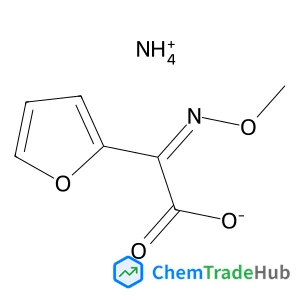
Ammonium (Z)-2-(furan-2-yl)-2-(methoxyimino)acetate
CAS Number:
97148-39-5
Molecular Formula:
C7H10N2O4
Recommended Suppliers






Disclaimer
This page provides academic journal information for reference and research purposes only. We are not affiliated with any journal publishers and do not handle publication submissions. For publication-related inquiries, please contact the respective journal publishers directly.
If you notice any inaccuracies in the information displayed, please contact us at support@chemtradehub.com. We will promptly review and address your concerns.