












Towards the 4 V-class n-type organic lithium-ion positive electrode materials: the case of conjugated triflimides and cyanamides
Literature Information
Publication Date
2023-11-20
DOI
10.1039/D3EE02897F
Impact Factor
38.532
Authors
Xiaolong Guo, Petru Apostol, Xuan Zhou, Jiande Wang, Xiaodong Lin, Darsi Rambabu, Mengyuan Du, Süleyman Er, Alexandru Vlad
View Original
Abstract
Organic electrode materials have garnered a great deal of interest owing to their sustainability, cost-efficiency, and design flexibility metrics. Despite numerous endeavors to fine-tune their redox potential, the pool of organic positive electrode materials with a redox potential above 3 V versus Li+/Li0, and maintaining air stability in the Li-reservoir configuration remains limited. This study expands the chemical landscape of organic Li-ion positive electrode chemistries towards the 4 V-class through molecular design based on electron density depletion within the redox center via the mesomeric effect of electron-withdrawing groups (EWGs). This results in the development of novel families of conjugated triflimides and cyanamides as high-voltage electrode materials for organic lithium-ion batteries. These are found to exhibit ambient air stability and demonstrate reversible electrochemistry with redox potentials spanning the range of 3.1 V to 3.8 V (versus Li+/Li0), marking the highest reported values so far within the realm of n-type organic chemistries. Through comprehensive structural analysis and extensive electrochemical studies, we elucidate the relationship between the molecular structure and the ability to fine-tune the redox potential. These findings offer promising opportunities to customize the redox properties of organic electrodes, bridging the gap with their inorganic counterparts for application in sustainable and eco-friendly electrochemical energy storage devices.
Related Literature
Silica-surface reorganization during organotin grafting evidenced by 119Sn DNP SENS: a tandem reaction of gem-silanols and strained siloxane bridges
Matthew P. Conley, Aaron J. Rossini, Aleix Comas-Vives, Maxence Valla, Gilles Casano, Olivier Ouari, Paul Tordo, Anne Lesage, Lyndon Emsley, Christophe Copéret
2014-06-12
Paper
DOI: 10.1039/C4CP01973C
Spectroscopic and viscometric elucidation of the interaction between a potential chloride channel blocker and calf-thymus DNA: the effect of medium ionic strength on the binding mode
Aniruddha Ganguly, Soumen Ghosh, Nikhil Guchhait
2014-11-05
Paper
DOI: 10.1039/C4CP04175E
Comparative dynamics of the two channels of the reaction of D + MuH
F. J. Aoiz, J. Aldegunde, V. J. Herrero, V. Sáez-Rábanos
2013-11-29
Paper
DOI: 10.1039/C3CP53908C
Influence of process variables on extraction of Cefalexin in a novel biocompatible ionic liquid based-aqueous two phase system
Shiva Abdolrahimi, Bahram Nasernejad, Gholamreza Pazuki
2014-11-07
Paper
DOI: 10.1039/C4CP02923B
Electronic structure investigation of the evanescent AtO+ ion
André Severo Pereira Gomes, Florent Réal, Nicolas Galland, Celestino Angeli, Renzo Cimiraglia, Valérie Vallet
2014-02-20
Paper
DOI: 10.1039/C3CP55294B
Solid state effects on the electronic structure of H2OEP
G. Di Santo, M. Caputo, A. Goldoni, M. Kumar, M. Pedio
2014-11-03
Paper
DOI: 10.1039/C4CP03450C
Unveiling the effects of post-deposition treatment with different alkaline elements on the electronic properties of CIGS thin film solar cells
Fabian Pianezzi, Patrick Reinhard, Adrian Chirilă, Benjamin Bissig, Shiro Nishiwaki, Stephan Buecheler, Ayodhya N. Tiwari
2014-03-18
Paper
DOI: 10.1039/C4CP00614C
Photophysical and structural characterisation of in situ formed quantum dots
A. K. Bansal, F. Antolini, M. T. Sajjad, L. Stroea, S. G. Ramkumar, K.-J. Kass, S. Allard, U. Scherf, I. D. W. Samuel
2014-04-11
Paper
DOI: 10.1039/C4CP00727A
Timescales of water transport in viscous aerosol: measurements on sub-micron particles and dependence on conditioning history
Jessica W. Lu, Andrew M. J. Rickards, Jim S. Walker, Kerry J. Knox, Rachael E. H. Miles, Jonathan P. Reid
2013-11-29
Paper
DOI: 10.1039/C3CP54233E
A novel reduction approach to fabricate quantum-sized SnO2-conjugated reduced graphene oxide nanocomposites as non-enzymatic glucose sensors
Yixing Ye, Panpan Wang, Enmei Dai, Jun Liu, Zhenfei Tian, Changhao Liang, Guosheng Shao
2014-03-28
Communication
DOI: 10.1039/C4CP00554F
You might also like
Compound Q&A
What are the main uses of 1H-Indazole-6-carbonitrile (CAS: 141290-59-7)?
1H-Indazole-6-carbonitrile finds applications in pharmaceuticals, where it serve...
141290-59-71H-Indazole-6-carbon...
Compound Q&A
How should waste containing Dioctyl (2E)-2-butenedioate (CAS: 2997-85-5) be handled?
Waste containing Dioctyl (2E)-2-butenedioate (CAS: 2997-85-5) should be collecte...
2997-85-5Dioctyl (2E)-2-buten...
Compound Q&A
What industries use Sodium [(1,2-benzoxazol-3-ylmethyl)sulfonyl]azanide (CAS: 68291-98-5)?
Sodium [(1,2-benzoxazol-3-ylmethyl)sulfonyl]azanide is primarily used in pharmac...
68291-98-5Sodium [(1,2-benzoxa...
Compound Q&A
Are there alternatives to Dimethyl 4-(4,4,5,5-tetramethyl-1,3,2-dioxaborolan-2-yl)-2,6-pyridinedicarboxylate (CAS: 741709-66-0) in synthesis?
Dimethyl 4-(4,4,5,5-tetramethyl-1,3,2-dioxaborolan-2-yl)-2,6-pyridinedicarboxyla...
741709-66-0Dimethyl 4-(4,4,5,5-...
Compound Q&A
How should waste containing 2-Fluoro-6-hydrazinopyridine (CAS: 80714-39-2) be handled?
Waste containing 2-Fluoro-6-hydrazinopyridine (CAS: 80714-39-2) should be manage...
80714-39-22-Fluoro-6-hydrazino...
Compound Q&A
What is 6-Formyl-2-pyridinecarboxylic acid (CAS: 499214-11-8)?
6-Formyl-2-pyridinecarboxylic acid is an organic compound with the molecular for...
499214-11-86-Formyl-2-pyridinec...
Compound Q&A
What is the market or research trend for 3-(3,4-dimethoxyphenyl)-2,5-dimethyl-N-(2-morpholin-4-ylethyl)pyrazolo[1,5-a]pyrimidin-7-amine (CAS: 900874-91-1)?
Research trends for this compound indicate a focus on its potential applications...
900874-91-13-(3,4-dimethoxyphen...
Compound Q&A
How is 9H-Tribenzo[b,d,f]azepine (CAS: 29875-73-8) typically synthesized?
9H-Tribenzo[b,d,f]azepine is typically synthesized via a multi-step process invo...
29875-73-89H-Tribenzo[b,d,f]az...
Compound Q&A
How is 1-Cyclopropyl-7-ethoxy-6-fluoro-8-methoxy-4-oxo-1,4-dihydro-3-quinolinecarboxylic acid (CAS: 1797982-51-4) typically synthesized?
1-Cyclopropyl-7-ethoxy-6-fluoro-8-methoxy-4-oxo-1,4-dihydro-3-quinolinecarboxyli...
1797982-51-41-Cyclopropyl-7-etho...
Compound Q&A
How should waste containing Methyl 3-oxo-1,2,3,4-tetrahydro-6-quinoxalinecarboxylate (CAS: 671820-52-3) be handled?
Waste containing Methyl 3-oxo-1,2,3,4-tetrahydro-6-quinoxalinecarboxylate (CAS: ...
671820-52-3Methyl 3-oxo-1,2,3,4...
Source Journal
Energy & Environmental Science

CiteScore:
32.34
Self-citation Rate:
3.4%
Articles per Year:
481
Energy & Environmental Science is an international journal dedicated to publishing exceptionally important and high quality, agenda-setting research tackling the key global and societal challenges of ensuring the provision of energy and protecting our environment for the future. The scope is intentionally broad and the journal recognises the complexity of issues and challenges relating to energy conversion and storage, alternative fuel technologies and environmental science. For work to be published it must be linked to the energy-environment nexus and be of significant general interest to our community-spanning readership. All scales of studies and analysis, from impactful fundamental advances, to interdisciplinary research across the (bio)chemical, (bio/geo)physical sciences and chemical engineering disciplines are welcomed. Topics include, but are not limited to, the following: Solar energy conversion and photovoltaics Solar fuels and artificial photosynthesis Fuel cells Hydrogen storage and (bio) hydrogen production Materials for energy systems Capture, storage and fate of CO2, including chemicals and fuels from CO2 Catalysis for a variety of feedstocks (for example, oil, gas, coal, biomass and synthesis gas) Biofuels and biorefineries Materials in extreme environments Environmental impacts of energy technologies Global atmospheric chemistry and climate change as related to energy systems Water-energy nexus Energy systems and networks Globally applicable principles of energy policy and techno-economics
Recommended Compounds
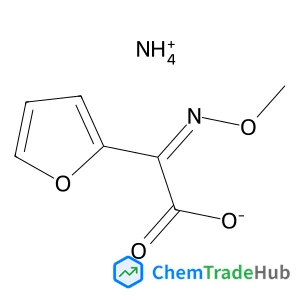
Ammonium (Z)-2-(furan-2-yl)-2-(methoxyimino)acetate
CAS Number:
97148-39-5
Molecular Formula:
C7H10N2O4
![N-[(9H-Fluoren-9-ylmethoxy)carbonyl]serine structure](https://static.chemtradehub.com/structs/737/73724-45-5-b0dc.webp "N-[(9H-Fluoren-9-ylmethoxy)carbonyl]serine structure")
Recommended Suppliers





Disclaimer
This page provides academic journal information for reference and research purposes only. We are not affiliated with any journal publishers and do not handle publication submissions. For publication-related inquiries, please contact the respective journal publishers directly.
If you notice any inaccuracies in the information displayed, please contact us at support@chemtradehub.com. We will promptly review and address your concerns.