












A novel reduction approach to fabricate quantum-sized SnO2-conjugated reduced graphene oxide nanocomposites as non-enzymatic glucose sensors
Literature Information
Publication Date
2014-03-28
DOI
10.1039/C4CP00554F
Impact Factor
3.676
Authors
Yixing Ye, Panpan Wang, Enmei Dai, Jun Liu, Zhenfei Tian, Changhao Liang, Guosheng Shao
View Original
Abstract
Quantum-sized SnO2 nanocrystals can be well dispersed on reduced graphene oxide (rGO) nanosheets through a convenient one-pot in situ reduction route without using any other chemical reagent or source. Highly reactive metastable tin oxide (SnOx) nanoparticles (NPs) were used as reducing agents and composite precursors derived by the laser ablation in liquid (LAL) technique. Moreover, the growth and phase transition of LAL-induced SnOx NPs and graphene oxide (GO) were examined by optical absorption, X-ray diffraction, X-ray photoelectron spectroscopy, Raman spectroscopy and high-resolution transmission electron microscopy. Highly dispersed SnOx NPs can also prevent rGO from being restacked into a multilayer structure during GO reduction. Given the good electron transfer ability and unsaturated dangling bonds of rGO, as well as the ample electrocatalytic active sites of quantum-sized SnO2 NPs on unfolded rGO sheets, the fabricated SnO2–rGO nanocomposite exhibited excellent performance in the non-enzymatic electrochemical detection of glucose molecules. The use of LAL-induced reactive NPs for in situ GO reduction is also expected to be a universal and environmentally friendly approach for the formation of various rGO-based nanocomposites.
Related Literature
Sieving behaviour of nanoscopic pores by hydrated ions
Joohan Lee, Juhyoun Kwak
2006-04-20
Communication
DOI: 10.1039/B601613H
Hosomi–Sakurai reactions of silacyclic allyl silanes
Jonathan D. Sellars, Patrick G. Steel, Michael J. Turner
2006-05-02
Communication
DOI: 10.1039/B602642G
Fabrication of bismuth subcarbonate nanotube arrays from bismuth citrate
Rong Chen, Man Ho So, Jun Yang, Feng Deng, Chi-Ming Che, Hongzhe Sun
2006-04-25
Communication
DOI: 10.1039/B601764A
Formation of layered titania and zirconia catalysed by surface-bound silicatein
Muhammad Nawaz Tahir, Patrick Théato, Werner E. G. Müller, Heinz C. Schröder, Alexandra Borejko, Simon Faiß, Andreas Janshoff, Joachim Huth, Wolfgang Tremel
2005-10-13
Communication
DOI: 10.1039/B510113A
Ferrimagnetic Mn2SnO4nanowires
Chan Woong Na, Doo Suk Han, Jeunghee Park, Younghun Jo, Myung-Hwa Jung
2006-04-25
Communication
DOI: 10.1039/B601404F
Anion-templated assembly of interpenetrated and interlocked structures
Paul D. Beer, Mark R. Sambrook, David Curiel
2006-03-08
Feature Article
DOI: 10.1039/B516435B
Intramolecular alkene hydroaminations catalyzed by a bis(thiophosphinic amidate) Zr(iv) complex
Hyunseok Kim, Phil Ho Lee, Tom Livinghouse
2005-09-20
Communication
DOI: 10.1039/B505738H
Facile and reproducible syntheses of bis(dialkylselenophosphenyl)-selenides and -diselenides: X-ray structures of (iPr2PSe)2Se, (iPr2PSe)2Se2 and (Ph2PSe)2Se
Chinh Q. Nguyen, Adekunle Adeogun, Mohammad Afzaal, Mohammad A. Malik, Paul O'Brien
2006-04-21
Communication
DOI: 10.1039/B603197H
A novel mediatorless microbial fuel cell based on direct biocatalysis of Escherichia coli
Tian Zhang, Changzheng Cui, Shengli Chen, Xinping Ai, Hanxi Yang, Ping Shen, Zhenrong Peng
2006-04-25
Communication
DOI: 10.1039/B600876C
You might also like
Compound Q&A
What are the main uses of 1H-Indazole-6-carbonitrile (CAS: 141290-59-7)?
1H-Indazole-6-carbonitrile finds applications in pharmaceuticals, where it serve...
141290-59-71H-Indazole-6-carbon...
Compound Q&A
How should waste containing Dioctyl (2E)-2-butenedioate (CAS: 2997-85-5) be handled?
Waste containing Dioctyl (2E)-2-butenedioate (CAS: 2997-85-5) should be collecte...
2997-85-5Dioctyl (2E)-2-buten...
Compound Q&A
What industries use Sodium [(1,2-benzoxazol-3-ylmethyl)sulfonyl]azanide (CAS: 68291-98-5)?
Sodium [(1,2-benzoxazol-3-ylmethyl)sulfonyl]azanide is primarily used in pharmac...
68291-98-5Sodium [(1,2-benzoxa...
Compound Q&A
Are there alternatives to Dimethyl 4-(4,4,5,5-tetramethyl-1,3,2-dioxaborolan-2-yl)-2,6-pyridinedicarboxylate (CAS: 741709-66-0) in synthesis?
Dimethyl 4-(4,4,5,5-tetramethyl-1,3,2-dioxaborolan-2-yl)-2,6-pyridinedicarboxyla...
741709-66-0Dimethyl 4-(4,4,5,5-...
Compound Q&A
How should waste containing 2-Fluoro-6-hydrazinopyridine (CAS: 80714-39-2) be handled?
Waste containing 2-Fluoro-6-hydrazinopyridine (CAS: 80714-39-2) should be manage...
80714-39-22-Fluoro-6-hydrazino...
Compound Q&A
What is 6-Formyl-2-pyridinecarboxylic acid (CAS: 499214-11-8)?
6-Formyl-2-pyridinecarboxylic acid is an organic compound with the molecular for...
499214-11-86-Formyl-2-pyridinec...
Compound Q&A
What is the market or research trend for 3-(3,4-dimethoxyphenyl)-2,5-dimethyl-N-(2-morpholin-4-ylethyl)pyrazolo[1,5-a]pyrimidin-7-amine (CAS: 900874-91-1)?
Research trends for this compound indicate a focus on its potential applications...
900874-91-13-(3,4-dimethoxyphen...
Compound Q&A
How is 9H-Tribenzo[b,d,f]azepine (CAS: 29875-73-8) typically synthesized?
9H-Tribenzo[b,d,f]azepine is typically synthesized via a multi-step process invo...
29875-73-89H-Tribenzo[b,d,f]az...
Compound Q&A
How is 1-Cyclopropyl-7-ethoxy-6-fluoro-8-methoxy-4-oxo-1,4-dihydro-3-quinolinecarboxylic acid (CAS: 1797982-51-4) typically synthesized?
1-Cyclopropyl-7-ethoxy-6-fluoro-8-methoxy-4-oxo-1,4-dihydro-3-quinolinecarboxyli...
1797982-51-41-Cyclopropyl-7-etho...
Compound Q&A
How should waste containing Methyl 3-oxo-1,2,3,4-tetrahydro-6-quinoxalinecarboxylate (CAS: 671820-52-3) be handled?
Waste containing Methyl 3-oxo-1,2,3,4-tetrahydro-6-quinoxalinecarboxylate (CAS: ...
671820-52-3Methyl 3-oxo-1,2,3,4...
Source Journal
Physical Chemistry Chemical Physics

CiteScore:
5.5
Self-citation Rate:
10.3%
Articles per Year:
3036
Physical Chemistry Chemical Physics (PCCP) is an international journal co-owned by 19 physical chemistry and physics societies from around the world. This journal publishes original, cutting-edge research in physical chemistry, chemical physics and biophysical chemistry. To be suitable for publication in PCCP, articles must include significant innovation and/or insight into physical chemistry; this is the most important criterion that reviewers and Editors will judge against when evaluating submissions. The journal has a broad scope and welcomes contributions spanning experiment, theory, computation and data science. Topical coverage includes spectroscopy, dynamics, kinetics, statistical mechanics, thermodynamics, electrochemistry, catalysis, surface science, quantum mechanics, quantum computing and machine learning. Interdisciplinary research areas such as polymers and soft matter, materials, nanoscience, energy, surfaces/interfaces, and biophysical chemistry are welcomed if they demonstrate significant innovation and/or insight into physical chemistry. Joined experimental/theoretical studies are particularly appreciated when complementary and based on up-to-date approaches.
Recommended Compounds
![N-[(9H-Fluoren-9-ylmethoxy)carbonyl]serine structure](https://static.chemtradehub.com/structs/737/73724-45-5-b0dc.webp "N-[(9H-Fluoren-9-ylmethoxy)carbonyl]serine structure")
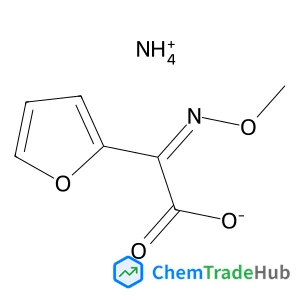
Ammonium (Z)-2-(furan-2-yl)-2-(methoxyimino)acetate
CAS Number:
97148-39-5
Molecular Formula:
C7H10N2O4
Recommended Suppliers





Disclaimer
This page provides academic journal information for reference and research purposes only. We are not affiliated with any journal publishers and do not handle publication submissions. For publication-related inquiries, please contact the respective journal publishers directly.
If you notice any inaccuracies in the information displayed, please contact us at support@chemtradehub.com. We will promptly review and address your concerns.