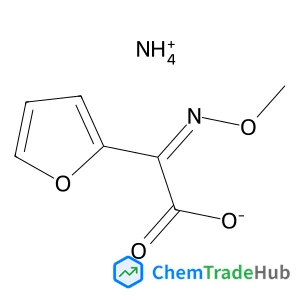
Ammonium (Z)-2-(furan-2-yl)-2-(methoxyimino)acetate
CAS Number:
97148-39-5
Molecular Formula:
C7H10N2O4
Ian C. Dingle, Nathan C. Stumme, Scott K. Shaw, David Eaton, Asmund Vego
Reproducible data and results underpin the credibility and integrity of research findings across the sciences. However, experiments and measurements conducted across laboratories, or by different researchers, are often hindered by incomplete or inaccessible procedural data. Additionally, the time and resources needed to manually perform repeat experiments and analyses limit the scale at which experiments can be reproduced. Both improved methods for recording and sharing experimental procedures in machine-readable formats and efforts towards automation can be beneficial to circumvent these issues. Here we report the development of ExpFlow, a data collection, sharing, and reporting software currently customized for electrochemical experiments. The ExpFlow software allows researchers to systematically encode laboratory procedures through a graphical user interface that operates like a fill-in-the-blank laboratory notebook. Built-in calculators automatically derive properties such as diffusion coefficient and charge-transfer rate constant from uploaded data. Further, we deploy ExpFlow procedures with robotic hardware and software to perform cyclic voltammetry (CV) experiments in triplicate for eight well-known electroactive systems. The resulting oxidation potentials and diffusion coefficients are consistent with literature-reported values, validating our approach and demonstrating the utility of robotic experimentation in promoting reproducibility. Ultimately, these tools enable automated and (semi)autonomous cyclic voltammetry experiments and measurements that will facilitate high-throughput experimentation, reproducibility, and eventually data-driven electrochemical discovery.
Luís C. Branco, Pedro M. P. Gois, Nuno M. T. Lourenço, Vanya B. Kurteva, Carlos A. M. Afonso
DOI: 10.1039/B600816J
Galia Maayan, Benjamin Ganchegui, Ronny Neumann
DOI: 10.1039/B603148J
Aimin Yu, Ian Gentle, Gaoqing Lu, Frank Caruso
DOI: 10.1039/B601490A
Asako Narita, Wataru Shibayama, Kenji Sakamoto, Tomonobu Mizumo, Noriyoshi Matsumi, Hiroyuki Ohno
DOI: 10.1039/B517019B
Chinh Q. Nguyen, Adekunle Adeogun, Mohammad Afzaal, Mohammad A. Malik, Paul O'Brien
DOI: 10.1039/B603198F
Colleen A. Williams, Alexander J. Blake, Peter Hubberstey, Martin Schröder
DOI: 10.1039/B509929C
Koichi Mikami, Kazuki Wakabayashi, Yukinori Yusa, Kohsuke Aikawa
DOI: 10.1039/B517585B
Jianhui Huang, Peter O'Brien
DOI: 10.1039/B510920E
Kirsty M. Anderson, Andres E. Goeta, Kirsty S. B. Hancock, Jonathan W. Steed
DOI: 10.1039/B602492K
Rohan T. Ranasinghe, Tom Brown
DOI: 10.1039/B509522K
1H-Indazole-6-carbonitrile finds applications in pharmaceuticals, where it serve...
Waste containing Dioctyl (2E)-2-butenedioate (CAS: 2997-85-5) should be collecte...
Sodium [(1,2-benzoxazol-3-ylmethyl)sulfonyl]azanide is primarily used in pharmac...
Dimethyl 4-(4,4,5,5-tetramethyl-1,3,2-dioxaborolan-2-yl)-2,6-pyridinedicarboxyla...
Waste containing 2-Fluoro-6-hydrazinopyridine (CAS: 80714-39-2) should be manage...
6-Formyl-2-pyridinecarboxylic acid is an organic compound with the molecular for...
Research trends for this compound indicate a focus on its potential applications...
9H-Tribenzo[b,d,f]azepine is typically synthesized via a multi-step process invo...
1-Cyclopropyl-7-ethoxy-6-fluoro-8-methoxy-4-oxo-1,4-dihydro-3-quinolinecarboxyli...
Waste containing Methyl 3-oxo-1,2,3,4-tetrahydro-6-quinoxalinecarboxylate (CAS: ...