












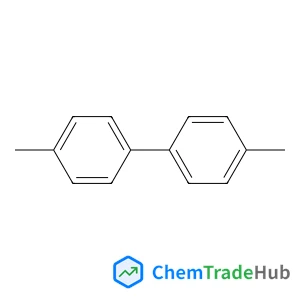
A unique example of a 36 tessellated 2-D net based on a tri-nuclear zinc(ii)-1,4-benzenedicarboxylate framework
Literature Information
Publication Date
2005-10-03
DOI
10.1039/B509929C
Impact Factor
6.222
Authors
Colleen A. Williams, Alexander J. Blake, Peter Hubberstey, Martin Schröder
View Original
Abstract
Reaction of Zn(NO3)2 and 1,4-benzenedicarboxylic acid (1,4-H2BDC) at 100 °C for 24 hours in a pressure tube yielded on cooling {[Zn3(1,4-BDC)3(DEF)2]·DEF}∞ (DEF = diethylformamide) incorporating planar six-connected centres to give a unique 36 tessellated 2-D framework polymer.
Related Literature
A fully self-assembled non-symmetric triad for photoinduced charge separation
G. Dan Pantoş, Jeremy K. M. Sanders, Michele Orlandi, Claudio Chiorboli, Sandro Fracasso
2010-12-24
Edge Article
DOI: 10.1039/C0SC00520G
β-Functionalized trans-A2B2 push–pull tetrabenzoporphyrins
Siddhartha Kumar, Xiaoqin Jiang, Wenqian Shan, R. G. Waruna Jinadasa, Karl M. Kadish, Hong Wang
2018-02-28
Communication
DOI: 10.1039/C7CC09743C
Quantitative visualization and detection of acetylcholinesterase activity and its inhibitor based on the oxidation character of ultrathin MnO2 nanosheets
Xian-Hua Meng, Dang Lan Huong, Won Keun Oh, Wei-Feng Wang, Jun-Li Yang
2019-09-10
Paper
DOI: 10.1039/C9AY01721F
A succinct strategy for construction of nanoporous ionic organic networks from a pyrylium intermediate
Siying Che, Ilja Popovs, Huimin Luo, Yali Luo, Wei Guo, Hao Chen, Tao Wang, Kecheng Jie, Congmin Wang
2019-10-17
Communication
DOI: 10.1039/C9CC06767A
1H quantitative NMR and UHPLC-MS analysis of seized MDMA/NPS mixtures and tablets from night-club venues
Husain A. Naqi, Stephen M. Husbands, Ian S. Blagbrough
2019-08-20
Paper
DOI: 10.1039/C9AY01403A
Borylated oximes: versatile building blocks for organic synthesis
Sean K. Liew, Aleksandra Holownia, Diego B. Diaz, Philip A. Cistrone, Philip E. Dawson, Andrei K. Yudin
2017-09-11
Communication
DOI: 10.1039/C7CC06579E
Controlling dynamic stereoisomerism in transition-metal folded baskets
Sandra Stojanović, Daniel A. Turner, Christopher M. Hadad, Jovica D. Badjić
2011-01-28
Edge Article
DOI: 10.1039/C0SC00592D
A comparison of inductively coupled plasma torch-sample introduction configurations using simplex optimisation
Paper
DOI: 10.1039/JA9860100265
Colorimetric assay for cyanide and cyanogenic glycoside using polysorbate 40-stabilized gold nanoparticles
Cheng-Yu Liu
2011-01-10
Communication
DOI: 10.1039/C0CC04591H
You might also like
Compound Q&A
What are the main uses of 1H-Indazole-6-carbonitrile (CAS: 141290-59-7)?
1H-Indazole-6-carbonitrile finds applications in pharmaceuticals, where it serve...
141290-59-71H-Indazole-6-carbon...
Compound Q&A
How should waste containing Dioctyl (2E)-2-butenedioate (CAS: 2997-85-5) be handled?
Waste containing Dioctyl (2E)-2-butenedioate (CAS: 2997-85-5) should be collecte...
2997-85-5Dioctyl (2E)-2-buten...
Compound Q&A
What industries use Sodium [(1,2-benzoxazol-3-ylmethyl)sulfonyl]azanide (CAS: 68291-98-5)?
Sodium [(1,2-benzoxazol-3-ylmethyl)sulfonyl]azanide is primarily used in pharmac...
68291-98-5Sodium [(1,2-benzoxa...
Compound Q&A
Are there alternatives to Dimethyl 4-(4,4,5,5-tetramethyl-1,3,2-dioxaborolan-2-yl)-2,6-pyridinedicarboxylate (CAS: 741709-66-0) in synthesis?
Dimethyl 4-(4,4,5,5-tetramethyl-1,3,2-dioxaborolan-2-yl)-2,6-pyridinedicarboxyla...
741709-66-0Dimethyl 4-(4,4,5,5-...
Compound Q&A
How should waste containing 2-Fluoro-6-hydrazinopyridine (CAS: 80714-39-2) be handled?
Waste containing 2-Fluoro-6-hydrazinopyridine (CAS: 80714-39-2) should be manage...
80714-39-22-Fluoro-6-hydrazino...
Compound Q&A
What is 6-Formyl-2-pyridinecarboxylic acid (CAS: 499214-11-8)?
6-Formyl-2-pyridinecarboxylic acid is an organic compound with the molecular for...
499214-11-86-Formyl-2-pyridinec...
Compound Q&A
What is the market or research trend for 3-(3,4-dimethoxyphenyl)-2,5-dimethyl-N-(2-morpholin-4-ylethyl)pyrazolo[1,5-a]pyrimidin-7-amine (CAS: 900874-91-1)?
Research trends for this compound indicate a focus on its potential applications...
900874-91-13-(3,4-dimethoxyphen...
Compound Q&A
How is 9H-Tribenzo[b,d,f]azepine (CAS: 29875-73-8) typically synthesized?
9H-Tribenzo[b,d,f]azepine is typically synthesized via a multi-step process invo...
29875-73-89H-Tribenzo[b,d,f]az...
Compound Q&A
How is 1-Cyclopropyl-7-ethoxy-6-fluoro-8-methoxy-4-oxo-1,4-dihydro-3-quinolinecarboxylic acid (CAS: 1797982-51-4) typically synthesized?
1-Cyclopropyl-7-ethoxy-6-fluoro-8-methoxy-4-oxo-1,4-dihydro-3-quinolinecarboxyli...
1797982-51-41-Cyclopropyl-7-etho...
Compound Q&A
How should waste containing Methyl 3-oxo-1,2,3,4-tetrahydro-6-quinoxalinecarboxylate (CAS: 671820-52-3) be handled?
Waste containing Methyl 3-oxo-1,2,3,4-tetrahydro-6-quinoxalinecarboxylate (CAS: ...
671820-52-3Methyl 3-oxo-1,2,3,4...
Source Journal
Chemical Communications

CiteScore:
8.6
Self-citation Rate:
4.7%
Articles per Year:
2458
ChemComm publishes urgent research which is of outstanding significance and interest to experts in the field, while also appealing to the journal’s broad chemistry readership. Our communication format is ideally suited to short, urgent studies that are of such importance that they require accelerated publication. Our scope covers all topics in chemistry, and research at the interface of chemistry and other disciplines (such as materials science, nanoscience, physics, engineering and biology) where there is a significant novelty in the chemistry aspects. Major topic areas covered include: Analytical Chemistry Catalysis Chemical Biology and medicinal chemistry Computational Chemistry and Machine Learning Energy and sustainable chemistry Environmental Chemistry Green Chemistry Inorganic Chemistry Materials Chemistry Nanoscience Organic Chemistry Physical Chemistry Polymer Chemistry Supramolecular Chemistry
Recommended Compounds

Recommended Suppliers





Disclaimer
This page provides academic journal information for reference and research purposes only. We are not affiliated with any journal publishers and do not handle publication submissions. For publication-related inquiries, please contact the respective journal publishers directly.
If you notice any inaccuracies in the information displayed, please contact us at support@chemtradehub.com. We will promptly review and address your concerns.