












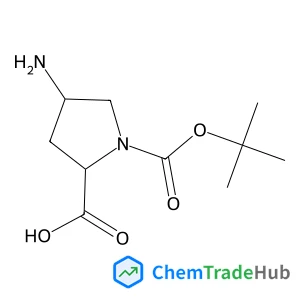
(2R,4R)-1-Boc-4-Aminopyrrolidine-2-carboxylic acid
CAS Number:
132622-98-1
Molecular Formula:
C10H18N2O4
Kohei Tada, Yasutaka Kitagawa
The diradical state is an important electronic state for understanding molecular functions and should be elucidated for the in silico design of functional molecules and their application to molecular devices. The density functional theory calculation with plane-wave basis and correction of the on-site Coulomb parameter U (DFT+U/plane-wave calculation) is a good candidate of high-throughput calculations of diradical-band interactions. However, it has not been investigated in detail to what extent the DFT+U/plane-wave calculation can be used to calculate organic diradicals with a high degree of accuracy. In the present study, using typical organic diradical molecules (bisphenalenyl molecules) as model systems, the discrepancy in the optimum U values between the two electronic states (open-shell singlet and triplet) that compose the diradical state is detected. The calculated results show that the reason for this U value discrepancy is the difference in electronic delocalisation due to π-conjugation between the open-shell singlet and triplet states, and that the effect of U discrepancy becomes large as diradical character decreases. This indicates that it is necessary to investigate the U value discrepancy with reference to the calculated results by more accurate methods or to experimental values when calculating organic diradicals with low diradical character. For this investigation, the local magnetic moments, unpaired beta electron numbers, and effective magnetic exchange integral values can be used as reference values. For the effective magnetic exchange integral values, the effects of U discrepancy are partially cancelled out. However, because the effects may not be completely offset, care should be taken when using the effective magnetic exchange integral value as a reference. Furthermore, a comparison of DFT+U and hybrid-DFT calculations shows that the DFT+U underestimates the HOMO–LUMO gap of bisphenalenyls, although a qualitative discussion of the gap is possible.
Maciej Ptak, Mirosław Mączka, Anna Gągor, Adam Sieradzki, Bartosz Bondzior, Przemysław Dereń, S. Pawlus
DOI: 10.1039/C6CP05151K
DOI: 10.1039/C6CP05557E
Daly Davis, Y. Sajeev
DOI: 10.1039/C6CP05480C
Suresh Kondati Natarajan, Jörg Behler
DOI: 10.1039/C6CP05711J
Chao Wang, Panlai Li, Zhijun Wang, Yuansheng Sun, Jinge Cheng, Zhenling Li, Miaomiao Tian, Zhiping Yang
DOI: 10.1039/C6CP05490K
Andrej Junginger, Rigoberto Hernandez
DOI: 10.1039/C6CP02532C
Paolo Restuccia, Mauro Ferrario, Pier Luigi Sivestrelli, Giampaolo Mistura
DOI: 10.1039/C6CP05386F
Xiaofeng Li, Hanyu Liu, Feng Peng
DOI: 10.1039/C6CP05702K
Peter V. Coveney, Shunzhou Wan
DOI: 10.1039/C6CP02349E
When considering alternatives to 1-(4-Chlorophenyl)-N-hydroxymethanimine (CAS: 3...
This compound should be stored in a cool, dry place away from direct sunlight. I...
3-(4-Bromophenyl)-5-(2-fluorophenyl)-1,2,4-oxadiazole is synthesized through a m...
5-Chloro-2-(4-chlorophenyl)-4-methyl-6-[3-(1-piperidinyl)propoxy]pyrimidine (CAS...
2-Chloro-4-(difluoromethoxy)pyridine is used in the pharmaceutical industry for ...
3-Chloro-6-methylpyridazine (CAS: 1121-79-5) is classified under the Globally Ha...
Several alternatives can be used in the synthesis of Methyl 4,5-dimethyl-2-nitro...
Alternatives to (2E,2'E)-3,3'-(1,4-Phenylene)bisacrylaldehyde include other acry...
3-Amino-5-chloropyridin-2-ol hydrochloride is an organic compound with the CAS n...
When handling 6,7-Difluoro-2,3-dihydro-4H-chromen-4-one, it is essential to wear...

Physical Chemistry Chemical Physics (PCCP) is an international journal co-owned by 19 physical chemistry and physics societies from around the world. This journal publishes original, cutting-edge research in physical chemistry, chemical physics and biophysical chemistry. To be suitable for publication in PCCP, articles must include significant innovation and/or insight into physical chemistry; this is the most important criterion that reviewers and Editors will judge against when evaluating submissions. The journal has a broad scope and welcomes contributions spanning experiment, theory, computation and data science. Topical coverage includes spectroscopy, dynamics, kinetics, statistical mechanics, thermodynamics, electrochemistry, catalysis, surface science, quantum mechanics, quantum computing and machine learning. Interdisciplinary research areas such as polymers and soft matter, materials, nanoscience, energy, surfaces/interfaces, and biophysical chemistry are welcomed if they demonstrate significant innovation and/or insight into physical chemistry. Joined experimental/theoretical studies are particularly appreciated when complementary and based on up-to-date approaches.
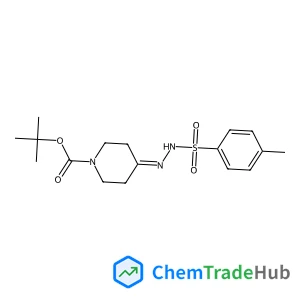
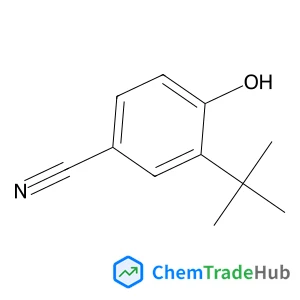
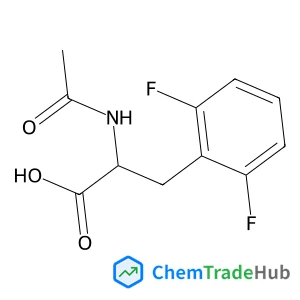
![[4-(Isobutyrylamino)phenyl]boronic acid structure](https://static.chemtradehub.com/structs/874/874219-50-8-6ab5.webp "[4-(Isobutyrylamino)phenyl]boronic acid structure")




