












Phase transitions and chromium(iii) luminescence in perovskite-type [C2H5NH3][Na0.5CrxAl0.5−x(HCOO)3] (x = 0, 0.025, 0.5), correlated with structural, dielectric and phonon properties
Literature Information
Publication Date
2016-10-04
DOI
10.1039/C6CP05151K
Impact Factor
3.676
Authors
Maciej Ptak, Mirosław Mączka, Anna Gągor, Adam Sieradzki, Bartosz Bondzior, Przemysław Dereń, S. Pawlus
View Original
Abstract
We report the synthesis, crystal structure, dielectric, vibrational and emission spectra of heterometallic MOFs, [C2H5NH3][Na0.5Cr0.5(HCOO)3] (EtANaCr), [C2H5NH3][Na0.5Al0.5(HCOO)3] (EtANaAl) and [C2H5NH3][Na0.5Al0.475Cr0.025(HCOO)3] (EtANaAlCr). These compounds crystallize in non-centrosymmetric monoclinic polar structures (space group Pn) and undergo order–disorder phase transitions upon heating to the monoclinic centrosymmetric structure (space group P21/n) at 369 (EtANaAl) and 373 K (EtANaCr). In principle, they are ferroelectric below these temperatures. In the high-temperature phase, ethylammonium (EtA+) cations are dynamically disordered over two symmetrically independent positions while upon cooling they begin to order. The ordering is accompanied by distortion of the metal formate framework. The hydrogen bonds (HBs) between the NH3+ group and NaO6 octahedral units are more robust than between the NH3+ group and CrO6 (AlO6) octahedral units and this feature explains a much stronger distortion of the former units and a weak effect of a trivalent cation type on the phase transition temperature. The dielectric studies have confirmed the occurrence of phase transitions of dipolar character and dipole relaxation processes. The optical studies show that EtANaCr and EtANaAlCr exhibit efficient Cr(III)-based emission characteristics for intermediate-ligand field strength.
Related Literature
Small molecule binders recognize DNA microstructural variations via an induced fit mechanism
E. Kathleen Carter, Thomas Dodd, W. David Wilson, Ivaylo Ivanov
2019-01-02
Paper
DOI: 10.1039/C8CP05537H
Crossover in the inelastic electron tunneling spectra of conjugated molecules with direct Au–C links
Enrique Montes, Giuseppe Foti, Héctor Vázquez
2019-01-08
Paper
DOI: 10.1039/C8CP06290K
Femtosecond infrared spectroscopy of chlorophyll f-containing photosystem I
Noura Zamzam, Marius Kaucikas, Dennis J. Nürnberg, A. William Rutherford, Jasper J. van Thor
2018-12-10
Paper
DOI: 10.1039/C8CP05627G
Spin and valley dependent electronic transport in molybdenum disulfide considering up to the second order k-dependent terms: a more exact solution
H. Khani, M. Esmaeilzadeh, F. Kanjouri
2019-03-15
Paper
DOI: 10.1039/C8CP07395C
The relationship between the asymmetric magnetoresistive effect and the magnetocaloric effect in Ni43Co7Mn39−xCrxSn11 Heusler alloys
Yunli Xu, Dongchao Yang, Linjie Ding, Lizhi Yi, Shuaiwei Fan, Liqing Pan, Jia Li, Fengxia Hu, Guanghua Yu, John Q. Xiao
2019-03-19
Paper
DOI: 10.1039/C9CP00145J
Electronic transport properties and magnetoresistance in the Fe3O4/SiO2/p-Si heterostructure with an in-plane current geometry
Xiang Liu, Wenbo Mi
2019-03-06
Paper
DOI: 10.1039/C9CP00033J
Influence of chelate ring type on chelate–chelate and chelate–aryl stacking: the case of nickel bis(dithiolene)
Dušan Ž. Veljković, Michael B. Hall, Edward N. Brothers
2018-11-28
Paper
DOI: 10.1039/C8CP06312E
Dimers of polycyclic aromatic hydrocarbons: the missing pieces in the soot formation process
X. Mercier, O. Carrivain, A. Faccinetto, E. Therssen
2019-03-22
Paper
DOI: 10.1039/C9CP00394K
First-principles prediction of phonon-mediated superconductivity in XBC (X = Mg, Ca, Sr, Ba)
Enamul Haque, M. Anwar Hossain, Catherine Stampfl
2019-04-02
Paper
DOI: 10.1039/C8CP07634K
You might also like
Compound Q&A
Are there alternatives to 1-(4-Chlorophenyl)-N-hydroxymethanimine (CAS: 3848-36-0) in synthesis?
When considering alternatives to 1-(4-Chlorophenyl)-N-hydroxymethanimine (CAS: 3...
3848-36-01-(4-Chlorophenyl)-N...
Compound Q&A
How should (1R,9S,10S,12S,14E,16S,19R,20R,21S,22R)-3,9,21-Trihydroxy-5,10,12,14,16,20,22-heptamethyl-23,24-dioxatetracyclo[17.3.1.1~6,9~.0~2,7~]tetracosa-2,5,7,14-tetraen-4-one (CAS: 183202-73-5) be stored?
This compound should be stored in a cool, dry place away from direct sunlight. I...
183202-73-5(1R,9S,10S,12S,14E,1...
Compound Q&A
How is 3-(4-Bromophenyl)-5-(2-fluorophenyl)-1,2,4-oxadiazole (CAS: 419553-16-5) typically synthesized?
3-(4-Bromophenyl)-5-(2-fluorophenyl)-1,2,4-oxadiazole is synthesized through a m...
419553-16-53-(4-Bromophenyl)-5-...
Compound Q&A
How is 5-Chloro-2-(4-chlorophenyl)-4-methyl-6-[3-(1-piperidinyl)propoxy]pyrimidine (CAS: 1639220-19-1) typically synthesized?
5-Chloro-2-(4-chlorophenyl)-4-methyl-6-[3-(1-piperidinyl)propoxy]pyrimidine (CAS...
1639220-19-15-Chloro-2-(4-chloro...
Compound Q&A
What industries use 2-Chloro-4-(difluoromethoxy)pyridine (CAS: 1206978-15-5)?
2-Chloro-4-(difluoromethoxy)pyridine is used in the pharmaceutical industry for ...
1206978-15-52-Chloro-4-(difluoro...
Compound Q&A
What regulatory guidelines apply to 3-Chloro-6-methylpyridazine (CAS: 1121-79-5)?
3-Chloro-6-methylpyridazine (CAS: 1121-79-5) is classified under the Globally Ha...
1121-79-53-Chloro-6-methylpyr...
Compound Q&A
Are there alternatives to Methyl 4,5-dimethyl-2-nitrobenzoate in synthesis?
Several alternatives can be used in the synthesis of Methyl 4,5-dimethyl-2-nitro...
90922-74-0Methyl 4,5-dimethyl-...
Compound Q&A
Are there alternatives to (2E,2'E)-3,3'-(1,4-Phenylene)bisacrylaldehyde in synthesis?
Alternatives to (2E,2'E)-3,3'-(1,4-Phenylene)bisacrylaldehyde include other acry...
63405-68-5(2E,2'E)-3,3'-(1,4-P...
Compound Q&A
What is 3-Amino-5-chloropyridin-2-ol hydrochloride (CAS: 1261906-29-9)?
3-Amino-5-chloropyridin-2-ol hydrochloride is an organic compound with the CAS n...
1261906-29-93-Amino-5-chloropyri...
Compound Q&A
What precautions should be taken when handling 6,7-Difluoro-2,3-dihydro-4H-chromen-4-one (CAS: 1092349-93-3)?
When handling 6,7-Difluoro-2,3-dihydro-4H-chromen-4-one, it is essential to wear...
1092349-93-36,7-Difluoro-2,3-dih...
Source Journal
Physical Chemistry Chemical Physics

CiteScore:
5.5
Self-citation Rate:
10.3%
Articles per Year:
3036
Physical Chemistry Chemical Physics (PCCP) is an international journal co-owned by 19 physical chemistry and physics societies from around the world. This journal publishes original, cutting-edge research in physical chemistry, chemical physics and biophysical chemistry. To be suitable for publication in PCCP, articles must include significant innovation and/or insight into physical chemistry; this is the most important criterion that reviewers and Editors will judge against when evaluating submissions. The journal has a broad scope and welcomes contributions spanning experiment, theory, computation and data science. Topical coverage includes spectroscopy, dynamics, kinetics, statistical mechanics, thermodynamics, electrochemistry, catalysis, surface science, quantum mechanics, quantum computing and machine learning. Interdisciplinary research areas such as polymers and soft matter, materials, nanoscience, energy, surfaces/interfaces, and biophysical chemistry are welcomed if they demonstrate significant innovation and/or insight into physical chemistry. Joined experimental/theoretical studies are particularly appreciated when complementary and based on up-to-date approaches.
Recommended Compounds
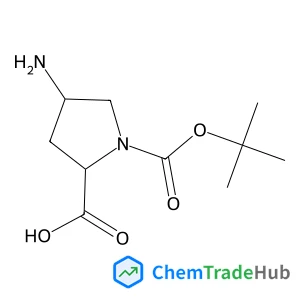
(2R,4R)-1-Boc-4-Aminopyrrolidine-2-carboxylic acid
CAS Number:
132622-98-1
Molecular Formula:
C10H18N2O4

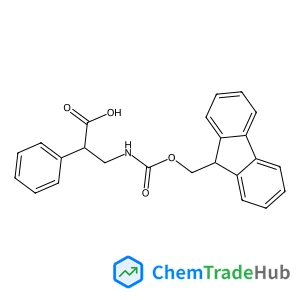
(S)-3-((((9H-Fluoren-9-yl)methoxy)carbonyl)amino)-2-phenylpropanoic acid
CAS Number:
1217663-60-9
Molecular Formula:
C24H21NO4
Recommended Suppliers





Disclaimer
This page provides academic journal information for reference and research purposes only. We are not affiliated with any journal publishers and do not handle publication submissions. For publication-related inquiries, please contact the respective journal publishers directly.
If you notice any inaccuracies in the information displayed, please contact us at support@chemtradehub.com. We will promptly review and address your concerns.