












Crystal structures and superconductivity of technetium hydrides under pressure
Literature Information
Publication Date
2016-09-27
DOI
10.1039/C6CP05702K
Impact Factor
3.676
Authors
Xiaofeng Li, Hanyu Liu, Feng Peng
View Original
Abstract
Guided by a simple strategy in search of new superconducting materials, we have performed extensive simulations on crystal structures and electronic properties of Tc–H compounds at high pressures. Three stoichiometries, namely TcH, TcH2, and TcH3, were predicted to be stable under high pressure. The chemical bonding characters of Tc–H compounds were investigated by introducing the electron localization function and electronic projected density of states, which show that the stable Tc–H compounds including TcH, TcH2 and TcH3 are all classified as ionic crystals as a result of Tc → H charge transfer. Based on the Bardeen–Cooper–Schrieffer theory and estimated from the Allen–Dynes modified McMillan equation, the superconducting critical temperature (Tc) values of the I4/mmm phase for TcH2 are 5 K at 100 GPa and 11 K at 200 GPa. Moreover, it is found that Cmcm-TcH2 and P42/mmc-TcH3 at 300 GPa have Tc values of 9 K and 10 K, respectively. Our current results significantly enrich the crystal structures of the Tc–H system and provide a further understanding of their structural features and physical properties.
Related Literature
Reversible lithium insertion and copper extrusion in layered oxysulfides
Oliver J. Rutt, Gareth R. Williams, Simon J. Clarke
2006-06-06
Communication
DOI: 10.1039/B605105G
Nanomechanical properties of reversed surfactant bilayers formed in micrometre-sized holes
Jian Jin, Yukihiro Sugiyama, Keita Mitsui, Hideo Arakawa, Izumi Ichinose
2008-01-14
Communication
DOI: 10.1039/B717485C
Studies on the direct electrochemistry of hemoglobin immobilized by yeast cells
Junhui Xu
2006-06-06
Communication
DOI: 10.1039/B606429A
“Click”-functionalization of conducting poly(3,4-ethylenedioxythiophene) (PEDOT)
Hang-Beom Bu, Günther Götz, Egon Reinold, Astrid Vogt, Sylvia Schmid, Raúl Blanco, Jose L. Segura, Peter Bäuerle
2008-01-16
Communication
DOI: 10.1039/B718077B
Regulation of α-chymotrypsin activity on the surface of substrate-functionalized gold nanoparticles
Chang-Cheng You, Rochelle R. Arvizo, Vincent M. Rotello
2006-06-02
Communication
DOI: 10.1039/B605508G
New palladium-catalyzed aerobic oxidative cleavage and cyclization of N-aryl peptide derivatives
Laurent El Kaïm, Rocio Gamez-Montaño, Laurence Grimaud, Tannya Ibarra-Rivera
2008-01-18
Communication
DOI: 10.1039/B716849G
Biomimetic synthesis of marine sponge metabolite spiculoic acid A and establishment of the absolute configuration of the natural product
James E. D. Kirkham, Victor Lee, Jack E. Baldwin
2006-06-12
Communication
DOI: 10.1039/B607035C
A mild and convenient synthesis of N-carbobenzyloxy ketimines
Jun-ichi Matsuo, Yumi Tanaki, Aimi Kido, Hiroyuki Ishibashi
2006-06-01
Communication
DOI: 10.1039/B605882E
Stereoselective coordination of ditopic phospholyl-azahelicenes: a novel approach towards structural diversity in chiral π-conjugated assemblies
Wenting Shen, Sébastien Graule, Jeanne Crassous, Christophe Lescop, Heinz Gornitzka, Régis Réau
2007-12-18
Communication
DOI: 10.1039/B714340K
Second harmonic generation from multilayered hybrid polymer nanoassemblies enhanced by coupled surface plasmon resonance
Miki Ishifuji, Masaya Mitsuishi, Tokuji Miyashita
2007-10-24
Communication
DOI: 10.1039/B714832A
You might also like
Compound Q&A
Are there alternatives to 1-(4-Chlorophenyl)-N-hydroxymethanimine (CAS: 3848-36-0) in synthesis?
When considering alternatives to 1-(4-Chlorophenyl)-N-hydroxymethanimine (CAS: 3...
3848-36-01-(4-Chlorophenyl)-N...
Compound Q&A
How should (1R,9S,10S,12S,14E,16S,19R,20R,21S,22R)-3,9,21-Trihydroxy-5,10,12,14,16,20,22-heptamethyl-23,24-dioxatetracyclo[17.3.1.1~6,9~.0~2,7~]tetracosa-2,5,7,14-tetraen-4-one (CAS: 183202-73-5) be stored?
This compound should be stored in a cool, dry place away from direct sunlight. I...
183202-73-5(1R,9S,10S,12S,14E,1...
Compound Q&A
How is 3-(4-Bromophenyl)-5-(2-fluorophenyl)-1,2,4-oxadiazole (CAS: 419553-16-5) typically synthesized?
3-(4-Bromophenyl)-5-(2-fluorophenyl)-1,2,4-oxadiazole is synthesized through a m...
419553-16-53-(4-Bromophenyl)-5-...
Compound Q&A
How is 5-Chloro-2-(4-chlorophenyl)-4-methyl-6-[3-(1-piperidinyl)propoxy]pyrimidine (CAS: 1639220-19-1) typically synthesized?
5-Chloro-2-(4-chlorophenyl)-4-methyl-6-[3-(1-piperidinyl)propoxy]pyrimidine (CAS...
1639220-19-15-Chloro-2-(4-chloro...
Compound Q&A
What industries use 2-Chloro-4-(difluoromethoxy)pyridine (CAS: 1206978-15-5)?
2-Chloro-4-(difluoromethoxy)pyridine is used in the pharmaceutical industry for ...
1206978-15-52-Chloro-4-(difluoro...
Compound Q&A
What regulatory guidelines apply to 3-Chloro-6-methylpyridazine (CAS: 1121-79-5)?
3-Chloro-6-methylpyridazine (CAS: 1121-79-5) is classified under the Globally Ha...
1121-79-53-Chloro-6-methylpyr...
Compound Q&A
Are there alternatives to Methyl 4,5-dimethyl-2-nitrobenzoate in synthesis?
Several alternatives can be used in the synthesis of Methyl 4,5-dimethyl-2-nitro...
90922-74-0Methyl 4,5-dimethyl-...
Compound Q&A
Are there alternatives to (2E,2'E)-3,3'-(1,4-Phenylene)bisacrylaldehyde in synthesis?
Alternatives to (2E,2'E)-3,3'-(1,4-Phenylene)bisacrylaldehyde include other acry...
63405-68-5(2E,2'E)-3,3'-(1,4-P...
Compound Q&A
What is 3-Amino-5-chloropyridin-2-ol hydrochloride (CAS: 1261906-29-9)?
3-Amino-5-chloropyridin-2-ol hydrochloride is an organic compound with the CAS n...
1261906-29-93-Amino-5-chloropyri...
Compound Q&A
What precautions should be taken when handling 6,7-Difluoro-2,3-dihydro-4H-chromen-4-one (CAS: 1092349-93-3)?
When handling 6,7-Difluoro-2,3-dihydro-4H-chromen-4-one, it is essential to wear...
1092349-93-36,7-Difluoro-2,3-dih...
Source Journal
Physical Chemistry Chemical Physics

CiteScore:
5.5
Self-citation Rate:
10.3%
Articles per Year:
3036
Physical Chemistry Chemical Physics (PCCP) is an international journal co-owned by 19 physical chemistry and physics societies from around the world. This journal publishes original, cutting-edge research in physical chemistry, chemical physics and biophysical chemistry. To be suitable for publication in PCCP, articles must include significant innovation and/or insight into physical chemistry; this is the most important criterion that reviewers and Editors will judge against when evaluating submissions. The journal has a broad scope and welcomes contributions spanning experiment, theory, computation and data science. Topical coverage includes spectroscopy, dynamics, kinetics, statistical mechanics, thermodynamics, electrochemistry, catalysis, surface science, quantum mechanics, quantum computing and machine learning. Interdisciplinary research areas such as polymers and soft matter, materials, nanoscience, energy, surfaces/interfaces, and biophysical chemistry are welcomed if they demonstrate significant innovation and/or insight into physical chemistry. Joined experimental/theoretical studies are particularly appreciated when complementary and based on up-to-date approaches.
Recommended Compounds
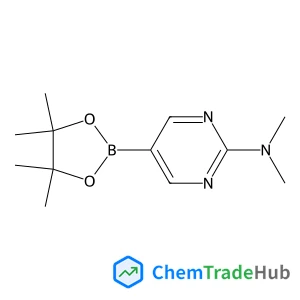
N,N-Dimethyl-5-(4,4,5,5-tetramethyl-1,3,2-dioxaborolan-2-yl)-2-pyrimidinamine
CAS Number:
1032759-30-0
Molecular Formula:
C12H20BN3O2
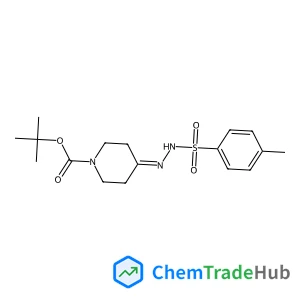
tert-Butyl 4-(2-(p-Tolylsulfonyl)hydrazono)piperidine-1-carboxylate
CAS Number:
1046478-89-0
Molecular Formula:
C17H25N3O4S
![[4-(Isobutyrylamino)phenyl]boronic acid structure](https://static.chemtradehub.com/structs/874/874219-50-8-6ab5.webp "[4-(Isobutyrylamino)phenyl]boronic acid structure")
Recommended Suppliers





Disclaimer
This page provides academic journal information for reference and research purposes only. We are not affiliated with any journal publishers and do not handle publication submissions. For publication-related inquiries, please contact the respective journal publishers directly.
If you notice any inaccuracies in the information displayed, please contact us at support@chemtradehub.com. We will promptly review and address your concerns.