












Model calculations for the prediction of the diradical character of physisorbed molecules: p-benzyne/MgO and p-benzyne/SrO
Literature Information
Publication Date
2023-09-19
DOI
10.1039/D3CP02988C
Impact Factor
3.676
Authors
Kohei Tada, Yoyo Hinuma
View Original
Abstract
The analysis of the diradical state of functional open-shell molecules is important for understanding their physical properties and chemical reactivity. The diradical character is an important factor in the functional elucidation and design of open-shell molecules. In recent years, attempts have been made to immobilise functional open-shell molecules on surfaces to form devices. However, the influence of surface interactions on the diradical state remains unclear. In this study, the physisorption structures of p-benzyne, which is a typical diradical molecule, on MgO(001) and SrO(001) surfaces are used as models to investigate how the diradical character is affected by physisorption. This is done using approximate spin-projected density functional theory calculations with dispersion correction and plane-wave basis (AP-DFT-D3/plane-wave calculations). The diradical character change (Δy) due to adsorption can be categorised into three factors, namely the change due to the distortion of the diradical molecule (Δydis), the interaction between neighbouring diradical molecules (Δycoh), and molecule-surface interactions (Δysurf). In all the calculated models, physisorption reduced the diradical character (Δy < 0), and the contribution of Δysurf was the largest among the three factors. The calculated results show that adsorption induces electron delocalisation to π-conjugated orbitals and intramolecular charge polarisation, both of which contribute to reducing the occupancy of singly occupied molecular orbitals. This indicates that the diradical character of p-benzyne is reduced by the stabilisation of the resonance structures. Furthermore, geometry optimisation of the surfaces shows that the chemical-soft surface (SrO) varies the diradical character more significantly than the chemical-hard surface (MgO). This study shows that the open-shell electronic state and stack structure of diradical molecules can be controlled through the analysis of the surface diradical state.
Recommended Journals
Related Literature
Impact of intracellular metallothionein on metal biouptake and partitioning dynamics at bacterial interfaces
2017-10-17
Paper
DOI: 10.1039/C7CP05456D
Probing the communication of deoxythymidine triphosphate in HIV-1 reverse transcriptase by communication maps and interaction energy studies
2017-10-09
Paper
DOI: 10.1039/C7CP06386E
Polarization mechanisms of dielectric materials at a binary liquid interface: impacts on electrowetting actuation
M.-C. Audry-Deschamps, L. Renaud, P. Kleimann, A. Brioude, M. Maillard
2017-10-17
Paper
DOI: 10.1039/C7CP06052A
Influence of the nature of the anchoring group on electron injection processes at dye–titania interfaces
David Cornil, Yasser Karzazi, Belkheir Hammouti, Roberto Lazzaroni, Jérôme Cornil
2017-10-17
Paper
DOI: 10.1039/C7CP05638A
Chemical surface exchange of oxygen on CeO2−δ in an O2/H2O atmosphere
Xin Xu
2017-10-09
Paper
DOI: 10.1039/C7CP05969H
Density functional theory investigation of negative differential resistance and efficient spin filtering in niobium-doped armchair graphene nanoribbons
Jitendra Kumar, Harshal B. Nemade, P. K. Giri
2017-10-12
Paper
DOI: 10.1039/C7CP05921C
Stacking-enriched magneto-transport properties of few-layer graphenes
Thi-Nga Do, Cheng-Peng Chang, Po-Hsin Shih, Jhao-Ying Wu, Ming-Fa Lin
2017-10-11
Paper
DOI: 10.1039/C7CP05614A
Quantitative DFT modeling of product concentration in organometallic reactions: Cu-mediated pentafluoroethylation of benzoic acid chlorides as a case study
2017-10-10
Paper
DOI: 10.1039/C7CP05709A
You might also like
Compound Q&A
What industries use (1R,3S)-1,3-Cyclopentanediol (CAS: 16326-97-9)?
(1R,3S)-1,3-Cyclopentanediol finds applications in various industries. In the ph...
16326-97-9(1R,3S)-1,3-Cyclopen...
Compound Q&A
What precautions should be taken when handling N'-[4-(Dimethylamino)phenyl]-N,N-dimethyl-1,4-benzenediamine (CAS: 637-31-0)?
When handling N'-[4-(Dimethylamino)phenyl]-N,N-dimethyl-1,4-benzenediamine, it i...
637-31-0N'-[4-(Dimethylamino...
Compound Q&A
Are there alternatives to 5-(2,4-Difluorophenyl)-2-methoxypyrimidine (CAS: 1352318-16-1) in synthesis?
There are several alternatives to 5-(2,4-Difluorophenyl)-2-methoxypyrimidine in ...
1352318-16-15-(2,4-Difluoropheny...
Compound Q&A
What regulatory guidelines apply to 1-(3-Methoxyphenoxy)propan-2-ol (CAS: 382141-68-6)?
1-(3-Methoxyphenoxy)propan-2-ol (CAS: 382141-68-6) must comply with the Globally...
382141-68-61-(3-Methoxyphenoxy)...
Compound Q&A
Is Tetrodotoxin Citrate (CAS: 18660-81-6) safe?
Tetrodotoxin Citrate is extremely dangerous and should be handled with extreme c...
18660-81-6Tetrodotoxin Citrate
Compound Q&A
What are the main uses of 2-Methyl-2-propanyl [(1R,3S)-3-hydroxycyclopentyl]carbamate (CAS: 225641-84-9)?
2-Methyl-2-propanyl [(1R,3S)-3-hydroxycyclopentyl]carbamate (CAS: 225641-84-9) i...
225641-84-92-Methyl-2-propanyl ...
Compound Q&A
How should waste containing 4-(2-Hydroxyhexafluoroisopropyl)Benzoic Acid (CAS: 16261-80-6) be handled?
Waste containing 4-(2-Hydroxyhexafluoroisopropyl)Benzoic Acid (CAS: 16261-80-6) ...
16261-80-64-(2-Hydroxyhexafluo...
Compound Q&A
How is 2-Methyl-2-proanyl {(2S)-1-[(benzyloxy)amino]-3-hydroxy-3-methyl-1-oxo-2-butanyl}carbamate (CAS: 102507-19-7) typically synthesized?
2-Methyl-2-proanyl {(2S)-1-[(benzyloxy)amino]-3-hydroxy-3-methyl-1-oxo-2-butanyl...
102507-19-72-Methyl-2-propanyl ...
Compound Q&A
What is Benzeneethanamine, α-ethyl-, hydrochloride (1:1) (CAS: 20735-15-3)?
Benzeneethanamine, α-ethyl-, hydrochloride (1:1) is an organic compound with the...
20735-15-3Benzeneethanamine, α...
Compound Q&A
Are there alternatives to 3-{(E)-[4-(Dimethylamino)phenyl]diazenyl}benzoic acid (CAS: 20691-84-3) in synthesis?
In the synthesis of compounds similar to 3-{(E)-[4-(Dimethylamino)phenyl]diazeny...
20691-84-33-{(E)-[4-(Dimethyla...
Source Journal
Physical Chemistry Chemical Physics

CiteScore:
5.5
Self-citation Rate:
10.3%
Articles per Year:
3036
Physical Chemistry Chemical Physics (PCCP) is an international journal co-owned by 19 physical chemistry and physics societies from around the world. This journal publishes original, cutting-edge research in physical chemistry, chemical physics and biophysical chemistry. To be suitable for publication in PCCP, articles must include significant innovation and/or insight into physical chemistry; this is the most important criterion that reviewers and Editors will judge against when evaluating submissions. The journal has a broad scope and welcomes contributions spanning experiment, theory, computation and data science. Topical coverage includes spectroscopy, dynamics, kinetics, statistical mechanics, thermodynamics, electrochemistry, catalysis, surface science, quantum mechanics, quantum computing and machine learning. Interdisciplinary research areas such as polymers and soft matter, materials, nanoscience, energy, surfaces/interfaces, and biophysical chemistry are welcomed if they demonstrate significant innovation and/or insight into physical chemistry. Joined experimental/theoretical studies are particularly appreciated when complementary and based on up-to-date approaches.
Recommended Compounds
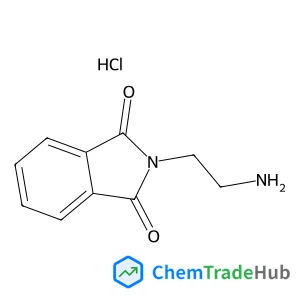
2-(2-Aminoethyl)-1H-isoindole-1,3(2H)-dione hydrochloride (1:1)
CAS Number:
30250-67-0
Molecular Formula:
C10H11ClN2O2
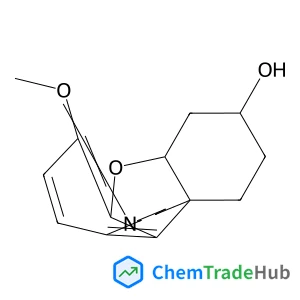
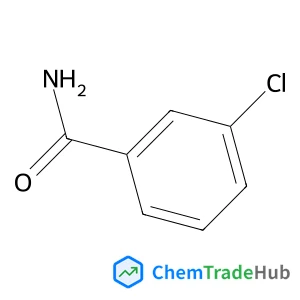
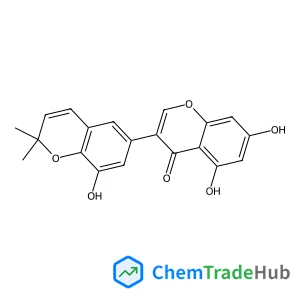
5,7,8'-Trihydroxy-2',2'-dimethyl-2'H,4H-3,6'-bichromen-4-one
CAS Number:
129280-33-7
Molecular Formula:
C20H16O6
Recommended Suppliers






Disclaimer
This page provides academic journal information for reference and research purposes only. We are not affiliated with any journal publishers and do not handle publication submissions. For publication-related inquiries, please contact the respective journal publishers directly.
If you notice any inaccuracies in the information displayed, please contact us at support@chemtradehub.com. We will promptly review and address your concerns.