












Density functional theory investigation of negative differential resistance and efficient spin filtering in niobium-doped armchair graphene nanoribbons
Literature Information
Publication Date
2017-10-12
DOI
10.1039/C7CP05921C
Impact Factor
3.676
Authors
Jitendra Kumar, Harshal B. Nemade, P. K. Giri
View Original
Abstract
Using density functional theory calculations in combination with a non-equilibrium Green's function method, we explore the transport properties of a niobium-doped (∼3.57%) armchair graphene nanoribbon of dimer length 7 in a two-terminal device configuration. The band structure of the supercell with niobium atoms showed spin splitting near the Fermi level. The spin-dependent transport properties and spin-resolved band structure of electrodes with applied bias values were calculated to understand the spin filter and the negative differential resistance (NDR) effect. The spin filter efficiency of the device was found to be more than 95% in the applied voltage range of 0.15 V to 0.5 V for the antiparallel configuration, and the device is suitable as an efficient spin filter at room temperature. The parallel configuration has a higher range, 0 V to 0.5 V, with an efficiency more than 70%. The peak-to-valley ratios in the parallel configuration for spin-up and spin-down currents were 4.5 and 17.8, respectively, while in the antiparallel configuration, the values were 4.57 and 37.5, respectively. The combined NDR characteristic showed figure of merit with a peak current density of ∼6 mA μm−1 and a PVR of ∼4.6, useful for logical application. Our findings open a new way to produce multifunctional spintronic devices based on niobium-doped armchair graphene nanoribbons.
Related Literature
Hierarchical formation of Fe-9eG supramolecular networks via flexible coordination bonds
Chi Zhang, Lei Xie, Yuanqi Ding, Chunxue Yuan, Wei Xu
2018-01-05
Paper
DOI: 10.1039/C7CP08278A
Towards understanding the behavior of polyelectrolyte–surfactant mixtures at the water/vapor interface closer to technologically-relevant conditions
Sara Llamas, Laura Fernández-Peña, Víctor Ortega, Aurelio G. Csaky, Richard A. Campbell
2017-12-18
Paper
DOI: 10.1039/C7CP05528E
Kamlet–Taft solvent parameters, NMR spectroscopic analysis and thermoelectrochemistry of lithium–glyme solvate ionic liquids and their dilute solutions
Jeffrey J. Black, Andrew Dolan, Jason B. Harper
2018-06-04
Paper
DOI: 10.1039/C8CP02527D
Multiscale simulations of ligand adsorption and exchange on gold nanoparticles
Hui-Min Gao, Hong Liu, Hu-Jun Qian, Gui-Sheng Jiao, Zhong-Yuan Lu
2017-12-11
Paper
DOI: 10.1039/C7CP07039J
Ethanol synthesis from syngas over Cu(Pd)-doped Fe(100): a systematic theoretical investigation
Wei Wang, Ye Wang
2017-11-13
Paper
DOI: 10.1039/C7CP06693G
Lead (Pb) interfacing with epitaxial graphene
Mikhail Vagin, Ivan G. Ivanov, Tihomir Iakimov, G. Reza Yazdi, Rositsa Yakimova
2018-05-29
Paper
DOI: 10.1039/C8CP01814F
Effect of transition-metal-ion dopants on the oxygen evolution reaction on NiOOH(0001)
Alexander J. Tkalych, John Mark P. Martirez, Emily A. Carter
2018-07-03
Paper
DOI: 10.1039/C8CP02849D
Analysis of competitive binding of several metal cations by graphene oxide reveals the quantity and spatial distribution of carboxyl groups on its surface
Rustem R. Amirov, Julia Shayimova, Zarina Nasirova, Alexander Solodov, Ayrat M. Dimiev
2017-12-12
Paper
DOI: 10.1039/C7CP07055A
The impact of tensorial temperature on equilibrium thermodynamics
Marcello Sega, Pál Jedlovszky
2018-06-04
Communication
DOI: 10.1039/C8CP02046A
The importance of grand-canonical quantum mechanical methods to describe the effect of electrode potential on the stability of intermediates involved in both electrochemical CO2 reduction and hydrogen evolution
Haochen Zhang, William A. Goddard, III, Qi Lu, Mu-Jeng Cheng
2018-01-03
Paper
DOI: 10.1039/C7CP08153G
You might also like
Compound Q&A
What industries use (1R,3S)-1,3-Cyclopentanediol (CAS: 16326-97-9)?
(1R,3S)-1,3-Cyclopentanediol finds applications in various industries. In the ph...
16326-97-9(1R,3S)-1,3-Cyclopen...
Compound Q&A
What precautions should be taken when handling N'-[4-(Dimethylamino)phenyl]-N,N-dimethyl-1,4-benzenediamine (CAS: 637-31-0)?
When handling N'-[4-(Dimethylamino)phenyl]-N,N-dimethyl-1,4-benzenediamine, it i...
637-31-0N'-[4-(Dimethylamino...
Compound Q&A
Are there alternatives to 5-(2,4-Difluorophenyl)-2-methoxypyrimidine (CAS: 1352318-16-1) in synthesis?
There are several alternatives to 5-(2,4-Difluorophenyl)-2-methoxypyrimidine in ...
1352318-16-15-(2,4-Difluoropheny...
Compound Q&A
What regulatory guidelines apply to 1-(3-Methoxyphenoxy)propan-2-ol (CAS: 382141-68-6)?
1-(3-Methoxyphenoxy)propan-2-ol (CAS: 382141-68-6) must comply with the Globally...
382141-68-61-(3-Methoxyphenoxy)...
Compound Q&A
Is Tetrodotoxin Citrate (CAS: 18660-81-6) safe?
Tetrodotoxin Citrate is extremely dangerous and should be handled with extreme c...
18660-81-6Tetrodotoxin Citrate
Compound Q&A
What are the main uses of 2-Methyl-2-propanyl [(1R,3S)-3-hydroxycyclopentyl]carbamate (CAS: 225641-84-9)?
2-Methyl-2-propanyl [(1R,3S)-3-hydroxycyclopentyl]carbamate (CAS: 225641-84-9) i...
225641-84-92-Methyl-2-propanyl ...
Compound Q&A
How should waste containing 4-(2-Hydroxyhexafluoroisopropyl)Benzoic Acid (CAS: 16261-80-6) be handled?
Waste containing 4-(2-Hydroxyhexafluoroisopropyl)Benzoic Acid (CAS: 16261-80-6) ...
16261-80-64-(2-Hydroxyhexafluo...
Compound Q&A
How is 2-Methyl-2-proanyl {(2S)-1-[(benzyloxy)amino]-3-hydroxy-3-methyl-1-oxo-2-butanyl}carbamate (CAS: 102507-19-7) typically synthesized?
2-Methyl-2-proanyl {(2S)-1-[(benzyloxy)amino]-3-hydroxy-3-methyl-1-oxo-2-butanyl...
102507-19-72-Methyl-2-propanyl ...
Compound Q&A
What is Benzeneethanamine, α-ethyl-, hydrochloride (1:1) (CAS: 20735-15-3)?
Benzeneethanamine, α-ethyl-, hydrochloride (1:1) is an organic compound with the...
20735-15-3Benzeneethanamine, α...
Compound Q&A
Are there alternatives to 3-{(E)-[4-(Dimethylamino)phenyl]diazenyl}benzoic acid (CAS: 20691-84-3) in synthesis?
In the synthesis of compounds similar to 3-{(E)-[4-(Dimethylamino)phenyl]diazeny...
20691-84-33-{(E)-[4-(Dimethyla...
Source Journal
Physical Chemistry Chemical Physics

CiteScore:
5.5
Self-citation Rate:
10.3%
Articles per Year:
3036
Physical Chemistry Chemical Physics (PCCP) is an international journal co-owned by 19 physical chemistry and physics societies from around the world. This journal publishes original, cutting-edge research in physical chemistry, chemical physics and biophysical chemistry. To be suitable for publication in PCCP, articles must include significant innovation and/or insight into physical chemistry; this is the most important criterion that reviewers and Editors will judge against when evaluating submissions. The journal has a broad scope and welcomes contributions spanning experiment, theory, computation and data science. Topical coverage includes spectroscopy, dynamics, kinetics, statistical mechanics, thermodynamics, electrochemistry, catalysis, surface science, quantum mechanics, quantum computing and machine learning. Interdisciplinary research areas such as polymers and soft matter, materials, nanoscience, energy, surfaces/interfaces, and biophysical chemistry are welcomed if they demonstrate significant innovation and/or insight into physical chemistry. Joined experimental/theoretical studies are particularly appreciated when complementary and based on up-to-date approaches.
Recommended Compounds
![N,N'-1,2-Ethanediylbis[2-(vinylsulfonyl)acetamide] structure](https://static.chemtradehub.com/structs/667/66710-66-5-b556.webp "N,N'-1,2-Ethanediylbis[2-(vinylsulfonyl)acetamide] structure")
N,N'-1,2-Ethanediylbis[2-(vinylsulfonyl)acetamide]
CAS Number:
66710-66-5
Molecular Formula:
C10H16N2O6S2

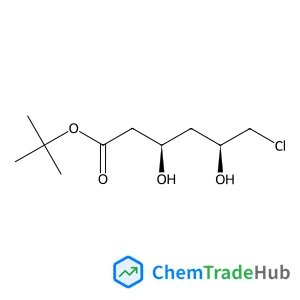
2-Methyl-2-propanyl (3R,5S)-6-chloro-3,5-dihydroxyhexanoate
CAS Number:
154026-93-4
Molecular Formula:
C10H19ClO4
Recommended Suppliers


Disclaimer
This page provides academic journal information for reference and research purposes only. We are not affiliated with any journal publishers and do not handle publication submissions. For publication-related inquiries, please contact the respective journal publishers directly.
If you notice any inaccuracies in the information displayed, please contact us at support@chemtradehub.com. We will promptly review and address your concerns.