












Probing the communication of deoxythymidine triphosphate in HIV-1 reverse transcriptase by communication maps and interaction energy studies
Literature Information
Publication Date
2017-10-09
DOI
10.1039/C7CP06386E
Impact Factor
3.676
Authors
View Original
Abstract
We calculate communication maps for HIV-1 Reverse Transcriptase (RT) to elucidate energy transfer pathways between deoxythymidine triphosphate (dTTP) and other parts of the protein. This approach locates energy transport channels from the dTTP to remote regions of the protein via residues and water molecules. We examine the water dynamics near the catalytic site of HIV-1 RT by molecular dynamics (MD) simulations. We find that, within the catalytic site, the relaxation of water molecules is similar to that of the hydration water molecules present in other proteins and the relaxation time scale is fast enough to transport energy and helps in communication between dTTP and other residues in the system. To quantify energy transfer, we also calculate the interaction energies of dTTP, 2Mg2+, doxy-guanosine nucleotide (DG22) with their surrounding residues by using the B3LYP-D3 method. The results, from classical vibrational energy diffusivity and QM interaction energy, are complementary to identify the important residues involved in the process of polymerization. The positive and negative interactions by dTTP with different types of residues in the catalytic region make the residues transfer energy through vibrational communication.
Recommended Journals
Related Literature
Non-percolating small metallic clusters and sharp suppression of metallicity in RE0.55Sr0.45Mn1−xRuxO3 manganites
H. S. Alagoz, I. Živković, K. H. Chow, J. Jung
2018-01-02
Paper
DOI: 10.1039/C7CP02423A
Towards understanding the behavior of polyelectrolyte–surfactant mixtures at the water/vapor interface closer to technologically-relevant conditions
Sara Llamas, Laura Fernández-Peña, Víctor Ortega, Aurelio G. Csaky, Richard A. Campbell
2017-12-18
Paper
DOI: 10.1039/C7CP05528E
Phonon thermal transport in a graphene/MoSe2 van der Waals heterobilayer
Yang Hong, Ming Gang Ju, Jingchao Zhang, Xiao Cheng Zeng
2017-12-19
Paper
DOI: 10.1039/C7CP06874C
A low temperature investigation of the gas-phase N(2D) + NO reaction. Towards a viable source of N(2D) atoms for kinetic studies in astrochemistry
2018-06-12
Paper
DOI: 10.1039/C8CP02851F
Size dependent surface charge properties of silica nano-channels: double layer overlap and inlet/outlet effects
Tumcan Sen, Murat Barisik
2018-05-30
Paper
DOI: 10.1039/C8CP01906A
Revisiting the catalytic mechanism of Mo–Cu carbon monoxide dehydrogenase using QM/MM and DFT calculations
Kai Xu, Hajime Hirao
2018-05-10
Paper
DOI: 10.1039/C8CP00858B
Comparative photophysical investigation of doubly-emissive photochromic-fluorescent diarylethenes
E. Barrez, G. Laurent, C. Pavageau, M. Sliwa, R. Métivier
2017-12-13
Paper
DOI: 10.1039/C7CP06541H
Approximate DFT-based methods for generating diabatic states and calculating electronic couplings: models of two and more states
ChiYung Yam
2017-12-20
Paper
DOI: 10.1039/C7CP06660K
Efficient interfacial charge transfer through plasmon sensitized Ag@Bi2O3 hierarchical photoanodes for photoelectrocatalytic degradation of chlorinated phenols
Neerugatti KrishnaRao Eswar, Sangeeta Adhikari, Praveen C. Ramamurthy, Giridhar Madras
2018-01-02
Paper
DOI: 10.1039/C7CP04888B
A remarkable two-dimensional membrane for multifunctional gas separation: halogenated metal-free fused-ring polyphthalocyanine
Yadong Zhang, Qi Shi, Yuzhen Liu, Aijun Du, Ruifeng Lu
2018-06-04
Paper
DOI: 10.1039/C8CP01648H
You might also like
Compound Q&A
What industries use (1R,3S)-1,3-Cyclopentanediol (CAS: 16326-97-9)?
(1R,3S)-1,3-Cyclopentanediol finds applications in various industries. In the ph...
16326-97-9(1R,3S)-1,3-Cyclopen...
Compound Q&A
What precautions should be taken when handling N'-[4-(Dimethylamino)phenyl]-N,N-dimethyl-1,4-benzenediamine (CAS: 637-31-0)?
When handling N'-[4-(Dimethylamino)phenyl]-N,N-dimethyl-1,4-benzenediamine, it i...
637-31-0N'-[4-(Dimethylamino...
Compound Q&A
Are there alternatives to 5-(2,4-Difluorophenyl)-2-methoxypyrimidine (CAS: 1352318-16-1) in synthesis?
There are several alternatives to 5-(2,4-Difluorophenyl)-2-methoxypyrimidine in ...
1352318-16-15-(2,4-Difluoropheny...
Compound Q&A
What regulatory guidelines apply to 1-(3-Methoxyphenoxy)propan-2-ol (CAS: 382141-68-6)?
1-(3-Methoxyphenoxy)propan-2-ol (CAS: 382141-68-6) must comply with the Globally...
382141-68-61-(3-Methoxyphenoxy)...
Compound Q&A
Is Tetrodotoxin Citrate (CAS: 18660-81-6) safe?
Tetrodotoxin Citrate is extremely dangerous and should be handled with extreme c...
18660-81-6Tetrodotoxin Citrate
Compound Q&A
What are the main uses of 2-Methyl-2-propanyl [(1R,3S)-3-hydroxycyclopentyl]carbamate (CAS: 225641-84-9)?
2-Methyl-2-propanyl [(1R,3S)-3-hydroxycyclopentyl]carbamate (CAS: 225641-84-9) i...
225641-84-92-Methyl-2-propanyl ...
Compound Q&A
How should waste containing 4-(2-Hydroxyhexafluoroisopropyl)Benzoic Acid (CAS: 16261-80-6) be handled?
Waste containing 4-(2-Hydroxyhexafluoroisopropyl)Benzoic Acid (CAS: 16261-80-6) ...
16261-80-64-(2-Hydroxyhexafluo...
Compound Q&A
How is 2-Methyl-2-proanyl {(2S)-1-[(benzyloxy)amino]-3-hydroxy-3-methyl-1-oxo-2-butanyl}carbamate (CAS: 102507-19-7) typically synthesized?
2-Methyl-2-proanyl {(2S)-1-[(benzyloxy)amino]-3-hydroxy-3-methyl-1-oxo-2-butanyl...
102507-19-72-Methyl-2-propanyl ...
Compound Q&A
What is Benzeneethanamine, α-ethyl-, hydrochloride (1:1) (CAS: 20735-15-3)?
Benzeneethanamine, α-ethyl-, hydrochloride (1:1) is an organic compound with the...
20735-15-3Benzeneethanamine, α...
Compound Q&A
Are there alternatives to 3-{(E)-[4-(Dimethylamino)phenyl]diazenyl}benzoic acid (CAS: 20691-84-3) in synthesis?
In the synthesis of compounds similar to 3-{(E)-[4-(Dimethylamino)phenyl]diazeny...
20691-84-33-{(E)-[4-(Dimethyla...
Source Journal
Physical Chemistry Chemical Physics

CiteScore:
5.5
Self-citation Rate:
10.3%
Articles per Year:
3036
Physical Chemistry Chemical Physics (PCCP) is an international journal co-owned by 19 physical chemistry and physics societies from around the world. This journal publishes original, cutting-edge research in physical chemistry, chemical physics and biophysical chemistry. To be suitable for publication in PCCP, articles must include significant innovation and/or insight into physical chemistry; this is the most important criterion that reviewers and Editors will judge against when evaluating submissions. The journal has a broad scope and welcomes contributions spanning experiment, theory, computation and data science. Topical coverage includes spectroscopy, dynamics, kinetics, statistical mechanics, thermodynamics, electrochemistry, catalysis, surface science, quantum mechanics, quantum computing and machine learning. Interdisciplinary research areas such as polymers and soft matter, materials, nanoscience, energy, surfaces/interfaces, and biophysical chemistry are welcomed if they demonstrate significant innovation and/or insight into physical chemistry. Joined experimental/theoretical studies are particularly appreciated when complementary and based on up-to-date approaches.
Recommended Compounds


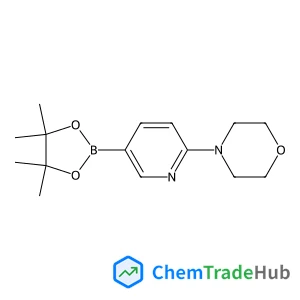
4-(5-(4,4,5,5-tetramethyl-1,3,2-dioxaborolan-2-yl)pyridin-2-yl)morpholine
CAS Number:
485799-04-0
Molecular Formula:
C15H23BN2O3
Recommended Suppliers





Disclaimer
This page provides academic journal information for reference and research purposes only. We are not affiliated with any journal publishers and do not handle publication submissions. For publication-related inquiries, please contact the respective journal publishers directly.
If you notice any inaccuracies in the information displayed, please contact us at support@chemtradehub.com. We will promptly review and address your concerns.