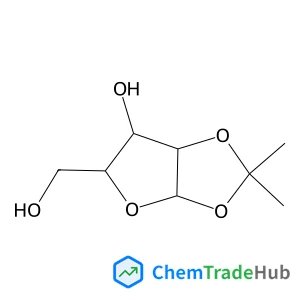
![(1S)-1,5-Anhydro-1-[3-(1-benzothiophen-2-ylmethyl)-4-fluorophenyl]-D-glucitol structure](https://static.chemtradehub.com/structs/761/761423-87-4-dbeb.webp "(1S)-1,5-Anhydro-1-[3-(1-benzothiophen-2-ylmethyl)-4-fluorophenyl]-D-glucitol structure")
(1S)-1,5-Anhydro-1-[3-(1-benzothiophen-2-ylmethyl)-4-fluorophenyl]-D-glucitol
CAS Number:
761423-87-4
Molecular Formula:
C21H21FO5S
Chunyu Wang, Jiayun Zhao, Xiaoju Chen, Renyi Zhang, Shuai Jiang
The new particle formation (NPF) process has been observed globally in clean and polluted environments, where the fundamental mechanisms leading to multicomponent aerosol formation remain elusive. Dicarboxylic acids play an important role in atmospheric NPF. In this study, theoretical calculations are performed to assess the effect of tartaric acid (TA) on the formation of clusters consisting of sulfuric acid (SA), ammonia (AM) or amines (methylamine or dimethylamine, MA/DMA) in the presence of water. Both carboxyl groups and hydroxyl groups in the carbon chain of TA could be involved in hydrogen bonds. The presence of TA triggers proton transfer from SA to the base molecule to form new covalent bonds or strengthens the preexisting covalent bonds, hence, all the hydrated (SA)(TA)(base) cluster formations by adding one TA molecule to the (SA)(base) hydrates are energetically favorable. The dipole–dipole interaction is not only related to the Gibbs energy change for acid affinity reactions to (SA)(W)n and (SA)(base)(W)n (n = 0–4) clusters but also positively related to the reaction rate constant. These results combined with preliminary kinetic results indicate that TA is very likely to participate in clustering and promote subsequent growth involving hydrated SA and (SA)(base) clusters. In addition, our results further indicate that the NPF process can be promoted by multicomponent nucleation involving organic acids, SA, and base species, which will help in understanding NPF in polluted areas and improving global and regional models.

European Journal of Wood and Wood Products

Helvetica Chimica Acta

Journal of Organometallic Chemistry

Science

Proceedings of the National Academy of Sciences of the United States of America

Journal of Physics and Chemistry of Solids

Fibre Chemistry

Russian Chemical Reviews

Pharmacological Reviews

Kinetics and Catalysis
Hèctor Prats, Pablo Gamallo, Ramón Sayós, Francesc Illas
DOI: 10.1039/C5CP06863K
Xueli Guo, Yiwei Tan
DOI: 10.1039/C5CP05531H
Qiong He, Meng Wang, Minghui Sun, Jie Yao, Tianhong Ao
DOI: 10.1039/C5CP03600C
Thomas Fransson, Iurii Zhovtobriukh, Patrick Norman, Lars G. M. Pettersson
DOI: 10.1039/C5CP03919C
Heng-Liang Wu, Yujin Tong, Qiling Peng, Na Li, Shen Ye
DOI: 10.1039/C5CP04960A
Ting Gong, Lijun Qin, Jian Lu, Hao Feng
DOI: 10.1039/C5CP05043J
Stefan Ralser, Alexander Kaiser, Michael Probst, Johannes Postler, Michael Renzler, Diethard K. Bohme, Paul Scheier
DOI: 10.1039/C5CP06587A
Mohammed Ahmed, Ajay K. Singh, Jahur A. Mondal
DOI: 10.1039/C5CP07014G
Sven Stafström
DOI: 10.1039/C5CP06577A
Szilvia Nagy, János Pipek
DOI: 10.1039/C5CP01214G
1H-Indazole-6-carbonitrile finds applications in pharmaceuticals, where it serve...
Waste containing Dioctyl (2E)-2-butenedioate (CAS: 2997-85-5) should be collecte...
Sodium [(1,2-benzoxazol-3-ylmethyl)sulfonyl]azanide is primarily used in pharmac...
Dimethyl 4-(4,4,5,5-tetramethyl-1,3,2-dioxaborolan-2-yl)-2,6-pyridinedicarboxyla...
Waste containing 2-Fluoro-6-hydrazinopyridine (CAS: 80714-39-2) should be manage...
6-Formyl-2-pyridinecarboxylic acid is an organic compound with the molecular for...
Research trends for this compound indicate a focus on its potential applications...
9H-Tribenzo[b,d,f]azepine is typically synthesized via a multi-step process invo...
1-Cyclopropyl-7-ethoxy-6-fluoro-8-methoxy-4-oxo-1,4-dihydro-3-quinolinecarboxyli...
Waste containing Methyl 3-oxo-1,2,3,4-tetrahydro-6-quinoxalinecarboxylate (CAS: ...

Physical Chemistry Chemical Physics (PCCP) is an international journal co-owned by 19 physical chemistry and physics societies from around the world. This journal publishes original, cutting-edge research in physical chemistry, chemical physics and biophysical chemistry. To be suitable for publication in PCCP, articles must include significant innovation and/or insight into physical chemistry; this is the most important criterion that reviewers and Editors will judge against when evaluating submissions. The journal has a broad scope and welcomes contributions spanning experiment, theory, computation and data science. Topical coverage includes spectroscopy, dynamics, kinetics, statistical mechanics, thermodynamics, electrochemistry, catalysis, surface science, quantum mechanics, quantum computing and machine learning. Interdisciplinary research areas such as polymers and soft matter, materials, nanoscience, energy, surfaces/interfaces, and biophysical chemistry are welcomed if they demonstrate significant innovation and/or insight into physical chemistry. Joined experimental/theoretical studies are particularly appreciated when complementary and based on up-to-date approaches.