












Unexpectedly large impact of van der Waals interactions on the description of heterogeneously catalyzed reactions: the water gas shift reaction on Cu(321) as a case example
Literature Information
Publication Date
2015-12-17
DOI
10.1039/C5CP06863K
Impact Factor
3.676
Authors
Hèctor Prats, Pablo Gamallo, Ramón Sayós, Francesc Illas
View Original
Abstract
The molecular mechanisms of the water gas shift reaction on Cu(321) have been chosen to investigate the effect of dispersion terms on the description of the energy profile and reaction rates. The present study based on periodic DFT calculations shows that including dispersion terms does not change the qualitative picture of the overall reaction, maintaining the rate determining step and the predominant route. However, the effect of dispersion is different for different adsorbates – reactants, intermediates or products – with a clear net effect and with no compensation of errors. Thus, in the OH + OH → H2O + O process the dispersion effects imply up to three orders of magnitude in the calculated reaction rates; the formation of carboxyl is highly disfavoured when dispersion terms are explicitly included and finally, the reaction rate for CO2 production (at 463 K) through cis-COOH dissociation is enhanced by three orders of magnitude by including dispersion terms in the calculation of the energy barrier. Consequently, the inclusion of dispersion terms largely affects the overall potential energy profile and produces tremendous changes in the predicted reaction rates. Therefore, dispersion terms must be included when aiming at obtaining information from macroscopic simulations employing for instance microkinetic or kinetic Monte Carlo approaches, where these effects should be clearly shown.
Related Literature
Large scale preparation of graphenequantum dots from graphite with tunable fluorescence properties
Yiqing Sun, Shiqi Wang, Chun Li, Peihui Luo, Lei Tao, Yen Wei, Gaoquan Shi
2013-04-24
Paper
DOI: 10.1039/C3CP50691F
Experimental observation of C60 LUMO splitting in the C602− dianions due to the Jahn–Teller effect. Comparison with the C60˙− radical anions
Dmitri V. Konarev, Alexey V. Kuzmin, Sergey V. Simonov, Evgeniya I. Yudanova, Salavat S. Khasanov, Gunzi Saito, Rimma N. Lyubovskaya
2013-03-25
Paper
DOI: 10.1039/C3CP44359K
Alzheimer's disease: which type of amyloid-preventing drug agents to employ?
Hyunbum Jang, Laura Connelly, Fernando Teran Arce, Srinivasan Ramachandran, Ratnesh Lal, Bruce L. Kagan
2013-02-21
Perspective
DOI: 10.1039/C3CP00017F
Effects of membrane interaction and aggregation of amyloid β-peptide on lipid mobility and membrane domain structure
Kenji Sasahara, Kyoko Shinya
2013-02-20
Paper
DOI: 10.1039/C3CP44517H
Octahedral tin dioxidenanocrystals as high capacity anode materials for Na-ion batteries
Dawei Su, Chengyin Wang, Hyojun Ahn, Guoxiu Wang
2013-05-30
Paper
DOI: 10.1039/C3CP52037D
Amyloid-β–neuropeptide interactions assessed by ion mobility-mass spectrometry
Molly T. Soper, Alaina S. DeToma, Suk-Joon Hyung, Brandon T. Ruotolo
2013-04-15
Paper
DOI: 10.1039/C3CP50721A
Analysis of the molecular interactions governing the polymorphism of benzamide – a guide to syntheses?
Philipp Ectors, Dirk Zahn
2013-04-16
Paper
DOI: 10.1039/C3CP44279A
Can mitochondrial dysfunction be initiated by dissociative electron attachment to xenobiotics?
Stanislav A. Pshenichnyuk
2013-04-08
Paper
DOI: 10.1039/C3CP50614B
A rapid identification of hit molecules for target proteins via physico-chemical descriptors
Goutam Mukherjee
2013-04-11
Paper
DOI: 10.1039/C3CP44697B
You might also like
Compound Q&A
What are the main uses of 1H-Indazole-6-carbonitrile (CAS: 141290-59-7)?
1H-Indazole-6-carbonitrile finds applications in pharmaceuticals, where it serve...
141290-59-71H-Indazole-6-carbon...
Compound Q&A
How should waste containing Dioctyl (2E)-2-butenedioate (CAS: 2997-85-5) be handled?
Waste containing Dioctyl (2E)-2-butenedioate (CAS: 2997-85-5) should be collecte...
2997-85-5Dioctyl (2E)-2-buten...
Compound Q&A
What industries use Sodium [(1,2-benzoxazol-3-ylmethyl)sulfonyl]azanide (CAS: 68291-98-5)?
Sodium [(1,2-benzoxazol-3-ylmethyl)sulfonyl]azanide is primarily used in pharmac...
68291-98-5Sodium [(1,2-benzoxa...
Compound Q&A
Are there alternatives to Dimethyl 4-(4,4,5,5-tetramethyl-1,3,2-dioxaborolan-2-yl)-2,6-pyridinedicarboxylate (CAS: 741709-66-0) in synthesis?
Dimethyl 4-(4,4,5,5-tetramethyl-1,3,2-dioxaborolan-2-yl)-2,6-pyridinedicarboxyla...
741709-66-0Dimethyl 4-(4,4,5,5-...
Compound Q&A
How should waste containing 2-Fluoro-6-hydrazinopyridine (CAS: 80714-39-2) be handled?
Waste containing 2-Fluoro-6-hydrazinopyridine (CAS: 80714-39-2) should be manage...
80714-39-22-Fluoro-6-hydrazino...
Compound Q&A
What is 6-Formyl-2-pyridinecarboxylic acid (CAS: 499214-11-8)?
6-Formyl-2-pyridinecarboxylic acid is an organic compound with the molecular for...
499214-11-86-Formyl-2-pyridinec...
Compound Q&A
What is the market or research trend for 3-(3,4-dimethoxyphenyl)-2,5-dimethyl-N-(2-morpholin-4-ylethyl)pyrazolo[1,5-a]pyrimidin-7-amine (CAS: 900874-91-1)?
Research trends for this compound indicate a focus on its potential applications...
900874-91-13-(3,4-dimethoxyphen...
Compound Q&A
How is 9H-Tribenzo[b,d,f]azepine (CAS: 29875-73-8) typically synthesized?
9H-Tribenzo[b,d,f]azepine is typically synthesized via a multi-step process invo...
29875-73-89H-Tribenzo[b,d,f]az...
Compound Q&A
How is 1-Cyclopropyl-7-ethoxy-6-fluoro-8-methoxy-4-oxo-1,4-dihydro-3-quinolinecarboxylic acid (CAS: 1797982-51-4) typically synthesized?
1-Cyclopropyl-7-ethoxy-6-fluoro-8-methoxy-4-oxo-1,4-dihydro-3-quinolinecarboxyli...
1797982-51-41-Cyclopropyl-7-etho...
Compound Q&A
How should waste containing Methyl 3-oxo-1,2,3,4-tetrahydro-6-quinoxalinecarboxylate (CAS: 671820-52-3) be handled?
Waste containing Methyl 3-oxo-1,2,3,4-tetrahydro-6-quinoxalinecarboxylate (CAS: ...
671820-52-3Methyl 3-oxo-1,2,3,4...
Source Journal
Physical Chemistry Chemical Physics

CiteScore:
5.5
Self-citation Rate:
10.3%
Articles per Year:
3036
Physical Chemistry Chemical Physics (PCCP) is an international journal co-owned by 19 physical chemistry and physics societies from around the world. This journal publishes original, cutting-edge research in physical chemistry, chemical physics and biophysical chemistry. To be suitable for publication in PCCP, articles must include significant innovation and/or insight into physical chemistry; this is the most important criterion that reviewers and Editors will judge against when evaluating submissions. The journal has a broad scope and welcomes contributions spanning experiment, theory, computation and data science. Topical coverage includes spectroscopy, dynamics, kinetics, statistical mechanics, thermodynamics, electrochemistry, catalysis, surface science, quantum mechanics, quantum computing and machine learning. Interdisciplinary research areas such as polymers and soft matter, materials, nanoscience, energy, surfaces/interfaces, and biophysical chemistry are welcomed if they demonstrate significant innovation and/or insight into physical chemistry. Joined experimental/theoretical studies are particularly appreciated when complementary and based on up-to-date approaches.
Recommended Compounds
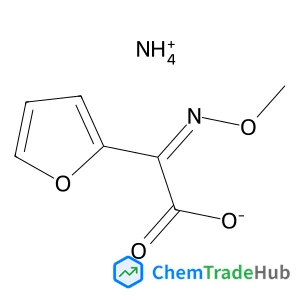
Ammonium (Z)-2-(furan-2-yl)-2-(methoxyimino)acetate
CAS Number:
97148-39-5
Molecular Formula:
C7H10N2O4
![N-[(9H-Fluoren-9-ylmethoxy)carbonyl]serine structure](https://static.chemtradehub.com/structs/737/73724-45-5-b0dc.webp "N-[(9H-Fluoren-9-ylmethoxy)carbonyl]serine structure")
Recommended Suppliers






Disclaimer
This page provides academic journal information for reference and research purposes only. We are not affiliated with any journal publishers and do not handle publication submissions. For publication-related inquiries, please contact the respective journal publishers directly.
If you notice any inaccuracies in the information displayed, please contact us at support@chemtradehub.com. We will promptly review and address your concerns.