













Surface-sealing encapsulation of phosphotungstic acid in microporous UiO-66 as a bifunctional catalyst for transfer hydrogenation of levulinic acid to γ-valerolactone
Literature Information
Publication Date
2023-06-30
DOI
10.1039/D3CP00727H
Impact Factor
3.676
Authors
Siteng Rong, Zhiyuan Zong, Pengrui Zhang, Rongrong Zhao, Feng Song, Hongyou Cui, Zhe-Ning Chen, Weiming Yi, Fengshan Zhang
View Original
Abstract
The efficient production of γ-valerolactone (GVL) from renewable lignocellulose that is synthesized in plants by photosynthesis to replace the declining fossil resources conforms to the principles of circular economy. Compared to direct hydrogenation by H2 molecules, catalytic transfer hydrogenation (CTH) of levulinic acid (LA) and/or its esters to GVL with organic alcohols as a hydrogen source is a much milder route. The synergistic catalysis between Lewis and Brønsted acids is indispensable in the CTH process. Considering that unsaturated coordinated Zr species could act as Lewis acid sites and phosphotungstic acid (PTA) could dissociate protons as Brønsted acid sites, UiO-66 (Zr) was thus “acidified” by encapsulating PTA in its channels to tune the ratio of Brønsted to Lewis acid sites as a bifunctional catalyst so as to better understand the catalytic structure–performance relationship in the CTH process. To address the dilemma of encapsulated PTA that is prone to leach, a rapid surface sealing strategy was adopted to establish a polyimide (PI) coating over the surface of UiO-66 introducing a space confinement effect via an anhydride–amine coupling reaction. The as-synthesized PTA/UiO-66@PI catalyst exhibited 100% of LA conversion, a 93.2% of GVL yield and high recyclability for at least five consecutive cycles. Moreover, a reaction pathway followed by esterification, hydrogenation and dealcoholization as well as a catalytic hydrogenation mechanism based on intermolecular hydride β-H transfer were proposed. Current work not only provides a high-performance and high-stability catalytic system to selectively produce GVL from LA or its esters, but also sheds light on the catalytic mechanism of the CTH process at the molecular level.
Related Literature
Modification of the ZnO(0001)–Zn surface under reducing conditions
Johannes C. van den Heuvel
2011-06-20
Paper
DOI: 10.1039/C1CP20330D
Effective interaction between charged nanoparticles and DNA
Vincent Dahirel, Marie Jardat
2011-06-14
Paper
DOI: 10.1039/C1CP20324J
Definitive solid-state 185/187Re NMR spectral evidence for and analysis of the origin of high-order quadrupole-induced effects for I = 5/2
Cory M. Widdifield, Alex D. Bain, David L. Bryce
2011-06-01
Paper
DOI: 10.1039/C1CP20572B
Passivity and electrocatalysis of nanostructured nickel encapsulated in carbon
Gareth E. Haslam, Xiao-Yao Chin, G. Tim Burstein
2011-06-22
Paper
DOI: 10.1039/C1CP20701F
Photochemistry of hydrogen bonded heterocycles probed by photodissociation experiments and ab initio methods
Michal Fárník
2011-05-25
Perspective
DOI: 10.1039/C1CP20674E
Stern–Brocot trees in the periodicity of mixed-mode oscillations
2011-02-21
Paper
DOI: 10.1039/C0CP02776F
A correlation-based predictor for pair-association in ionic liquids
A. Maiti, R. D. Rogers
2011-06-03
Communication
DOI: 10.1039/C1CP21018A
Energetics of Ce and Pu incorporation into zirconolite waste-forms
M. Gilbert, J. H. Harding
2011-06-21
Paper
DOI: 10.1039/C0CP01478H
Hofmeister effects: interplay of hydration, nonelectrostatic potentials, and ion size
Drew F. Parsons, Mathias Boström, Pierandrea Lo Nostro, Barry W. Ninham
2011-06-14
Perspective
DOI: 10.1039/C1CP20538B
Large ferroelectric polarization in the new double perovskite NaLaMnWO6 induced by non-polar instabilities
T. Fukushima, A. Stroppa, S. Picozzi, J. M. Perez-Mato
2011-06-06
Paper
DOI: 10.1039/C1CP20626E
You might also like
Compound Q&A
What are the main uses of 1H-Indazole-6-carbonitrile (CAS: 141290-59-7)?
1H-Indazole-6-carbonitrile finds applications in pharmaceuticals, where it serve...
141290-59-71H-Indazole-6-carbon...
Compound Q&A
How should waste containing Dioctyl (2E)-2-butenedioate (CAS: 2997-85-5) be handled?
Waste containing Dioctyl (2E)-2-butenedioate (CAS: 2997-85-5) should be collecte...
2997-85-5Dioctyl (2E)-2-buten...
Compound Q&A
What industries use Sodium [(1,2-benzoxazol-3-ylmethyl)sulfonyl]azanide (CAS: 68291-98-5)?
Sodium [(1,2-benzoxazol-3-ylmethyl)sulfonyl]azanide is primarily used in pharmac...
68291-98-5Sodium [(1,2-benzoxa...
Compound Q&A
Are there alternatives to Dimethyl 4-(4,4,5,5-tetramethyl-1,3,2-dioxaborolan-2-yl)-2,6-pyridinedicarboxylate (CAS: 741709-66-0) in synthesis?
Dimethyl 4-(4,4,5,5-tetramethyl-1,3,2-dioxaborolan-2-yl)-2,6-pyridinedicarboxyla...
741709-66-0Dimethyl 4-(4,4,5,5-...
Compound Q&A
How should waste containing 2-Fluoro-6-hydrazinopyridine (CAS: 80714-39-2) be handled?
Waste containing 2-Fluoro-6-hydrazinopyridine (CAS: 80714-39-2) should be manage...
80714-39-22-Fluoro-6-hydrazino...
Compound Q&A
What is 6-Formyl-2-pyridinecarboxylic acid (CAS: 499214-11-8)?
6-Formyl-2-pyridinecarboxylic acid is an organic compound with the molecular for...
499214-11-86-Formyl-2-pyridinec...
Compound Q&A
What is the market or research trend for 3-(3,4-dimethoxyphenyl)-2,5-dimethyl-N-(2-morpholin-4-ylethyl)pyrazolo[1,5-a]pyrimidin-7-amine (CAS: 900874-91-1)?
Research trends for this compound indicate a focus on its potential applications...
900874-91-13-(3,4-dimethoxyphen...
Compound Q&A
How is 9H-Tribenzo[b,d,f]azepine (CAS: 29875-73-8) typically synthesized?
9H-Tribenzo[b,d,f]azepine is typically synthesized via a multi-step process invo...
29875-73-89H-Tribenzo[b,d,f]az...
Compound Q&A
How is 1-Cyclopropyl-7-ethoxy-6-fluoro-8-methoxy-4-oxo-1,4-dihydro-3-quinolinecarboxylic acid (CAS: 1797982-51-4) typically synthesized?
1-Cyclopropyl-7-ethoxy-6-fluoro-8-methoxy-4-oxo-1,4-dihydro-3-quinolinecarboxyli...
1797982-51-41-Cyclopropyl-7-etho...
Compound Q&A
How should waste containing Methyl 3-oxo-1,2,3,4-tetrahydro-6-quinoxalinecarboxylate (CAS: 671820-52-3) be handled?
Waste containing Methyl 3-oxo-1,2,3,4-tetrahydro-6-quinoxalinecarboxylate (CAS: ...
671820-52-3Methyl 3-oxo-1,2,3,4...
Source Journal
Physical Chemistry Chemical Physics

CiteScore:
5.5
Self-citation Rate:
10.3%
Articles per Year:
3036
Physical Chemistry Chemical Physics (PCCP) is an international journal co-owned by 19 physical chemistry and physics societies from around the world. This journal publishes original, cutting-edge research in physical chemistry, chemical physics and biophysical chemistry. To be suitable for publication in PCCP, articles must include significant innovation and/or insight into physical chemistry; this is the most important criterion that reviewers and Editors will judge against when evaluating submissions. The journal has a broad scope and welcomes contributions spanning experiment, theory, computation and data science. Topical coverage includes spectroscopy, dynamics, kinetics, statistical mechanics, thermodynamics, electrochemistry, catalysis, surface science, quantum mechanics, quantum computing and machine learning. Interdisciplinary research areas such as polymers and soft matter, materials, nanoscience, energy, surfaces/interfaces, and biophysical chemistry are welcomed if they demonstrate significant innovation and/or insight into physical chemistry. Joined experimental/theoretical studies are particularly appreciated when complementary and based on up-to-date approaches.
Recommended Compounds

![N-[(9H-Fluoren-9-ylmethoxy)carbonyl]serine structure](https://static.chemtradehub.com/structs/737/73724-45-5-b0dc.webp "N-[(9H-Fluoren-9-ylmethoxy)carbonyl]serine structure")
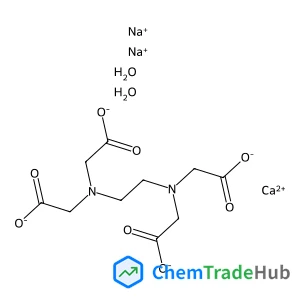
EthylenediaminetetraaceticacidcalciumDisodiumsalthydrate
CAS Number:
23411-34-9
Molecular Formula:
C10H16CaN2Na2O10
Recommended Suppliers






Disclaimer
This page provides academic journal information for reference and research purposes only. We are not affiliated with any journal publishers and do not handle publication submissions. For publication-related inquiries, please contact the respective journal publishers directly.
If you notice any inaccuracies in the information displayed, please contact us at support@chemtradehub.com. We will promptly review and address your concerns.