













Large ferroelectric polarization in the new double perovskite NaLaMnWO6 induced by non-polar instabilities
Literature Information
Publication Date
2011-06-06
DOI
10.1039/C1CP20626E
Impact Factor
3.676
Authors
T. Fukushima, A. Stroppa, S. Picozzi, J. M. Perez-Mato
View Original
Abstract
Based on density functional theory calculations and group theoretical analysis, we have studied NaLaMnWO6 compound which has been recently synthesized [G. King, A. Wills and P. M. Woodward, Phys. Rev. B: Condens. Matter, 2009, 79, 224428] and belongs to the AA′BB′O6 family of double perovskites. At low temperature, the structure has monoclinic P21 symmetry, with layered ordering of the Na and La ions and rocksalt ordering of Mn and W ions. The Mn atoms show an antiferromagnetic collinear spin ordering, and the compound has been reported as a potential multiferroic. By comparing the low symmetry structure with a parent phase of P4/nmm symmetry, two distortion modes are found dominant. They correspond to MnO6 and WO6 octahedron tilt modes, often found in many simple perovskites. While in the latter these common tilting instabilities yield non-polar phases, in NaLaMnWO6 the additional presence of the A–A′ cation ordering is sufficient to make these rigid unit modes a source of the ferroelectricity. Through a trilinear coupling with the two unstable tilting modes, a polar distortion is induced, although the system has no intrinsic polar instability. The calculated electric polarization resulting from this polar distortion is as large as ∼16 μC cm−2. Despite its secondary character, this polarization is coupled with the dominant tilting modes and its switching is bound to produce the switching of one of two tilts, enhancing in this way a possible interaction with the magnetic ordering. The transformation of common non-polar purely steric instabilities into sources of ferroelectricity through a controlled modification of the parent structure, as done here by the cation ordering, is a phenomenon to be further explored.
Related Literature
A first-principles study of the III–IV–V semiconductor nanosheets
Amrita Bhattacharya, Saswata Bhattacharya, G. P. Das
2014-11-12
Paper
DOI: 10.1039/C4CP04188G
Analysis of solvent induced porous PMMA–Bioglass monoliths by the phase separation method – mechanical and in vitro biocompatible studies
D. Durgalakshmi, S. Balakumar
2014-11-07
Paper
DOI: 10.1039/C4CP03515A
Tuning the singlet–triplet energy gap of AIE luminogens: crystallization-induced room temperature phosphorescence and delay fluorescence, tunable temperature response, highly efficient non-doped organic light-emitting diodes
Jie Li, Yibin Jiang, Juan Cheng, Yilin Zhang, Huimin Su, Jacky W. Y. Lam, Herman H. Y. Sung, Kam Sing Wong, Hoi Sing Kwok
2014-11-14
Paper
DOI: 10.1039/C4CP04052J
Morphology-, synthesis- and doping-independent tuning of ZnO work function using phenylphosphonates
Nir Kedem, Sylke Blumstengel, Fritz Henneberger, Hagai Cohen, Gary Hodes, David Cahen
2014-03-12
Paper
DOI: 10.1039/C3CP55083D
Electrochemical energy storage by polyaniline nanofibers: high gravity assisted oxidative polymerization vs. rapid mixing chemical oxidative polymerization
Yibo Zhao, Huige Wei, Xingru Yan, Wei Wu, Yiran Wang, Zhanhu Guo
2014-10-28
Paper
DOI: 10.1039/C4CP03144J
Vaporization of the prototypical ionic liquid BMImNTf2 under equilibrium conditions: a multitechnique study
Bruno Brunetti, Andrea Ciccioli, Guido Gigli, Nicolaemanuele Misceo, Luana Tanzi, Stefano Vecchio Ciprioti
2014-06-09
Paper
DOI: 10.1039/C4CP01673D
Structural and electronic properties of organo-halide lead perovskites: a combined IR-spectroscopy and ab initio molecular dynamics investigation
Edoardo Mosconi, Claudio Quarti, Tanja Ivanovska, Giampiero Ruani, Filippo De Angelis
2014-06-13
Paper
DOI: 10.1039/C4CP00569D
Electrochemical characteristics of nanostructured platinum electrodes – a cyclic voltammetry study
P. Daubinger, J. Kieninger, T. Unmüssig
2014-03-17
Paper
DOI: 10.1039/C4CP00342J
Graphyne-supported single Fe atom catalysts for CO oxidation
Ping Wu, Pan Du, Hui Zhang, Chenxin Cai
2014-10-20
Paper
DOI: 10.1039/C4CP04181J
The nature of vertical excited states of dyes containing metals for DSSC applications: insights from TD-DFT and density based indexes
Tangui Le Bahers, Eric Brémond, Ilaria Ciofini
2014-01-16
Paper
DOI: 10.1039/C3CP55032J
You might also like
Compound Q&A
What are the main uses of 1H-Indazole-6-carbonitrile (CAS: 141290-59-7)?
1H-Indazole-6-carbonitrile finds applications in pharmaceuticals, where it serve...
141290-59-71H-Indazole-6-carbon...
Compound Q&A
How should waste containing Dioctyl (2E)-2-butenedioate (CAS: 2997-85-5) be handled?
Waste containing Dioctyl (2E)-2-butenedioate (CAS: 2997-85-5) should be collecte...
2997-85-5Dioctyl (2E)-2-buten...
Compound Q&A
What industries use Sodium [(1,2-benzoxazol-3-ylmethyl)sulfonyl]azanide (CAS: 68291-98-5)?
Sodium [(1,2-benzoxazol-3-ylmethyl)sulfonyl]azanide is primarily used in pharmac...
68291-98-5Sodium [(1,2-benzoxa...
Compound Q&A
Are there alternatives to Dimethyl 4-(4,4,5,5-tetramethyl-1,3,2-dioxaborolan-2-yl)-2,6-pyridinedicarboxylate (CAS: 741709-66-0) in synthesis?
Dimethyl 4-(4,4,5,5-tetramethyl-1,3,2-dioxaborolan-2-yl)-2,6-pyridinedicarboxyla...
741709-66-0Dimethyl 4-(4,4,5,5-...
Compound Q&A
How should waste containing 2-Fluoro-6-hydrazinopyridine (CAS: 80714-39-2) be handled?
Waste containing 2-Fluoro-6-hydrazinopyridine (CAS: 80714-39-2) should be manage...
80714-39-22-Fluoro-6-hydrazino...
Compound Q&A
What is 6-Formyl-2-pyridinecarboxylic acid (CAS: 499214-11-8)?
6-Formyl-2-pyridinecarboxylic acid is an organic compound with the molecular for...
499214-11-86-Formyl-2-pyridinec...
Compound Q&A
What is the market or research trend for 3-(3,4-dimethoxyphenyl)-2,5-dimethyl-N-(2-morpholin-4-ylethyl)pyrazolo[1,5-a]pyrimidin-7-amine (CAS: 900874-91-1)?
Research trends for this compound indicate a focus on its potential applications...
900874-91-13-(3,4-dimethoxyphen...
Compound Q&A
How is 9H-Tribenzo[b,d,f]azepine (CAS: 29875-73-8) typically synthesized?
9H-Tribenzo[b,d,f]azepine is typically synthesized via a multi-step process invo...
29875-73-89H-Tribenzo[b,d,f]az...
Compound Q&A
How is 1-Cyclopropyl-7-ethoxy-6-fluoro-8-methoxy-4-oxo-1,4-dihydro-3-quinolinecarboxylic acid (CAS: 1797982-51-4) typically synthesized?
1-Cyclopropyl-7-ethoxy-6-fluoro-8-methoxy-4-oxo-1,4-dihydro-3-quinolinecarboxyli...
1797982-51-41-Cyclopropyl-7-etho...
Compound Q&A
How should waste containing Methyl 3-oxo-1,2,3,4-tetrahydro-6-quinoxalinecarboxylate (CAS: 671820-52-3) be handled?
Waste containing Methyl 3-oxo-1,2,3,4-tetrahydro-6-quinoxalinecarboxylate (CAS: ...
671820-52-3Methyl 3-oxo-1,2,3,4...
Source Journal
Physical Chemistry Chemical Physics

CiteScore:
5.5
Self-citation Rate:
10.3%
Articles per Year:
3036
Physical Chemistry Chemical Physics (PCCP) is an international journal co-owned by 19 physical chemistry and physics societies from around the world. This journal publishes original, cutting-edge research in physical chemistry, chemical physics and biophysical chemistry. To be suitable for publication in PCCP, articles must include significant innovation and/or insight into physical chemistry; this is the most important criterion that reviewers and Editors will judge against when evaluating submissions. The journal has a broad scope and welcomes contributions spanning experiment, theory, computation and data science. Topical coverage includes spectroscopy, dynamics, kinetics, statistical mechanics, thermodynamics, electrochemistry, catalysis, surface science, quantum mechanics, quantum computing and machine learning. Interdisciplinary research areas such as polymers and soft matter, materials, nanoscience, energy, surfaces/interfaces, and biophysical chemistry are welcomed if they demonstrate significant innovation and/or insight into physical chemistry. Joined experimental/theoretical studies are particularly appreciated when complementary and based on up-to-date approaches.
Recommended Compounds
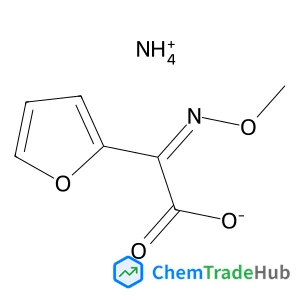
Ammonium (Z)-2-(furan-2-yl)-2-(methoxyimino)acetate
CAS Number:
97148-39-5
Molecular Formula:
C7H10N2O4



Recommended Suppliers




Disclaimer
This page provides academic journal information for reference and research purposes only. We are not affiliated with any journal publishers and do not handle publication submissions. For publication-related inquiries, please contact the respective journal publishers directly.
If you notice any inaccuracies in the information displayed, please contact us at support@chemtradehub.com. We will promptly review and address your concerns.