













Passivity and electrocatalysis of nanostructured nickel encapsulated in carbon
Literature Information
Publication Date
2011-06-22
DOI
10.1039/C1CP20701F
Impact Factor
3.676
Authors
Gareth E. Haslam, Xiao-Yao Chin, G. Tim Burstein
View Original
Abstract
Metallic nickel is a powerful electrocatalyst in alkaline solution and is able to be used in the alkaline fuel cell. However, in acidic solution, electrocatalysis is impossible because the metal is subject to rapid corrosion at low pH for all potentials at which an acidic fuel cell would operate. Here we report the synthesis and passive nature of a nickel–carbon nanostructured material which shows electrocatalytic activity. A thin film composed of nickel and carbon prepared by co-sputtering a graphite target partially covered with a nickel foil shows remarkable passivity against corrosion when polarized in hot sulphuric acid. The film, which contains 21 atom-% nickel, also shows significant electrocatalysis of the hydrogen oxidation reaction, and therefore forms the basis of a new type of fuel cell anode catalyst. High-resolution transmission electron microscopy (HRTEM) reveals a nanostructure of carbon-encapsulated nickel nanocrystals of ≤ ca. 4 nm diameter. The passive nature of the material against corrosion is due to protection generated by the presence of a very thin carbon-rich layer encapsulating the nanoparticulate catalyst: this is a new form of passivation.
Related Literature
Plasmonic enhancement of the optical absorption and catalytic efficiency of BiVO4 photoanodes decorated with Ag@SiO2 core–shell nanoparticles
Ali Dabirian, Bernard Dam, Roel van de Krol
2014-06-12
Paper
DOI: 10.1039/C4CP01583E
Role of oxygen impurity on the mechanical stability and atomic cohesion of Ta3N5 semiconductor photocatalyst
Jiajia Wang, Jianyong Feng, Li Zhang, Zhaosheng Li, Zhigang Zou
2014-05-15
Paper
DOI: 10.1039/C4CP00120F
A first-principles study of the III–IV–V semiconductor nanosheets
Amrita Bhattacharya, Saswata Bhattacharya, G. P. Das
2014-11-12
Paper
DOI: 10.1039/C4CP04188G
Interactions of adsorbed CO2 on water ice at low temperatures
L. J. Karssemeijer, G. A. de Wijs, H. M. Cuppen
2014-06-17
Paper
DOI: 10.1039/C4CP01622J
Photoluminescence quenching in compressed MgO nanoparticle systems
Nicolas Siedl, David Koller, Andreas Kurt Sternig
2014-03-10
Paper
DOI: 10.1039/C3CP54582B
Hidden aspects of the Structural theory of chemistry: MC-QTAIM analysis reveals “alchemical” transformation from a triatomic to a diatomic structure
Mohammad Goli, Shant Shahbazian
2014-10-28
Paper
DOI: 10.1039/C4CP03722G
IR spectroscopy of pyridine–water structures in helium nanodroplets
Melanie Letzner, Torsten Endres, Gerhard Schwaab, Martina Havenith
2014-03-10
Paper
DOI: 10.1039/C3CP55284E
XAS of tetrakis(phenyl)- and tetrakis(pentafluorophenyl)-porphyrin: an experimental and theoretical study
Roberto Verucchi, Luca Pasquali, Angelo Giglia, Giovanna Fronzoni, Mauro Sambi, Giulia Mangione
2014-11-27
Paper
DOI: 10.1039/C4CP03958K
Infrared multiple photon dissociation spectroscopy and density functional theory (DFT) studies of protonated permethylated β-cyclodextrin–water non-covalent complexes
Sung-Sik Lee, Soojin Park, Ju-Young Kim, Hye-Rim Kim, Sungyul Lee, Han Bin Oh
2014-03-10
Paper
DOI: 10.1039/C3CP54841D
You might also like
Compound Q&A
What are the main uses of 1H-Indazole-6-carbonitrile (CAS: 141290-59-7)?
1H-Indazole-6-carbonitrile finds applications in pharmaceuticals, where it serve...
141290-59-71H-Indazole-6-carbon...
Compound Q&A
How should waste containing Dioctyl (2E)-2-butenedioate (CAS: 2997-85-5) be handled?
Waste containing Dioctyl (2E)-2-butenedioate (CAS: 2997-85-5) should be collecte...
2997-85-5Dioctyl (2E)-2-buten...
Compound Q&A
What industries use Sodium [(1,2-benzoxazol-3-ylmethyl)sulfonyl]azanide (CAS: 68291-98-5)?
Sodium [(1,2-benzoxazol-3-ylmethyl)sulfonyl]azanide is primarily used in pharmac...
68291-98-5Sodium [(1,2-benzoxa...
Compound Q&A
Are there alternatives to Dimethyl 4-(4,4,5,5-tetramethyl-1,3,2-dioxaborolan-2-yl)-2,6-pyridinedicarboxylate (CAS: 741709-66-0) in synthesis?
Dimethyl 4-(4,4,5,5-tetramethyl-1,3,2-dioxaborolan-2-yl)-2,6-pyridinedicarboxyla...
741709-66-0Dimethyl 4-(4,4,5,5-...
Compound Q&A
How should waste containing 2-Fluoro-6-hydrazinopyridine (CAS: 80714-39-2) be handled?
Waste containing 2-Fluoro-6-hydrazinopyridine (CAS: 80714-39-2) should be manage...
80714-39-22-Fluoro-6-hydrazino...
Compound Q&A
What is 6-Formyl-2-pyridinecarboxylic acid (CAS: 499214-11-8)?
6-Formyl-2-pyridinecarboxylic acid is an organic compound with the molecular for...
499214-11-86-Formyl-2-pyridinec...
Compound Q&A
What is the market or research trend for 3-(3,4-dimethoxyphenyl)-2,5-dimethyl-N-(2-morpholin-4-ylethyl)pyrazolo[1,5-a]pyrimidin-7-amine (CAS: 900874-91-1)?
Research trends for this compound indicate a focus on its potential applications...
900874-91-13-(3,4-dimethoxyphen...
Compound Q&A
How is 9H-Tribenzo[b,d,f]azepine (CAS: 29875-73-8) typically synthesized?
9H-Tribenzo[b,d,f]azepine is typically synthesized via a multi-step process invo...
29875-73-89H-Tribenzo[b,d,f]az...
Compound Q&A
How is 1-Cyclopropyl-7-ethoxy-6-fluoro-8-methoxy-4-oxo-1,4-dihydro-3-quinolinecarboxylic acid (CAS: 1797982-51-4) typically synthesized?
1-Cyclopropyl-7-ethoxy-6-fluoro-8-methoxy-4-oxo-1,4-dihydro-3-quinolinecarboxyli...
1797982-51-41-Cyclopropyl-7-etho...
Compound Q&A
How should waste containing Methyl 3-oxo-1,2,3,4-tetrahydro-6-quinoxalinecarboxylate (CAS: 671820-52-3) be handled?
Waste containing Methyl 3-oxo-1,2,3,4-tetrahydro-6-quinoxalinecarboxylate (CAS: ...
671820-52-3Methyl 3-oxo-1,2,3,4...
Source Journal
Physical Chemistry Chemical Physics

CiteScore:
5.5
Self-citation Rate:
10.3%
Articles per Year:
3036
Physical Chemistry Chemical Physics (PCCP) is an international journal co-owned by 19 physical chemistry and physics societies from around the world. This journal publishes original, cutting-edge research in physical chemistry, chemical physics and biophysical chemistry. To be suitable for publication in PCCP, articles must include significant innovation and/or insight into physical chemistry; this is the most important criterion that reviewers and Editors will judge against when evaluating submissions. The journal has a broad scope and welcomes contributions spanning experiment, theory, computation and data science. Topical coverage includes spectroscopy, dynamics, kinetics, statistical mechanics, thermodynamics, electrochemistry, catalysis, surface science, quantum mechanics, quantum computing and machine learning. Interdisciplinary research areas such as polymers and soft matter, materials, nanoscience, energy, surfaces/interfaces, and biophysical chemistry are welcomed if they demonstrate significant innovation and/or insight into physical chemistry. Joined experimental/theoretical studies are particularly appreciated when complementary and based on up-to-date approaches.
Recommended Compounds
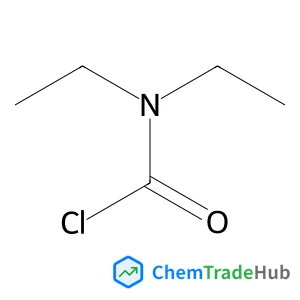


Trichloro(3,3,4,4,5,5,6,6,7,7,8,8,8-tridecafluorooctyl)silane
CAS Number:
78560-45-9
Molecular Formula:
C8H4Cl3F13Si

Recommended Suppliers


Disclaimer
This page provides academic journal information for reference and research purposes only. We are not affiliated with any journal publishers and do not handle publication submissions. For publication-related inquiries, please contact the respective journal publishers directly.
If you notice any inaccuracies in the information displayed, please contact us at support@chemtradehub.com. We will promptly review and address your concerns.