



Quantum mechanical studies of p-azoxyanisole and identification of its electro-optic activity
Literature Information
Publication Date
2023-03-21
DOI
10.1039/D3CP00084B
Impact Factor
3.676
Authors
Manish Kumar, Mirtunjai Mishra, Devendra Singh
View Original
Abstract
Liquid crystals (LCs) are used in displays, visors, navigation systems and many more. Amongst a wide range of LCs, p-azoxyanisole (PAA) is considered to be an active LC. Focusing on different properties of this molecule, in the reported study, the theoretical identification of quantum mechanical parameters and the identification of electro-optic properties are carried out. Different functional theories such as B3LYP, M06-2X and M06L are used along with three basis sets 6-31G**, 6-311G and 6-311G**. A comparative study revealed that the M06-2X method produces higher values of band gap, ionization potential, electronegativity and electronic global hardness while M06L produces lower values and B3LYP gives intermediate values. Nonlinear optical properties of liquid crystals are evaluated. The nonlinear optical properties obtained for a PAA liquid crystal are much higher than those of urea. Due to its high nonlinear optical properties, our liquid crystal can be used in the field of telecommunication and optical interconnection. The order parameter and birefringence are calculated with variable electric field. We found out that the order parameter and birefringence increase with a gradually increasing electric field, which suggests that the PAA liquid crystal can be used for developing electro-optic and tunable metamaterial devices.
Recommended Journals

Journal of Physical Organic Chemistry

Bio-Medical Materials and Engineering

Current Medicinal Chemistry

Diamond and Related Materials

Catalysis Today

Advances in Cement Research

Advanced Composite Materials

Cement and Concrete Composites

Journal of Computer-Aided Molecular Design

Construction and Building Materials
Related Literature
Structural dependence of the photocatalytic properties of double perovskite compounds A2InTaO6 (A = Sr or Ba) doped with nickel
Meilin Lv, Yawei Wang, Lingwei Lu, Ruinan Wang, Shuang Ni, Gang Liu, Xiaoxiang Xu
2016-07-04
Paper
DOI: 10.1039/C6CP03522A
Understanding the fundamental electrical and photoelectrochemical behavior of a hematite photoanode
Mario R. S. Soares, Ricardo H. Gonçalves, Içamira C. Nogueira, Jefferson Bettini, Adenilson J. Chiquito, Edson R. Leite
2016-07-13
Paper
DOI: 10.1039/C6CP03680E
Transient study of the oxygen reduction reaction on reduced Pt and Pt alloys microelectrodes: evidence for the reduction of pre-adsorbed oxygen species linked to dissolved oxygen
S. C. Perry, G. Denuault
2015-10-19
Paper
DOI: 10.1039/C5CP04667J
Using the GVB Ansatz to develop ensemble DFT method for describing multiple strongly correlated electron pairs
Michael Filatov, Kwang S. Kim
2016-03-01
Paper
DOI: 10.1039/C6CP00236F
Mechanistic understanding of calcium–phosphonate solid dissolution and scale inhibitor return behavior in oilfield reservoir: formation of middle phase
Ping Zhang, Dong Shen, Gedeng Ruan
2016-07-08
Paper
DOI: 10.1039/C6CP03148J
Frozen-density embedding theory with average solvent charge densities from explicit atomistic simulations
Andrey Laktionov, Emilie Chemineau-Chalaye, Tomasz A. Wesolowski
2016-03-03
Paper
DOI: 10.1039/C6CP00497K
Photoinduced long-lived charge transfer excited states in AT-DNA strands
Lara Martinez-Fernandez, Yuyuan Zhang, Kimberly de La Harpe, Ashley A. Beckstead, Bern Kohler, Roberto Improta
2016-07-12
Communication
DOI: 10.1039/C6CP04550B
Kohn–Sham calculations of NMR shifts for paramagnetic 3d metal complexes: protocols, delocalization error, and the curious amide proton shifts of a high-spin iron(ii) macrocycle complex
Bob Martin, Jochen Autschbach
2016-02-24
Paper
DOI: 10.1039/C5CP07667F
Extension of the interacting quantum atoms (IQA) approach to B3LYP level density functional theory (DFT)
Ángel Martín Pendás
2016-01-25
Paper
DOI: 10.1039/C5CP07021J
Multicomponent kinetic analysis and theoretical studies on the phenolic intermediates in the oxidation of eugenol and isoeugenol catalyzed by laccase
Yan-Bing Qi, Xiao-Lei Wang, Ting Shi, Shuchang Liu, Zhen-Hao Xu, Xiqing Li, Xuling Shi, Ping Xu, Yi-Lei Zhao
2015-10-07
Paper
DOI: 10.1039/C5CP03475B
You might also like
Compound Q&A
How should waste containing (6-Bromo-2-naphthyl)oxy](dimethyl)(2-methyl-2-propanyl)silane be handled?
Waste containing (6-Bromo-2-naphthyl)oxy](dimethyl)(2-methyl-2-propanyl)silane (...
100751-65-3[(6-Bromo-2-naphthyl...
Compound Q&A
How is 7-Fluoro-4-isoquinolinecarboxylic acid (CAS: 1841081-40-0) typically synthesized?
7-Fluoro-4-isoquinolinecarboxylic acid can be synthesized via a multi-step proce...
1841081-40-07-Fluoro-4-isoquinol...
Compound Q&A
What are the physical and chemical properties of 2,3,5,6-Tetrabromothieno[3,2-b]thiophene (CAS: 124638-53-5)?
2,3,5,6-Tetrabromothieno[3,2-b]thiophene is a crystalline compound with a high m...
124638-53-52,3,5,6-Tetrabromoth...
Compound Q&A
Is 1-[4-(Benzylamino)-7,8-dihydro-5H-pyrano[4,3-d]pyrimidin-2-yl]-2-methyl-1H-indole-4-carboxamide (CAS: 1542705-92-9) safe?
1-[4-(Benzylamino)-7,8-dihydro-5H-pyrano[4,3-d]pyrimidin-2-yl]-2-methyl-1H-indol...
1542705-92-91-[4-(Benzylamino)-7...
Compound Q&A
What is the market or research trend for imidazo[5,1-d]-1,2,3,5-tetrazine-8-carboxylic acid, 3,4-dihydro-3-methyl-4-oxo- (CAS: 113942-30-6)?
The market for imidazo[5,1-d]-1,2,3,5-tetrazine-8-carboxylic acid, 3,4-dihydro-3...
113942-30-6Imidazo[5,1-d]-1,2,3...
Compound Q&A
What is 3-(Triisopropylsilyl)propiolaldehyde (CAS: 163271-80-5)?
3-(Triisopropylsilyl)propiolaldehyde is a synthetic organic compound with the CA...
163271-80-53-(Triisopropylsilyl...
Compound Q&A
What regulatory guidelines apply to 6-Nitro-2H-1,4-benzoxazin-3(4H)-one (CAS: 81721-87-1)?
6-Nitro-2H-1,4-benzoxazin-3(4H)-one (CAS: 81721-87-1) is subject to various regu...
81721-87-16-Nitro-2H-1,4-benzo...
Compound Q&A
How should waste containing (3-Fluorophenyl)(4-{[(2-methyl-2-propanyl)oxy]carbonyl}-1-piperazinyl)acetic acid (CAS: 885272-91-3) be handled?
Waste containing (3-Fluorophenyl)(4-{[(2-methyl-2-propanyl)oxy]carbonyl}-1-piper...
885272-91-3(3-Fluorophenyl)(4-{...
Compound Q&A
What are the physical and chemical properties of N,N'-4,4'-Biphenyldiyldiisonicotinamide (CAS: 55119-40-9)?
N,N'-4,4'-Biphenyldiyldiisonicotinamide is a white crystalline solid with a mole...
55119-40-9N,N'-4,4'-Biphenyldi...
Compound Q&A
What industries use 6-Bromo-8-fluoro-2-quinazolinol (CAS: 1036756-15-6)?
6-Bromo-8-fluoro-2-quinazolinol is primarily used in the pharmaceutical industry...
1036756-15-66-Bromo-8-fluoro-2-q...
Source Journal
Physical Chemistry Chemical Physics

CiteScore:
5.5
Self-citation Rate:
10.3%
Articles per Year:
3036
Physical Chemistry Chemical Physics (PCCP) is an international journal co-owned by 19 physical chemistry and physics societies from around the world. This journal publishes original, cutting-edge research in physical chemistry, chemical physics and biophysical chemistry. To be suitable for publication in PCCP, articles must include significant innovation and/or insight into physical chemistry; this is the most important criterion that reviewers and Editors will judge against when evaluating submissions. The journal has a broad scope and welcomes contributions spanning experiment, theory, computation and data science. Topical coverage includes spectroscopy, dynamics, kinetics, statistical mechanics, thermodynamics, electrochemistry, catalysis, surface science, quantum mechanics, quantum computing and machine learning. Interdisciplinary research areas such as polymers and soft matter, materials, nanoscience, energy, surfaces/interfaces, and biophysical chemistry are welcomed if they demonstrate significant innovation and/or insight into physical chemistry. Joined experimental/theoretical studies are particularly appreciated when complementary and based on up-to-date approaches.
Recommended Compounds

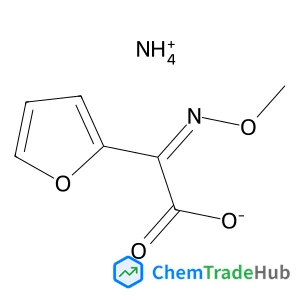
Ammonium (Z)-2-(furan-2-yl)-2-(methoxyimino)acetate
CAS Number:
97148-39-5
Molecular Formula:
C7H10N2O4


EthylenediaminetetraaceticacidcalciumDisodiumsalthydrate
CAS Number:
23411-34-9
Molecular Formula:
C10H16CaN2Na2O10
Recommended Suppliers



Disclaimer
This page provides academic journal information for reference and research purposes only. We are not affiliated with any journal publishers and do not handle publication submissions. For publication-related inquiries, please contact the respective journal publishers directly.
If you notice any inaccuracies in the information displayed, please contact us at support@chemtradehub.com. We will promptly review and address your concerns.