













Transient study of the oxygen reduction reaction on reduced Pt and Pt alloys microelectrodes: evidence for the reduction of pre-adsorbed oxygen species linked to dissolved oxygen
Literature Information
Publication Date
2015-10-19
DOI
10.1039/C5CP04667J
Impact Factor
3.676
Authors
S. C. Perry, G. Denuault
View Original
Abstract
Using chronoamperometry at preconditioned oxide-free Pt microdisc electrodes in aqueous media, we investigated the oxygen reduction reaction (ORR) on the millisecond timescale and obtained results consistent with the reduction of oxygen species which adsorb on the electrode before the ORR is electrochemically driven. Furthermore these adsorbed species are clearly linked to oxygen in solution. At long times, the amperometric response is solely controlled by the diffusion of dissolved oxygen towards the microelectrode. However, at short times, typically below 50 ms, the reduction of pre-adsorbed oxygen produces a large extra current whose magnitude depends on the oxygen concentration in solution, deliberate electrode poisoning and the rest time before the potential step. Using sampled current voltammetry we show that this extra current affects the entire potential range of the ORR. Using microdisc electrodes made with Pt alloys we find that the amperometric response is sufficiently sensitive to distinguish oxygen coverage differences between Pt, Pt0.9Rh0.1 and Pt0.9Ir0.1 microdiscs. These unexpected and, to our knowledge, never previously reported results provide new insight into the oxygen reduction reaction on Pt. The existence over a wide potential range of irreversibly adsorbed oxygen species arising from dissolved oxygen and different from Pt oxide is particularly relevant to the development of oxygen reduction catalysts for low temperature fuel cells.
Related Literature
Stability of two-dimensional PN monolayer sheets and their electronic properties
ShuangYing Ma, Chaoyu He, L. Z. Sun, Haiping Lin, Youyong Li, K. W. Zhang
2015-11-02
Paper
DOI: 10.1039/C5CP05901A
Experimental evidence for the influence of charge on the adsorption capacity of carbon dioxide on charged fullerenes
Stefan Ralser, Alexander Kaiser, Michael Probst, Johannes Postler, Michael Renzler, Diethard K. Bohme, Paul Scheier
2015-12-16
Paper
DOI: 10.1039/C5CP06587A
Synthesis of branched Pd nanocrystals with tunable structures, their growth mechanism, and enhanced electrocatalytic properties
Xueli Guo, Yiwei Tan
2015-10-26
Paper
DOI: 10.1039/C5CP05531H
The new insight into the structure–activity relation of Pd/CeO2–ZrO2–Nd2O3 catalysts by Raman, in situ DRIFTS and XRD Rietveld analysis
X. Yang, L. Yang, J. Lin, R. Zhou
2015-12-22
Paper
DOI: 10.1039/C5CP06956D
Nitrogenated, phosphorated and arsenicated monolayer holey graphenes
Mehmet Yagmurcukardes, Engin Torun, Francois M. Peeters, R. Tugrul Senger
2015-12-22
Paper
DOI: 10.1039/C5CP05538E
Excited-state dynamics of guanosine in aqueous solution revealed by time-resolved photoelectron spectroscopy: experiment and theory
Franziska Buchner, Berit Heggen, Hans-Hermann Ritze, Walter Thiel, Andrea Lübcke
2015-11-09
Paper
DOI: 10.1039/C5CP04394H
Effects of various kinetic rates of FtsZ filaments on bacterial cytokinesis
Zi He, Zhuan Liu, Kunkun Guo, Lina Ding
2015-11-06
Paper
DOI: 10.1039/C5CP00183H
Nuclear quantum tunnelling in enzymatic reactions – an enzymologist's perspective
Linus O. Johannissen, Sam Hay, Nigel S. Scrutton
2015-03-27
Perspective
DOI: 10.1039/C5CP00614G
Revival of “dead” memristive devices: case of WO3−x
Zheng-Hua Tan, Rui Yang, Kazuya Terabe, Xue-Bing Yin, Xin Guo
2015-12-07
Communication
DOI: 10.1039/C5CP06484H
You might also like
Compound Q&A
How should waste containing (6-Bromo-2-naphthyl)oxy](dimethyl)(2-methyl-2-propanyl)silane be handled?
Waste containing (6-Bromo-2-naphthyl)oxy](dimethyl)(2-methyl-2-propanyl)silane (...
100751-65-3[(6-Bromo-2-naphthyl...
Compound Q&A
How is 7-Fluoro-4-isoquinolinecarboxylic acid (CAS: 1841081-40-0) typically synthesized?
7-Fluoro-4-isoquinolinecarboxylic acid can be synthesized via a multi-step proce...
1841081-40-07-Fluoro-4-isoquinol...
Compound Q&A
What are the physical and chemical properties of 2,3,5,6-Tetrabromothieno[3,2-b]thiophene (CAS: 124638-53-5)?
2,3,5,6-Tetrabromothieno[3,2-b]thiophene is a crystalline compound with a high m...
124638-53-52,3,5,6-Tetrabromoth...
Compound Q&A
Is 1-[4-(Benzylamino)-7,8-dihydro-5H-pyrano[4,3-d]pyrimidin-2-yl]-2-methyl-1H-indole-4-carboxamide (CAS: 1542705-92-9) safe?
1-[4-(Benzylamino)-7,8-dihydro-5H-pyrano[4,3-d]pyrimidin-2-yl]-2-methyl-1H-indol...
1542705-92-91-[4-(Benzylamino)-7...
Compound Q&A
What is the market or research trend for imidazo[5,1-d]-1,2,3,5-tetrazine-8-carboxylic acid, 3,4-dihydro-3-methyl-4-oxo- (CAS: 113942-30-6)?
The market for imidazo[5,1-d]-1,2,3,5-tetrazine-8-carboxylic acid, 3,4-dihydro-3...
113942-30-6Imidazo[5,1-d]-1,2,3...
Compound Q&A
What is 3-(Triisopropylsilyl)propiolaldehyde (CAS: 163271-80-5)?
3-(Triisopropylsilyl)propiolaldehyde is a synthetic organic compound with the CA...
163271-80-53-(Triisopropylsilyl...
Compound Q&A
What regulatory guidelines apply to 6-Nitro-2H-1,4-benzoxazin-3(4H)-one (CAS: 81721-87-1)?
6-Nitro-2H-1,4-benzoxazin-3(4H)-one (CAS: 81721-87-1) is subject to various regu...
81721-87-16-Nitro-2H-1,4-benzo...
Compound Q&A
How should waste containing (3-Fluorophenyl)(4-{[(2-methyl-2-propanyl)oxy]carbonyl}-1-piperazinyl)acetic acid (CAS: 885272-91-3) be handled?
Waste containing (3-Fluorophenyl)(4-{[(2-methyl-2-propanyl)oxy]carbonyl}-1-piper...
885272-91-3(3-Fluorophenyl)(4-{...
Compound Q&A
What are the physical and chemical properties of N,N'-4,4'-Biphenyldiyldiisonicotinamide (CAS: 55119-40-9)?
N,N'-4,4'-Biphenyldiyldiisonicotinamide is a white crystalline solid with a mole...
55119-40-9N,N'-4,4'-Biphenyldi...
Compound Q&A
What industries use 6-Bromo-8-fluoro-2-quinazolinol (CAS: 1036756-15-6)?
6-Bromo-8-fluoro-2-quinazolinol is primarily used in the pharmaceutical industry...
1036756-15-66-Bromo-8-fluoro-2-q...
Source Journal
Physical Chemistry Chemical Physics

CiteScore:
5.5
Self-citation Rate:
10.3%
Articles per Year:
3036
Physical Chemistry Chemical Physics (PCCP) is an international journal co-owned by 19 physical chemistry and physics societies from around the world. This journal publishes original, cutting-edge research in physical chemistry, chemical physics and biophysical chemistry. To be suitable for publication in PCCP, articles must include significant innovation and/or insight into physical chemistry; this is the most important criterion that reviewers and Editors will judge against when evaluating submissions. The journal has a broad scope and welcomes contributions spanning experiment, theory, computation and data science. Topical coverage includes spectroscopy, dynamics, kinetics, statistical mechanics, thermodynamics, electrochemistry, catalysis, surface science, quantum mechanics, quantum computing and machine learning. Interdisciplinary research areas such as polymers and soft matter, materials, nanoscience, energy, surfaces/interfaces, and biophysical chemistry are welcomed if they demonstrate significant innovation and/or insight into physical chemistry. Joined experimental/theoretical studies are particularly appreciated when complementary and based on up-to-date approaches.
Recommended Compounds
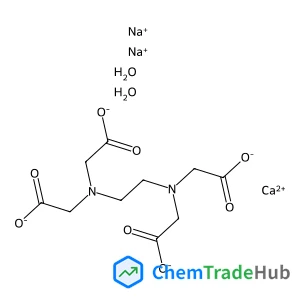
EthylenediaminetetraaceticacidcalciumDisodiumsalthydrate
CAS Number:
23411-34-9
Molecular Formula:
C10H16CaN2Na2O10
Recommended Suppliers






Disclaimer
This page provides academic journal information for reference and research purposes only. We are not affiliated with any journal publishers and do not handle publication submissions. For publication-related inquiries, please contact the respective journal publishers directly.
If you notice any inaccuracies in the information displayed, please contact us at support@chemtradehub.com. We will promptly review and address your concerns.