


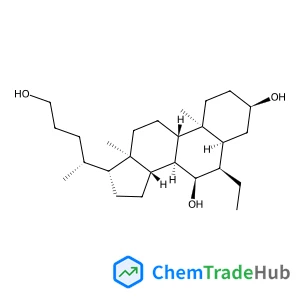
(3alpha,5beta,6alpha,7alpha)-6-Ethylcholane-3,7,24-triol
CAS Number:
1537866-49-1
Molecular Formula:
C26H46O3
Shiguan Xu, Lin Shen, Xiaoxu Wang, Shaonan Gu, Wei Sun, Yuhao Huang
Zinc-based aqueous dual-ion batteries (ADIBs) with halogen-graphite intercalation compound positive electrodes are among the most competitive candidates for next-generation electrochemical energy storage systems. However, most of the electrolytes employed have been gel-like electrolytes; hence, a fundamental understanding of the halogen storage process using fluid hydrates will be essential for constructing efficient Zn-based ADIBs. Herein, the halogen storage mechanism on a graphite electrode from fluid ZnCl2/ZnBr2 hydrates is studied by experimental and computational methods. The results indicate that the halogen storage mechanism is a competition between conversion and intercalation. Moreover, the macroscopic electrode reaction is determined by both the ion-pair solvation state at the graphite–electrolyte interface and the subsequent reactant supply is influenced by the electrode reaction rate.

Journal of Physics and Chemistry of Solids

Organic Preparations and Procedures International

Molecular Pharmacology

Journal of Medicinal Chemistry

Proceedings of the National Academy of Sciences of the United States of America

Journal of Organometallic Chemistry

Planta Medica

Russian Chemical Reviews

Journal of Heterocyclic Chemistry

Helvetica Chimica Acta
Frédéric A. Perras
DOI: 10.1039/C5CP06505D
DOI: 10.1039/C5CP05778G
Susanna K. Eriksson, Ida Josefsson, Hanna Ellis, Anna Amat, Mariachiara Pastore, Johan Oscarsson, Rebecka Lindblad, Anna I. K. Eriksson, Erik M. J. Johansson, Gerrit Boschloo, Anders Hagfeldt, Simona Fantacci, Michael Odelius, Håkan Rensmo
DOI: 10.1039/C5CP04589D
Wan-Kuen Jo, Joon Yeob Lee, Thillai Sivakumar Natarajan
DOI: 10.1039/C5CP06176H
Yevhen K. Cherniavskyi, Christophe Ramseyer, Semen O. Yesylevskyy
DOI: 10.1039/C5CP05838D
Yu-Ting Chen, Kerwin Hui
DOI: 10.1039/C5CP06317E
Hui Wang, Yuan Li, Dong-mei Li, Bin Cui
DOI: 10.1039/C5CP05789B
C. Hintze, F. Schütze, M. Drescher, S. Mecking
DOI: 10.1039/C5CP05749C
Nikolay O. Mchedlov-Petrossyan, Nika N. Kamneva, Younis T. M. Al-Shuuchi, Andriy I. Marynin, Olexii S. Zozulia, Alexander P. Kryshtal, Vladimir K. Klochkov, Sergey V. Shekhovtsov
DOI: 10.1039/C5CP06806A
C. M. Grytz, A. Marko, P. Cekan, S. Th. Sigurdsson, T. F. Prisner
DOI: 10.1039/C5CP06158J
Waste containing 6-Chloro-5-(2'-hydroxy-3'-methoxy-4-biphenylyl)-3-(3-methoxyphe...
(3alpha,5alpha)-3-Hydroxypregnane-11,20-dione is primarily used in the pharmaceu...
The market for 4-Amino-6-chloro-2-pyridinecarboxylic acid (CAS: 546141-56-4) is ...
Alternatives to (2-Benzoylethyl)trimethylammonium chloride (CAS: 24472-88-6) in ...
N-[4-Nitro-3-(trifluoromethyl)phenyl]acetamide (CAS: 393-12-4) is generally safe...
Alternative reagents such as other phosphates or similar functional groups can b...
There are alternatives to N,N'-Bis(3-aminopropyl)-1,3-propanediamine (CAS: 4605-...
When handling Aluminium trihexadecanoate, it is important to use appropriate per...
(1,1-Dioxido-3-oxo-1,2-benzothiazol-2(3H)-yl)acetic acid is a chemical compound ...
Several alternatives to 5,5-dimethyloxolan-2-one (CAS: 3123-97-5) can be used in...

ChemComm publishes urgent research which is of outstanding significance and interest to experts in the field, while also appealing to the journal’s broad chemistry readership. Our communication format is ideally suited to short, urgent studies that are of such importance that they require accelerated publication. Our scope covers all topics in chemistry, and research at the interface of chemistry and other disciplines (such as materials science, nanoscience, physics, engineering and biology) where there is a significant novelty in the chemistry aspects. Major topic areas covered include: Analytical Chemistry Catalysis Chemical Biology and medicinal chemistry Computational Chemistry and Machine Learning Energy and sustainable chemistry Environmental Chemistry Green Chemistry Inorganic Chemistry Materials Chemistry Nanoscience Organic Chemistry Physical Chemistry Polymer Chemistry Supramolecular Chemistry
![(2R,6S)-6-[(Benzyloxy)methyl]-4-{[(2-methyl-2-propanyl)oxy]carbonyl}-2-morpholinecarboxylic acid structure](https://static.chemtradehub.com/structs/109/1093085-91-6-3382.webp "(2R,6S)-6-[(Benzyloxy)methyl]-4-{[(2-methyl-2-propanyl)oxy]carbonyl}-2-morpholinecarboxylic acid structure")




