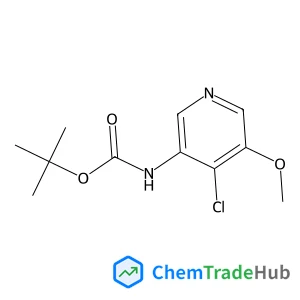
tert-Butyl 4-chloro-5-methoxypyridin-3-ylcarbamate
CAS Number:
1045858-17-0
Molecular Formula:
C11H15ClN2O3
Hui Wang, Yuan Li, Dong-mei Li, Bin Cui
We present a model study of the dynamic properties of a polaron in an organic ferromagnetic polymer by focusing on the spin correlation between the polymer backbone and the side radicals. The simulations are performed by using a tight-binding description coupled with a nonadiabatic dynamics method. We find that, in the presence of an external electric field, the polarons with both up and down spins can get trapped near the side radicals of the polymer chain unless the electric field is stronger than a critical field. However, the magnitudes of the critical electric field vary quite differently for the spin-up and spin-down polarons as a function of the number of side radicals in the polymer, leading to the exponential change of the range of the electric field within which the spin-filtering takes place. The range of the electric field increases nearly in a linear manner with the strength of the electron–lattice coupling as a result of the increase of the polaron binding energy. The impact of the strength of the spin correlation between the backbone and the side radicals on the polaron spin filtering is also discussed. These findings are expected to be useful for the design of organic-based spin filters.
Matthias R. Bauer, Paolo Di Fruscia, Simon C. C. Lucas, Iacovos N. Michaelides, Jennifer E. Nelson, R. Ian Storer, Benjamin C. Whitehurst
DOI: 10.1039/D0MD00370K
Ankita Punetha, Keith D. Green, Atefeh Garzan, Nishad Thamban Chandrika, Melisa J. Willby, Allan H. Pang, Caixia Hou, Selina Y. L. Holbrook, Kyle Krieger, James E. Posey, Tanya Parish, Oleg V. Tsodikov, Sylvie Garneau-Tsodikova
DOI: 10.1039/D1MD00239B
Rachael Zigweid, Bart L. Staker
DOI: 10.1039/D0MD00303D
Maximillian Taro William Lee, William Mahy, Mark David Rackham
DOI: 10.1039/D1MD00113B
Katherine A. Abrahams, Gurdyal S. Besra
DOI: 10.1039/D0MD00261E
Shahinda S. R. Alsayed, Amreena Suri, Anders W. Bailey, Samuel Lane, Chiang-Ching Huang, Li-Fang Yu, Michael Kassiou, Hendra Gunosewoyo
DOI: 10.1039/D1MD00065A
Bandi Siva, Sravanthi Vadlamudi, Surendar Reddy Bathula, Hashnu Dutta, K. Suresh Babu
DOI: 10.1039/D0MD00315H
Jeanette R. McConnell, H. Jane Dyson, Shelli R. McAlpine
DOI: 10.1039/D0MD00387E
Waste containing 6-Chloro-5-(2'-hydroxy-3'-methoxy-4-biphenylyl)-3-(3-methoxyphe...
(3alpha,5alpha)-3-Hydroxypregnane-11,20-dione is primarily used in the pharmaceu...
The market for 4-Amino-6-chloro-2-pyridinecarboxylic acid (CAS: 546141-56-4) is ...
Alternatives to (2-Benzoylethyl)trimethylammonium chloride (CAS: 24472-88-6) in ...
N-[4-Nitro-3-(trifluoromethyl)phenyl]acetamide (CAS: 393-12-4) is generally safe...
Alternative reagents such as other phosphates or similar functional groups can b...
There are alternatives to N,N'-Bis(3-aminopropyl)-1,3-propanediamine (CAS: 4605-...
When handling Aluminium trihexadecanoate, it is important to use appropriate per...
(1,1-Dioxido-3-oxo-1,2-benzothiazol-2(3H)-yl)acetic acid is a chemical compound ...
Several alternatives to 5,5-dimethyloxolan-2-one (CAS: 3123-97-5) can be used in...

Physical Chemistry Chemical Physics (PCCP) is an international journal co-owned by 19 physical chemistry and physics societies from around the world. This journal publishes original, cutting-edge research in physical chemistry, chemical physics and biophysical chemistry. To be suitable for publication in PCCP, articles must include significant innovation and/or insight into physical chemistry; this is the most important criterion that reviewers and Editors will judge against when evaluating submissions. The journal has a broad scope and welcomes contributions spanning experiment, theory, computation and data science. Topical coverage includes spectroscopy, dynamics, kinetics, statistical mechanics, thermodynamics, electrochemistry, catalysis, surface science, quantum mechanics, quantum computing and machine learning. Interdisciplinary research areas such as polymers and soft matter, materials, nanoscience, energy, surfaces/interfaces, and biophysical chemistry are welcomed if they demonstrate significant innovation and/or insight into physical chemistry. Joined experimental/theoretical studies are particularly appreciated when complementary and based on up-to-date approaches.
![2-morpholino-2-[2-(trifluoromethyl)pyrimidin-5-yl]ethanamine structure](https://static.chemtradehub.com/structs/119/1192570-20-9-2810.webp "2-morpholino-2-[2-(trifluoromethyl)pyrimidin-5-yl]ethanamine structure")