












Geometrical and energetical structural changes in organic dyes for dye-sensitized solar cells probed using photoelectron spectroscopy and DFT
Literature Information
Publication Date
2015-11-05
DOI
10.1039/C5CP04589D
Impact Factor
3.676
Authors
Susanna K. Eriksson, Ida Josefsson, Hanna Ellis, Anna Amat, Mariachiara Pastore, Johan Oscarsson, Rebecka Lindblad, Anna I. K. Eriksson, Erik M. J. Johansson, Gerrit Boschloo, Anders Hagfeldt, Simona Fantacci, Michael Odelius, Håkan Rensmo
View Original
Abstract
The effects of alkoxy chain length in triarylamine based donor–acceptor organic dyes are investigated with respect to the electronic and molecular surface structures on the performance of solar cells and the electron lifetime. The dyes were investigated when adsorbed on TiO2 in a configuration that can be used for dye-sensitized solar cells (DSCs). Specifically, the two dyes D35 and D45 were compared using photoelectron spectroscopy (PES) and density functional theory (DFT) calculations. The differences in solar cell characteristics when longer alkoxy chains are introduced in the dye donor unit are attributed to geometrical changes in dye packing while only minor differences were observed in the electronic structure. A higher dye load was observed for D45 on TiO2. However, D35 based solar cells result in higher photocurrent although the dye load is lower. This is explained by different geometrical structures of the dyes on the surface.
Related Literature
Exonuclease III-assisted signal amplification strategy for sensitive fluorescence detection of polynucleotide kinase based on poly(thymine)-templated copper nanoparticles
Han Zhao, Ying Yan, Mingjian Chen, Tingting Hu, Kefeng Wu, Haisheng Liu, Changbei Ma
2019-10-07
Paper
DOI: 10.1039/C9AN01659G
Electrochemical sensors for rapid diagnosis of pathogens in real time
Olja Simoska, Keith J. Stevenson
2019-10-07
Minireview
DOI: 10.1039/C9AN01747J
Recent advances in inorganic materials for LDI-MS analysis of small molecules
C. Y. Shi, C. H. Deng
2016-03-18
Minireview
DOI: 10.1039/C6AN00220J
A novel logic gate based on liquid-crystals responding to the DNA conformational transition
Fubing Xiao, Hui Tan, Yan Wu, Shuzhen Liao, Zhaoyang Wu, Guoli Shen, Ruqin Yu
2016-04-13
Communication
DOI: 10.1039/C6AN00504G
Synthesis of a CdS-decorated Eu-MOF nanocomposite for the construction of a self-powered photoelectrochemical aptasensor
Jie Gao, Yingxu Chen, Weihao Ji, Zhonghong Gao, Jingdong Zhang
2019-09-25
Paper
DOI: 10.1039/C9AN01606F
Solvent-independent determination of heteroatom protonation states from NMR spectra by differential deuterium isotope shifts
Sebastian Tassoti, Martin Walenta, Alexander Pöcheim, Kathrin Buchberger, Olaf Kunert, Klaus Zangger
2019-11-11
Paper
DOI: 10.1039/C9AN01364D
Semi-automatic instrumentation for nucleic acid extraction and purification to quantify pathogens on surfaces
Won-Nyoung Lee, Hyun Jin Yoo, Kim Huyen Nguyen, Changyoon Baek, Junhong Min
2019-09-27
Paper
DOI: 10.1039/C9AN00896A
Sensitive analysis of multiple low-molecular-weight thiols in a single human cervical cancer cell by chemical derivatization-liquid chromatography-mass spectrometry
Xian Wang, Quan-Lan Liao, Shuai Zhao, Wei-Hua Huang, Yu-Qi Feng
2019-10-02
Paper
DOI: 10.1039/C9AN01566C
A flowing atmospheric pressure afterglow as an ion source coupled to a differential mobility analyzer for volatile organic compound detection
Marcos Bouza, Jaime Orejas, Silvia López-Vidal, Jorge Pisonero, Nerea Bordel, Rosario Pereiro, Alfredo Sanz-Medel
2016-04-13
Paper
DOI: 10.1039/C5AN01938A
Enzyme-linked immunosorbent assay utilizing thin-layered microfluidics
Tatsuro Nakao, Yutaka Kazoe, Emi Mori, Hisashi Shimizu
2019-09-18
Paper
DOI: 10.1039/C9AN01491H
You might also like
Compound Q&A
How should waste containing 6-Chloro-5-(2'-hydroxy-3'-methoxy-4-biphenylyl)-3-(3-methoxyphenyl)-1H-pyrrolo[3,2-d]pyrimidine-2,4(3H,5H)-dione (CAS: 1346607-05-3) be handled?
Waste containing 6-Chloro-5-(2'-hydroxy-3'-methoxy-4-biphenylyl)-3-(3-methoxyphe...
1346607-05-36-Chloro-5-(2'-hydro...
Compound Q&A
What are the main uses of (3alpha,5alpha)-3-Hydroxypregnane-11,20-dione (CAS: 23930-19-0)?
(3alpha,5alpha)-3-Hydroxypregnane-11,20-dione is primarily used in the pharmaceu...
23930-19-0(3alpha,5alpha)-3-Hy...
Compound Q&A
What is the market or research trend for 4-Amino-6-chloro-2-pyridinecarboxylic acid (CAS: 546141-56-4)?
The market for 4-Amino-6-chloro-2-pyridinecarboxylic acid (CAS: 546141-56-4) is ...
546141-56-44-Amino-6-chloro-2-p...
Compound Q&A
Are there alternatives to (2-Benzoylethyl)trimethylammonium chloride (CAS: 24472-88-6) in synthesis?
Alternatives to (2-Benzoylethyl)trimethylammonium chloride (CAS: 24472-88-6) in ...
24472-88-6(2-Benzoylethyl)trim...
Compound Q&A
Is N-[4-Nitro-3-(trifluoromethyl)phenyl]acetamide (CAS: 393-12-4) safe?
N-[4-Nitro-3-(trifluoromethyl)phenyl]acetamide (CAS: 393-12-4) is generally safe...
393-12-4N-[4-Nitro-3-(triflu...
Compound Q&A
Are there alternatives to [(4R,5R,6S)-5-hydroxy-10-imino-3,7-dioxa-1,9-diazatricyclo[6.4.0.02,6]dodeca-8,11-dien-4-yl]methyl dihydrogen phosphate (CAS: 39679-56-6) in synthesis?
Alternative reagents such as other phosphates or similar functional groups can b...
39679-56-6[(4R,5R,6S)-5-hydrox...
Compound Q&A
Are there alternatives to N,N'-Bis(3-aminopropyl)-1,3-propanediamine (CAS: 4605-14-5) in synthesis?
There are alternatives to N,N'-Bis(3-aminopropyl)-1,3-propanediamine (CAS: 4605-...
4605-14-5N,N'-Bis(3-aminoprop...
Compound Q&A
What precautions should be taken when handling Aluminium trihexadecanoate (CAS: 555-35-1)?
When handling Aluminium trihexadecanoate, it is important to use appropriate per...
555-35-1Aluminium trihexadec...
Compound Q&A
What is (1,1-Dioxido-3-oxo-1,2-benzothiazol-2(3H)-yl)acetic acid (CAS: 52188-11-1)?
(1,1-Dioxido-3-oxo-1,2-benzothiazol-2(3H)-yl)acetic acid is a chemical compound ...
52188-11-1(1,1-Dioxido-3-oxo-1...
Compound Q&A
Are there alternatives to 5,5-dimethyloxolan-2-one (CAS: 3123-97-5) in synthesis?
Several alternatives to 5,5-dimethyloxolan-2-one (CAS: 3123-97-5) can be used in...
3123-97-55,5-dimethyloxolan-2...
Source Journal
Physical Chemistry Chemical Physics

CiteScore:
5.5
Self-citation Rate:
10.3%
Articles per Year:
3036
Physical Chemistry Chemical Physics (PCCP) is an international journal co-owned by 19 physical chemistry and physics societies from around the world. This journal publishes original, cutting-edge research in physical chemistry, chemical physics and biophysical chemistry. To be suitable for publication in PCCP, articles must include significant innovation and/or insight into physical chemistry; this is the most important criterion that reviewers and Editors will judge against when evaluating submissions. The journal has a broad scope and welcomes contributions spanning experiment, theory, computation and data science. Topical coverage includes spectroscopy, dynamics, kinetics, statistical mechanics, thermodynamics, electrochemistry, catalysis, surface science, quantum mechanics, quantum computing and machine learning. Interdisciplinary research areas such as polymers and soft matter, materials, nanoscience, energy, surfaces/interfaces, and biophysical chemistry are welcomed if they demonstrate significant innovation and/or insight into physical chemistry. Joined experimental/theoretical studies are particularly appreciated when complementary and based on up-to-date approaches.
Recommended Compounds

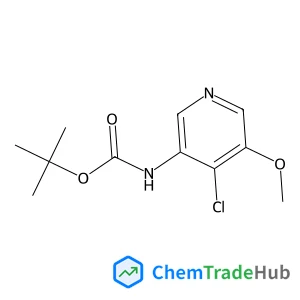
tert-Butyl 4-chloro-5-methoxypyridin-3-ylcarbamate
CAS Number:
1045858-17-0
Molecular Formula:
C11H15ClN2O3
Recommended Suppliers




Disclaimer
This page provides academic journal information for reference and research purposes only. We are not affiliated with any journal publishers and do not handle publication submissions. For publication-related inquiries, please contact the respective journal publishers directly.
If you notice any inaccuracies in the information displayed, please contact us at support@chemtradehub.com. We will promptly review and address your concerns.