












2D superlattices via interfacial self-assembly of polymer-grafted Au nanoparticles
Literature Information
Publication Date
2023-11-07
DOI
10.1039/D3CC04587K
Impact Factor
6.222
Authors
Liangzhu Jiang, Xi Mao, Changxu Liu, Xiaodan Guo, Renhua Deng, Jintao Zhu
View Original
Abstract
Nanoparticle (NP) superlattices are periodic arrays of nanoscale building blocks. Because of the collective effect between functional NPs, NP superlattices can exhibit exciting new properties that are distinct from those of individual NPs or corresponding bulk materials. In particular, two-dimensional (2D) NP superlattices have attracted increasing attention due to their emerging applications in micro/opto-electronics, catalysis, sensing, and other fields. Among various preparation methods, evaporation-induced interfacial self-assembly has become the most popular method for preparing 2D NP superlattices because it is a simple, low-cost, and scalable process that can be widely applied to various NPs. Introducing soft ligands, such as polymers, can not only provide convenience in controlling the self-assembly process and tuning superlattice structures but also improve the properties of 2D NP superlattices. This feature article focuses on the methods of evaporation-induced self-assembly of polymer-grafted Au NPs into free-standing 2D NP superlattice films at air/liquid interfaces and 2D NP superlattice coatings on substrates, followed by studies on in situ tracking of the self-assembly evolution process through small-angle X-ray scattering. Their application in nano-floating gate memory devices is also included. Finally, the challenges and perspectives of this direction are discussed.
Related Literature
Hydrogenation of PAH molecules through interaction with hydrogenated carbonaceous grains
John D. Thrower, Emil E. Friis, Anders L. Skov, Bjarke Jørgensen, Liv Hornekær
2013-11-15
Paper
DOI: 10.1039/C3CP54073A
A XANES study of LiVPO4F: a factor analysis approach
Yan Qin, Yang Ren, Steve M. Heald, Chengjun Sun, Dehua Zhou, Bryant J. Polzin, Steve E. Trask, Khalil Amine, Yinjin Wei, Gang Chen, Ira Bloom, Zonghai Chen
2014-01-10
Paper
DOI: 10.1039/C3CP54588A
Improving O2 production of WO3 photoanodes with IrO2 in acidic aqueous electrolyte
Joshua M. Spurgeon, Jesus M. Velazquez, Matthew T. McDowell
2014-01-10
Paper
DOI: 10.1039/C3CP55527E
Ionic liquid modulation of swelling and LCST behavior of N-isopropylacrylamide polymer gels
Simon Gallagher, Andrew Kavanagh, Bartosz Zíołkowski, Larisa Florea, Douglas R. MacFarlane, Kevin Fraser, Dermot Diamond
2013-12-18
Paper
DOI: 10.1039/C3CP53397B
Hybrid pn-junction solar cells based on layers of inorganic nanocrystals and organic semiconductors: optimization of layer thickness by considering the width of the depletion region
Sudip K. Saha, Asim Guchhait, Amlan J. Pal
2013-11-29
Paper
DOI: 10.1039/C3CP52227J
The relationship between enhanced enzyme activity and structural dynamics in ionic liquids: a combined computational and experimental study
Sung Ho Ha, Latsavongsakda Sethaphong, Yoon-Mo Koo, Yaroslava G. Yingling
2013-12-02
Paper
DOI: 10.1039/C3CP52516C
A steered molecular dynamics mediated hit discovery for histone deacetylases
Subha Kalyaanamoorthy, Yi-Ping Phoebe Chen
2013-12-19
Paper
DOI: 10.1039/C3CP53511H
Experimental and theoretical study on the sensing mechanism of a fluorescence probe for hypochloric acid: a Se⋯N nonbonding interaction modulated twisting process
Songqiu Yang, Peng Li, Panwang Zhou, Keli Han
2013-11-26
Paper
DOI: 10.1039/C3CP54093F
Progress on extending the light absorption spectra of photocatalysts
Zeyan Wang, Yuanyuan Liu, Baibiao Huang, Ying Dai, Zaizhu Lou, Gang Wang, Xiaoyang Zhang, Xiaoyan Qin
2013-11-11
Perspective
DOI: 10.1039/C3CP53817F
Optimization of amorphous silicon double junction solar cells for an efficient photoelectrochemical water splitting device based on a bismuth vanadate photoanode
Lihao Han, Paula Perez Rodriguez, Bernard Dam, Miro Zeman, Arno H. M. Smets
2014-01-02
Paper
DOI: 10.1039/C3CP55035D
You might also like
Compound Q&A
What is the market or research trend for N-(4-Methoxybenzyl)-2-pyridinamine (CAS: 52818-63-0)?
N-(4-Methoxybenzyl)-2-pyridinamine (CAS: 52818-63-0) is increasingly being used ...
52818-63-0N-(4-Methoxybenzyl)-...
Compound Q&A
What precautions should be taken when handling Ethyl 4-(2-chlorophenyl)-1,3-thiazole-2-carboxylate (CAS: 1050507-06-6)?
When handling Ethyl 4-(2-chlorophenyl)-1,3-thiazole-2-carboxylate, appropriate p...
1050507-06-6Ethyl 4-(2-chlorophe...
Compound Q&A
What regulatory guidelines apply to diethyldiselane (CAS: 628-39-7)?
Diethyldiselane (CAS: 628-39-7) is classified under the Globally Harmonized Syst...
628-39-7Diethyldiselane
Compound Q&A
What is the market or research trend for oxocopper (CAS: 12053-18-8)?
The market for oxocopper (CAS: 12053-18-8) is primarily driven by its use in cat...
12053-18-8oxocopper; oxo-(oxoc...
Compound Q&A
What is the market or research trend for 5-{[(2-Methyl-2-propanyl)oxy]carbonyl}-5-azaspiro[2.4]heptane-7-carboxylic acid?
The market for 5-{[(2-Methyl-2-propanyl)oxy]carbonyl}-5-azaspiro[2.4]heptane-7-c...
1268519-54-55-{[(2-Methyl-2-prop...
Compound Q&A
What is 2-(1-Pyrrolidinyl)-4-pyridinamine (CAS: 35981-63-6)?
2-(1-Pyrrolidinyl)-4-pyridinamine is a chemical compound with the CAS number 359...
35981-63-62-(1-Pyrrolidinyl)-4...
Compound Q&A
What are the physical and chemical properties of 2-(3-Pyridinyl)-1-azabicyclo[2.2.2]octane (CAS: 91556-75-1)?
2-(3-Pyridinyl)-1-azabicyclo[2.2.2]octane (CAS: 91556-75-1) is a crystalline sol...
91556-75-12-(3-Pyridinyl)-1-az...
Compound Q&A
How is (S)-Alpha-allyl-proline hydrochloride (CAS: 129704-91-2) typically synthesized?
(S)-Alpha-allyl-proline hydrochloride is usually synthesized via a Wittig reacti...
129704-91-2(S)-Alpha-allyl-prol...
Compound Q&A
What is 3-Methyl-1,2-oxazole-5-carboxylic acid (CAS: 4857-42-5)?
3-Methyl-1,2-oxazole-5-carboxylic acid (CAS: 4857-42-5) is an organic compound w...
4857-42-53-Methyl-1,2-oxazole...
Compound Q&A
How is Lys-SMCC-DM1 (CAS: 1281816-04-3) typically synthesized?
Lys-SMCC-DM1 is synthesized via a multi-step process involving the coupling of S...
1281816-04-3Lys-SMCC-DM1
Source Journal
Chemical Communications

CiteScore:
8.6
Self-citation Rate:
4.7%
Articles per Year:
2458
ChemComm publishes urgent research which is of outstanding significance and interest to experts in the field, while also appealing to the journal’s broad chemistry readership. Our communication format is ideally suited to short, urgent studies that are of such importance that they require accelerated publication. Our scope covers all topics in chemistry, and research at the interface of chemistry and other disciplines (such as materials science, nanoscience, physics, engineering and biology) where there is a significant novelty in the chemistry aspects. Major topic areas covered include: Analytical Chemistry Catalysis Chemical Biology and medicinal chemistry Computational Chemistry and Machine Learning Energy and sustainable chemistry Environmental Chemistry Green Chemistry Inorganic Chemistry Materials Chemistry Nanoscience Organic Chemistry Physical Chemistry Polymer Chemistry Supramolecular Chemistry
Recommended Compounds
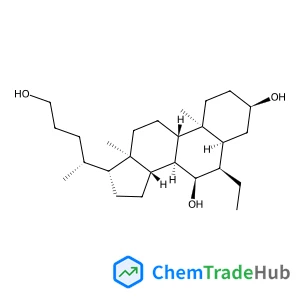
(3alpha,5beta,6alpha,7alpha)-6-Ethylcholane-3,7,24-triol
CAS Number:
1537866-49-1
Molecular Formula:
C26H46O3
Recommended Suppliers






Disclaimer
This page provides academic journal information for reference and research purposes only. We are not affiliated with any journal publishers and do not handle publication submissions. For publication-related inquiries, please contact the respective journal publishers directly.
If you notice any inaccuracies in the information displayed, please contact us at support@chemtradehub.com. We will promptly review and address your concerns.