













Magnetically controlled cyclic microscale deformation of in vitro cancer invasion models
Literature Information
Publication Date
2023-10-16
DOI
10.1039/D3BM00583F
Impact Factor
6.843
Authors
Daphne O. Asgeirsson, Avni Mehta, Fan Li, Xiang Wang, Michael G. Christiansen, Nicolas Hesse, Rachel Ward, Ece Su Ildiz, Stefano Menghini, Nicola Aceto, Simone Schuerle
View Original
Abstract
Mechanical cues play an important role in the metastatic cascade of cancer. Three-dimensional (3D) tissue matrices with tunable stiffness have been extensively used as model systems of the tumor microenvironment for physiologically relevant studies. Tumor-associated cells actively deform these matrices, providing mechanical cues to other cancer cells residing in the tissue. Mimicking such dynamic deformation in the surrounding tumor matrix may help clarify the effect of local strain on cancer cell invasion. Remotely controlled microscale magnetic actuation of such 3D in vitro systems is a promising approach, offering a non-invasive means for in situ interrogation. Here, we investigate the influence of cyclic deformation on tumor spheroids embedded in matrices, continuously exerted for days by cell-sized anisotropic magnetic probes, referred to as μRods. Particle velocimetry analysis revealed the spatial extent of matrix deformation produced in response to a magnetic field, which was found to be on the order of 200 μm, resembling strain fields reported to originate from contracting cells. Intracellular calcium influx was observed in response to cyclic actuation, as well as an influence on cancer cell invasion from 3D spheroids, as compared to unactuated controls. Furthermore, RNA sequencing revealed subtle upregulation of certain genes associated with migration and stress, such as induced through mechanical deformation, for spheroids exposed to actuation vs. controls. Localized actuation at one side of a tumor spheroid tended to result in anisotropic invasion toward the μRods causing the deformation. In summary, our approach offers a strategy to test and control the influence of non-invasive micromechanical cues on cancer cell invasion and metastasis.
Recommended Journals
Related Literature
O-Phenylenediamine: a privileged pharmacophore of ferrostatins for radical-trapping reactivity in blocking ferroptosis
Xie-Huang Sheng, Cheng-Cheng Cui, Chao Shan, Yu-Zhen Li, Duo-Hong Sheng, Bin Sun, De-Zhan Chen
2018-05-03
Paper
DOI: 10.1039/C8OB00546J
Rh(iii)-Catalyzed tandem C(sp2)–H allylation/N-alkylation annulation of arene amides with 2-alkylidenetrimethylene carbonates
Hui Xie, Jin-Yi Liang, Zhuo-Jun Huang, Bing Shu, Yi-Chuan Zheng, Yan-Zhi Liu, Shao-Yong Chen, Xu-Ge Liu, Shang-Shi Zhang
2021-10-08
Research Article
DOI: 10.1039/D1QO01129D
Facile synthesis of 2,3-benzodiazepines using one-pot two-step phosphate-assisted acylation–hydrazine cyclization reactions
Akinari Sumita, Yuko Otani, Tomohiko Ohwada
2018-05-09
Paper
DOI: 10.1039/C8OB00708J
Correction: 2-Aroylquinoline-5,8-diones as potent anticancer agents displaying tubulin and heat shock protein 90 (HSP90) inhibition
Kunal Nepali, Sunil Kumar, Hsiang-Ling Huang, Fei-Chiao Kuo, Cheng-Hsin Lee, Ching-Chuan Kuo, Teng-Kuang Yeh, Yu-Hsuan Li, Jang-Yang Chang, Jing-Ping Liou, Hsueh-Yun Lee
2018-06-15
Correction
DOI: 10.1039/C8OB90080A
A transition-metal-free, base-promoted annulation/ring-cleavage/ring-reconstruction cascade reaction: a facile access to N-protection free indole-indenones
Na Luo, Zhen-Wei Sun, Xing-Xin Xu, Xiao-Qiang Hu, Feng-Cheng Jia
2021-10-05
Research Article
DOI: 10.1039/D1QO01280K
Photoredox-catalyzed synthesis of sulfonated oxazolines from N-allylamides through the insertion of sulfur dioxide
Zhichao Chen, Hong Zhang, Shu-Feng Zhou, Xiuling Cui
2021-11-30
Research Article
DOI: 10.1039/D1QO01540K
Figure-eight arylene ethynylene macrocycles: facile synthesis and specific binding behavior toward Hg2+
Hui Nie, Qian-Hui Li, Siqi Zhang, Chuan-Ming Wang, Wen-Hui Lin, Ke Deng, Li-Jin Shu, Qing-Dao Zeng, Jun-Hua Wan
2021-09-29
Research Article
DOI: 10.1039/D1QO00812A
Recent advances in catalytic enantioselective direct C–H bond functionalization of electron-deficient N-containing heteroarenes
Xiao-Lan Liu, Luo-Bin Jiang, Mu-Peng Luo, Zhi Ren, Shou-Guo Wang
2021-09-22
Review Article
DOI: 10.1039/D1QO01223A
Key role of a π–π complex in diaryl cross-coupling between aryldiazonium salts and arylboronic acids using photosensitizer-free gold/photoredox catalysis
Yanhong Liu, Rongxiu Zhu, Chengbu Liu, Dongju Zhang
2021-11-17
Research Article
DOI: 10.1039/D1QO01464A
Ruthenium-catalyzed C–H allylation of arenes with allylic amines
Rui Yan
2018-05-07
Paper
DOI: 10.1039/C8OB00723C
You might also like
Compound Q&A
How should waste containing 4-Bromo-3-methyl-2-thiophenecarboxylic acid (CAS: 265652-39-9) be handled?
Waste containing 4-Bromo-3-methyl-2-thiophenecarboxylic acid (CAS: 265652-39-9) ...
265652-39-94-Bromo-3-methyl-2-t...
Compound Q&A
What industries use (2S,5S,2'S,5'S)-1,1'-(1,2-Ethanediyl)bis(2,5-dimethylphospholane) (CAS: 136779-26-5)?
(2S,5S,2'S,5'S)-1,1'-(1,2-Ethanediyl)bis(2,5-dimethylphospholane) is primarily u...
136779-26-5(2S,5S,2'S,5'S)-1,1'...
Compound Q&A
What industries use Ethyl 2-(2-bromo-5-fluorophenyl)acetate (CAS: 1214910-61-8)?
Ethyl 2-(2-bromo-5-fluorophenyl)acetate (CAS: 1214910-61-8) is used in the pharm...
1214910-61-8Ethyl 2-(2-bromo-5-f...
Compound Q&A
How is 4-Methyl-2-benzofuran-1,3-dione (CAS: 4792-30-7) typically synthesized?
4-Methyl-2-benzofuran-1,3-dione (CAS: 4792-30-7) can be synthesized through seve...
4792-30-74-Methyl-2-benzofura...
Compound Q&A
What industries use 4,6-Dichloroquinoline-3-carbonitrile (CAS: 936498-04-3)?
4,6-Dichloroquinoline-3-carbonitrile (CAS: 936498-04-3) is used in the pharmaceu...
936498-04-34,6-Dichloroquinolin...
Compound Q&A
What are the main uses of Chloro[tris(para-trifluoromethylphenyl)phosphine]gold(I) (CAS: 385815-83-8)?
Chloro[tris(para-trifluoromethylphenyl)phosphine]gold(I) is primarily used in or...
385815-83-8Chloro[tris(para-tri...
Compound Q&A
Is 2-Bromo-5-nitrofuran (CAS: 823-73-4) safe?
2-Bromo-5-nitrofuran (CAS: 823-73-4) is generally considered safe when handled w...
823-73-42-Bromo-5-nitrofuran
Compound Q&A
How should 5-Bromo-2,3,4-trifluorobenzoic acid (CAS: 212631-85-1) be stored?
5-Bromo-2,3,4-trifluorobenzoic acid should be stored in a cool, dry place away f...
212631-85-15-Bromo-2,3,4-triflu...
Compound Q&A
What are the main uses of Zinc bis(aminoacetate) (CAS: 7214-08-6)?
Zinc bis(aminoacetate) (CAS: 7214-08-6) is primarily used in the pharmaceutical ...
7214-08-6Zinc bis(aminoacetat...
Compound Q&A
How should Adamantan-1-ylmethanol (CAS: 770-71-8) be stored?
Adamantan-1-ylmethanol should be stored in a cool, dry, and well-ventilated plac...
770-71-8Adamantan-1-ylmethan...
Source Journal
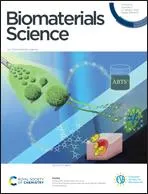
Biomaterials Science
CiteScore:
11.5
Self-citation Rate:
3.4%
Articles per Year:
492
Biomaterials Science is an international high impact journal exploring the science of biomaterials and their translation towards clinical use. Its scope encompasses new concepts in biomaterials design, studies into the interaction of biomaterials with the body, and the use of materials to answer fundamental biological questions. Papers do not necessarily need to report a new biomaterial but should provide novel insight into the biological applications of the biomaterial. Articles that primarily focus on demonstrating novel materials chemistry and bring a molecular picture to bear on a given material’s suitability as a biomaterial are more suited to our companion journal, Journal of Materials Chemistry B. Biomaterials Science publishes primary research and review-type articles in the following areas: molecular design of biomaterials, including translation of emerging chemistries to biomaterials science of cells and materials at the nanoscale and microscale materials as model systems for stem cell and human biology materials for tissue engineering and regenerative medicine (Nano)materials and (nano)systems for therapeutic delivery interactions at the biointerface biologically inspired and biomimetic materials, including bio-inspired self-assembly systems and cell-inspired synthetic tools next-generation biomaterials tools and methods
Recommended Compounds
![(2R)-2,7,8-Trimethyl-2-[(4R,8R)-4,8,12-trimethyltridecyl]-6-chromanol structure](https://static.chemtradehub.com/structs/54-/54-28-4-155c.webp "(2R)-2,7,8-Trimethyl-2-[(4R,8R)-4,8,12-trimethyltridecyl]-6-chromanol structure")
(2R)-2,7,8-Trimethyl-2-[(4R,8R)-4,8,12-trimethyltridecyl]-6-chromanol
CAS Number:
54-28-4
Molecular Formula:
C28H48O2

![N-[(9Z)-9-Octadecen-1-yl]-1,3-propanediamine structure](https://static.chemtradehub.com/structs/717/7173-62-8-d43e.webp "N-[(9Z)-9-Octadecen-1-yl]-1,3-propanediamine structure")
Recommended Suppliers





Disclaimer
This page provides academic journal information for reference and research purposes only. We are not affiliated with any journal publishers and do not handle publication submissions. For publication-related inquiries, please contact the respective journal publishers directly.
If you notice any inaccuracies in the information displayed, please contact us at support@chemtradehub.com. We will promptly review and address your concerns.