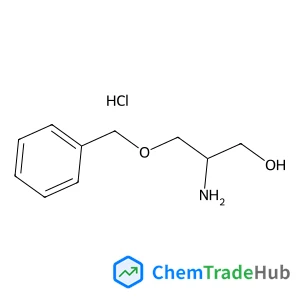
(R)-2-amino-3-(benzyloxy)propan-1-ol hydrochloride
CAS Number:
58577-95-0
Molecular Formula:
C10H16ClNO2
Wenjuan Liu, Mingwei Cui, Qiao Yang, Bingbing Tian, Jingxue Xia, Lin Zhao, Yanyan Guo
Colloidal gold immunoassay is the most widely used method in the field of drug detection. However, this method often has poor quantitative identification ability and low analytical sensitivity, which is not suitable for the analysis of hair poisoning ingredients. In order to solve these limitations, we developed an immunochromatographic test strip for simultaneously screening multiple drugs in this study. This hand-held test strip used fluorescent nanoparticles loaded with lanthanide chelates as the signal carrier of fluorescence reading, and conducted quantitative testing of various drugs based on the competitive immune reaction between the analyte and antigen. Under the optimal conditions, the competition curves of morphine (MOP), methamphetamine (MET) and ketamine (KET) were obtained on a single band. The detection limit (LOD) of this analytical method was 100–1000 times lower than that of colloidal gold test strips. The detection limits of MOP, MET and KET were 0.06 ng mL−1, 0.1 ng mL−1 and 1.0 ng mL−1, respectively. No cross-reaction was observed when morphine, methamphetamine and ketamine were tested simultaneously with this method. And 184 hair samples were tested simultaneously, and the detected amount was very close to the results of LC-MS. The immunochromatographic strip showed good stability in repeated tests, and the coefficient of variation was less than 15%. Fluorescence immunochromatography strips and handheld strip readers have the characteristics of portability, speed, ease of operation and high sensitivity, and may become powerful tools for screening drug abuse in hair in forensic medicine.
Simone Meloni
DOI: 10.1039/C0CP01335H
Saartje Swinnen, Jerzy Leszczynski, Minh Tho Nguyen
DOI: 10.1039/C0CP02484H
Junji Etou, Daisuke Ino, Daisuke Furukawa, Ikuyo F. Nakai, Yoshiyasu Matsumoto
DOI: 10.1039/C0CP01627F
Zhong-hua Cui, Yi-hong Ding
DOI: 10.1039/C0CP02475A
Hongzhen Lin, Ivan G. Scheblykin
DOI: 10.1039/C0CP02764B
Avi Lavi, Ali Abo-Riziq, Yinon Rudich
DOI: 10.1039/C0CP02114H
Cheng Hua Zhang, Chan Kyung Kim, Ying Xue
DOI: 10.1039/C0CP02783A
Sylvain Cristol
DOI: 10.1039/C0CP01295E
E. Hazrati, G. Brocks, B. Buurman, G. A. de Wijs
DOI: 10.1039/C0CP01540G
Andreas Maiser, Christian Steinhauer, Lothar Schermelleh
DOI: 10.1039/C0CP01919D
Ethyl 4-chlorothieno[2,3-b]pyridine-5-carboxylate (CAS: 59713-58-5) can be synth...
5-Methyl-1H-indole-3-carbaldehyde (CAS: 52562-50-2) is subject to various regula...
(1,3-Dimethyl-2,4-dioxo-1,2,3,4-tetrahydro-5-pyrimidinyl)boronic acid is a white...
Waste containing Sulfocostunolide A (CAS: 1016983-51-9) should be handled with c...
When handling Murraxocin (CAS: 88478-44-8), ensure proper personal protective eq...
Formvar (CAS: 63148-64-1) is an alkyd resin characterized by a high molecular we...
(S)-4-benzyl-2-((benzyloxy)methyl)morpholine is generally safe when handled with...
Methyl 1-(5-bromo-2-pyrimidinyl)cyclopropanecarboxylate (CAS: 1447607-69-3) is p...
2-Methyl-1-phenyl-1-propanamine hydrochloride (CAS: 24290-47-9) is generally con...
3-(4-Bromophenyl)-2-methylpropanoic acid is synthesized through a multi-step pro...

Analytical Methods welcomes early applications of new analytical and bioanalytical methods and technology demonstrating the potential for societal impact. We require that methods and technology reported in the journal are sufficiently innovative, robust, accurate, and compared to other available methods for the intended application. Developments with interdisciplinary approaches are particularly welcome. Systems should be proven with suitably complex and analytically challenging samples. We encourage developments within, but not limited to, the following technologies and applications: global health, point-of-care and molecular diagnostics biosensors and bioengineering drug development and pharmaceutical analysis applied microfluidics and nanotechnology omics studies, such as proteomics, metabolomics or glycomics environmental, agricultural and food science neuroscience biochemical and clinical analysis forensic analysis industrial process and method development
![4-{1-[4-(4,4,5,5-Tetramethyl-1,3,2-dioxaborolan-2-yl)phenyl]cyclopropyl}morpholine structure](https://static.chemtradehub.com/structs/120/1206594-08-2-7afb.webp "4-{1-[4-(4,4,5,5-Tetramethyl-1,3,2-dioxaborolan-2-yl)phenyl]cyclopropyl}morpholine structure")
![4-[(1-Methyl-1H-pyrrol-2-yl)methylene]-1,3(2H,4H)-isoquinolinedione structure](https://static.chemtradehub.com/structs/110/1104546-89-5-a600.webp "4-[(1-Methyl-1H-pyrrol-2-yl)methylene]-1,3(2H,4H)-isoquinolinedione structure")